
Lebanese mezze is a shared meal made of many small plates, dips, salads, fried and grilled bites, served to be eaten together rather than in a single course. The spread usually centers on anchor dishes like hummus, tabbouleh, and baba ghanoush, then expands outward. In this guide, we cover which dishes to include, how much to order per person, quick recipes for the essentials, and plating tips that make the table look as good as it tastes.
TL;DR:
- Prioritizing core dishes like hummus and tabbouleh ensures the spread remains flavorful and memorable, even with fewer plates.
- Pacing the arrival of hot and cold dishes in waves enhances the meal’s social and sensory rhythm, prolonging enjoyment and conversation.
- Achieving balance in acidity, fat, and salt across the spread prevents any single dish from overpowering the others.
- Serving a mix of vegetarian, vegan, and allergy-friendly options allows broader guest inclusion without compromising taste.
- Focusing on a few well-executed dishes and thoughtful sequencing creates a more abundant-feeling table than simply increasing the number of plates.
Table of Contents
- What is Lebanese mezze: scale, rhythm, and cultural role
- Core mezze dishes to include (cold and hot)
- How to build and order a mezze platter: portions, balance, and sequencing
- Quick recipes and shortcuts for three signature mezze items
- Vegetarian, vegan and allergy-friendly swaps
- Presentation and plating tips for an abundant, photo-ready mezze table
- Chef’s notes from Virginia Jiha (VJ Cuisine): sourcing, flavor pairings, and private-dinner flow
- The history behind the mezze table
- Regional variations within Lebanon
- Pairing Lebanese mezze with traditional drinks
- What actually matters when you put a mezze table together
- Have VJ Cuisine bring the mezze table to you
- FAQ
- Sources
What is Lebanese mezze: scale, rhythm, and cultural role
A Lebanese mezze spread can run anywhere from 6 to about 40 dishes, often arriving at the table in successive waves of four or five items rather than all at once. That pacing is deliberate. Cold dips and salads, hummus, labneh, tabbouleh, open the meal, giving diners something light to start on while the kitchen finishes the hot plates. Fried and grilled items follow: kibbeh, falafel, skewered meats, grilled halloumi, each one landing while appetites are still fresh.
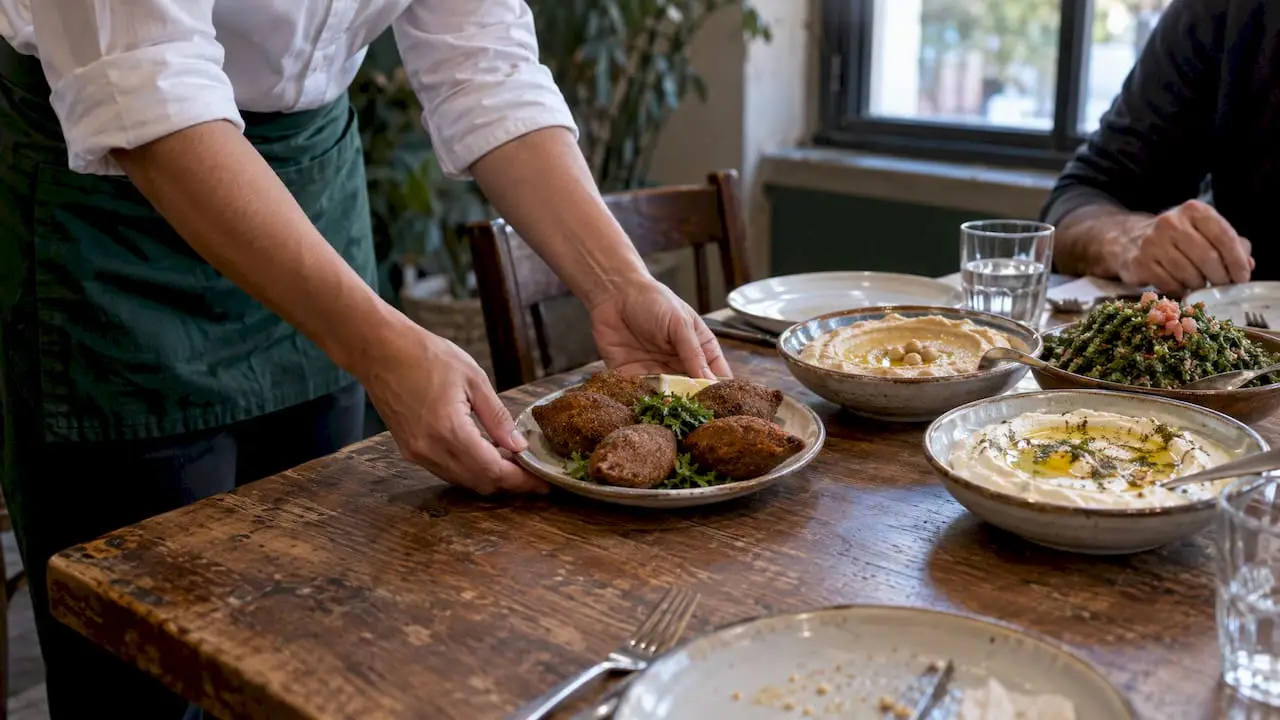
This sequencing supports what’s sometimes called kaif, a sustained, pleasurable appetite kept alive by varying temperature, texture, and richness across the meal instead of front-loading one big course. Mezze is built for conversation and lingering. Nobody is rushing to a single entrée; the table stays active for an hour or more, with new plates giving people a reason to keep eating, talking, and passing dishes around.
Core mezze dishes to include (cold and hot)
A well-rounded spread draws from both categories. Cold mezze sets the tone, hot mezze keeps it going.
- Hummus: a creamy chickpea and tahini dip, vegetarian and vegan.
- Baba ghanoush (moutabal): smoky charred eggplant blended with tahini and lemon, vegan.
- Tabbouleh: a parsley-forward salad with fine bulgur, tomato, and lemon, vegan.
- Fattoush: a crisp salad of mixed greens, toasted or fried pita, and sumac, vegan.
- Labneh: strained yogurt, often finished with olive oil and za’atar, vegetarian.
- Muhammara: a roasted red pepper and walnut spread with a touch of heat, vegan.
- Olives and pickles: briny, acidic palate resets between richer bites, vegan.
- Grape leaves (warak enab): rice or bulgur rolled in brined leaves, vegan or meat-stuffed depending on the kitchen.
- Falafel: fried chickpea or fava bean patties, crisp outside and soft inside, vegan.
- Kibbeh: a torpedo-shaped shell of bulgur and minced meat, often cited as Lebanon’s national dish.
- Fatayer: baked or fried pastries filled with spinach, cheese, or meat.
- Makanek or sujuk: small spiced sausages, pan-seared and often flambéed with lemon.
- Grilled halloumi: firm, salty cheese seared until golden, vegetarian.
Most tables mix at least two or three vegan options with one or two meat-based hot plates, which keeps the spread accessible without turning it into an all-vegetable meal.
How to build and order a mezze platter: portions, balance, and sequencing
Sizing a mezze spread is simpler than it looks once you have a rule to anchor it.
- Plan for roughly one mezze dish per person, plus two or three extra plates for the table to share.
- Split the order evenly between cold and hot items so no single temperature dominates the table.
- Vary texture on purpose: something creamy (hummus), something crunchy (fattoush), something chewy (falafel or kibbeh).
- Balance acid, fat, and salt across the spread, a squeeze of lemon on one plate offsets the richness of another.
- Order or serve in waves instead of all at once, starting cold and bringing hot plates out as the first round winds down.
- Keep warm pita on hand throughout, it’s the primary utensil for scooping dips and wrapping bites.
Pro Tip: Hold back one or two hot dishes until the first wave is half-eaten; a fresh plate arriving mid-meal keeps the table’s energy up far better than everything landing cold by the second course.
Quick recipes and shortcuts for three signature mezze items
These three dishes anchor almost every mezze table, and each one rewards a specific technique more than a long ingredient list.
- Hummus (15 minutes, easy): blend cooked chickpeas, a generous amount of tahini, lemon juice, garlic, and salt, then stream in ice-cold water while the blender runs. The tahini should taste dominant, not the chickpeas, and the cold water is what aerates the mixture into something light and pourable rather than pasty. Garnish with a pool of olive oil, whole chickpeas, and a dusting of paprika or sumac.
- Tabbouleh (20 minutes, easy): this salad is parsley first, everything else second. A classic ratio leans heavily toward the herb, with bulgur used more as a seasoning element than a base, so chop the parsley fine and by hand rather than in a food processor, which bruises it into mush. Toss with diced tomato, finely minced onion, lemon juice, and olive oil just before serving so the greens stay bright.
- Baba ghanoush (30 minutes, moderate): char whole eggplants directly over a flame or under a broiler until the skin blisters and the flesh collapses, which is what builds the smoky flavor. Let the flesh drain in a colander for a few minutes to shed excess liquid, then mash with tahini, lemon, and garlic, tasting as you go so the smoke, not the tahini, leads.
A properly made hummus should taste of tahini first, chickpeas second, a texture cue that separates home versions from the dense, pasty kind sold in tubs.
Vegetarian, vegan and allergy-friendly swaps
Mezze is naturally accommodating since so many staples are already plant-based. A few swaps extend that further without flattening the flavor.
- Add roasted chickpeas or spiced lentils where a table wants more plant protein without meat.
- Swap labneh for a thick, strained coconut yogurt to keep the tangy, creamy role dairy-free.
- Use tahini-based dressings instead of nut-based ones like muhammara for guests avoiding tree nuts.
- Rebalance with an extra acidic or crunchy dish, like pickles or fattoush, whenever you remove a rich item, so the table doesn’t lose contrast.
Presentation and plating tips for an abundant, photo-ready mezze table
Mezze is as visual as it is edible, and a few staging choices do most of the work.
- Use dips as anchors in matching bowls, then arrange vegetables, olives, and pickles around them to fill the gaps.
- Scatter fresh herbs, pomegranate seeds, or toasted nuts over dips for color and contrast.
- Serve warm dishes hot, dips slightly chilled, and bread warm, temperature contrast reads as freshness.
- Rotate bowls so no two similar colors sit side by side, and use small serving spoons to keep edges clean for photos.
Chef’s notes from Virginia Jiha (VJ Cuisine): sourcing, flavor pairings, and private-dinner flow
We run VJ Cuisine, a Miami-based private chef service built around chef-crafted meal plans, boutique catering, and private dining, all small-batch and never frozen. For mezze specifically, sourcing matters more than technique: fresh, tightly bunched parsley, a tahini that’s smooth rather than gritty, and a good olive oil carry the whole spread. A private-dinner flow we often use starts with hummus, labneh, and olives, moves into tabbouleh and fattoush, then closes with warm kibbeh and grilled halloumi straight from the pan.
The history behind the mezze table
Mezze’s shape comes from centuries of shared dining across the eastern Mediterranean, where meals were built around communal grazing rather than individual plates. In Lebanon specifically, the practice absorbed influences from Ottoman, Levantine, and Mediterranean cooking traditions, which is part of why dishes like kibbeh and grape leaves show up across several neighboring cuisines in slightly different forms. Mezze found wider recognition as part of a broader eastern Mediterranean meal pattern shared with Syria, Palestine, and Cyprus, each country adapting the format to its own ingredients and seasonal produce.
What makes the Lebanese version distinct is less any single dish and more the insistence on abundance and pacing as a form of hospitality. Serving six dishes to one guest or forty to a banquet hall follows the same logic: the table should never look sparse, and no one should leave hungry or unattended. Meals historically stretched across long afternoons or evenings, with mezze functioning as both food and social infrastructure, a reason for people to stay seated, keep talking, and keep passing plates. That root in hospitality is why mezze still anchors Lebanese weddings, family gatherings, and holiday meals today, scaled up or down but never abandoned.
Regional variations within Lebanon
Mezze shifts noticeably depending on where in Lebanon it’s served. Coastal cities near Beirut and Tripoli lean on fresh seafood mezze, grilled fish, fried whitebait, and seafood-based dips, alongside the standard vegetable spread, reflecting easy access to the Mediterranean. Mountain and inland regions, by contrast, favor heartier, meat-forward plates: more kibbeh variations, richer stews adapted into smaller portions, and dishes built around preserved meats like makanek that kept well before refrigeration was common.
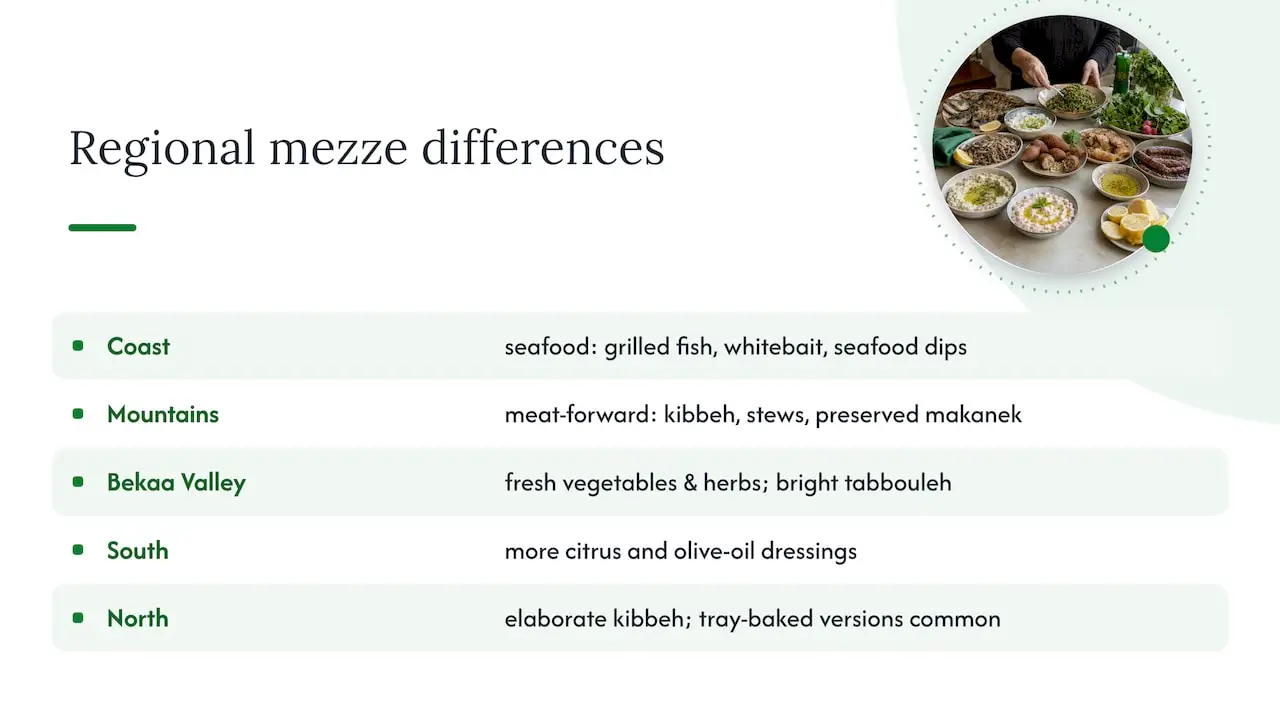
The Bekaa Valley, Lebanon’s agricultural core, tends to produce mezze heavier on fresh vegetables and herbs, since the region supplies much of the country’s produce. Tabbouleh and fattoush here often taste brighter simply because the parsley, tomatoes, and herbs are grown nearby rather than shipped in. Southern Lebanon incorporates more citrus and olive oil into its dressings, drawing on the region’s groves, while northern areas around Tripoli are known for more elaborate kibbeh preparations, sometimes baked in trays rather than shaped into individual torpedoes. None of these differences override the core format. A mezze table in the mountains and one on the coast still follow the same rhythm of cold plates first, hot plates in waves, bread throughout, even as the specific dishes shift with what’s locally available.
Pairing Lebanese mezze with traditional drinks
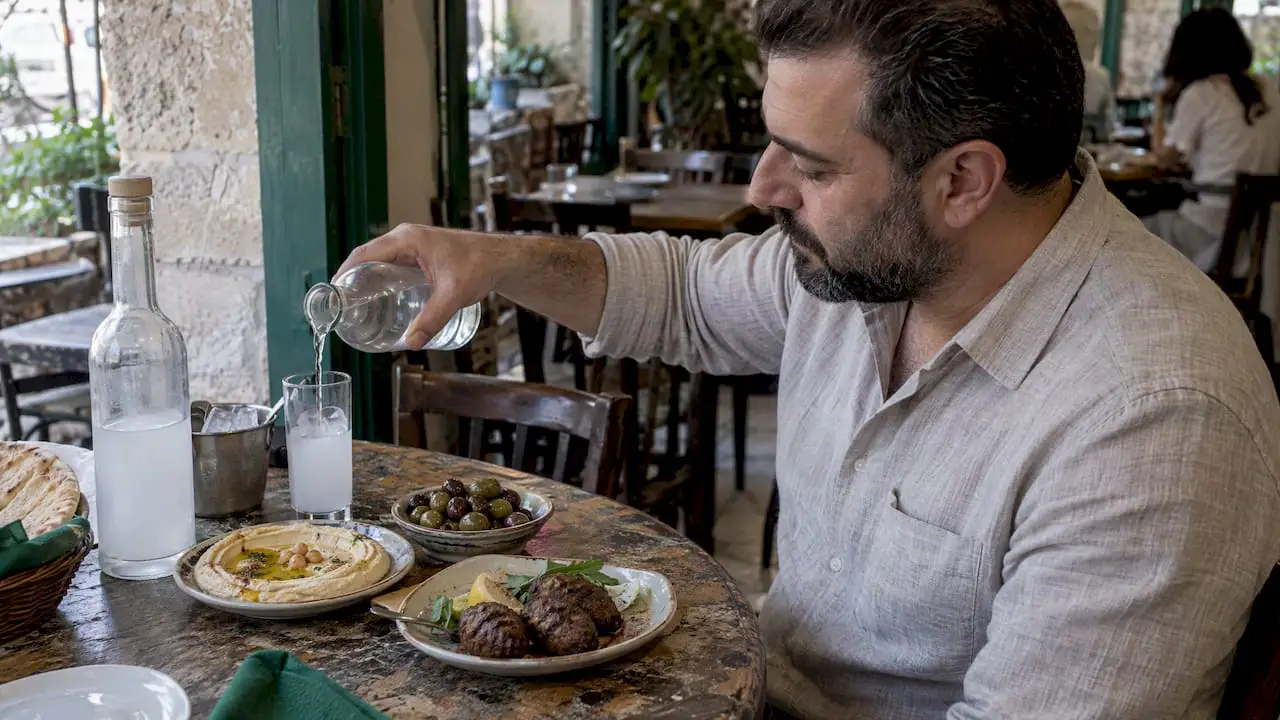
Arak is the traditional pairing for most of the mezze table. This anise-flavored spirit is served with water and ice, which turns it cloudy white, and its licorice-forward profile cuts through rich dips like hummus and baba ghanoush while standing up to grilled and fried items like kibbeh and makanek. The ritual of diluting arak at the table, slowly, over the course of the meal, mirrors the same unhurried pacing that defines mezze itself.
Wine has a growing place at the Lebanese table as well, particularly with lighter courses. A crisp white or a dry rosé pairs well with tabbouleh, fattoush, and labneh, where acidity in the glass echoes the lemon and sumac already in the dishes. For the heavier, meat-based plates, a medium-bodied red stands up better, though it’s less traditional than arak in that role. Non-alcoholic options matter too: fresh mint lemonade or a tamarind drink offers the same palate-resetting acidity that pickles and olives provide on the food side, which is part of why both appear on the same tables regardless of what’s being poured. The common thread across all of it is contrast, a drink that cuts through richness rather than adding to it, keeping the meal moving the same way the dishes do.
What actually matters when you put a mezze table together
The biggest mistake home cooks make with mezze isn’t skipping a dish, it’s treating every plate as equally important. It isn’t. Hummus and tabbouleh carry the table; everything else is support. Get those two right, with tahini doing real work in the hummus and parsley genuinely dominating the tabbouleh, and a mediocre fatayer or an overcooked falafel barely registers.
Conventional advice tends to focus on quantity, more dishes, more variety, as a proxy for generosity. We’d argue pacing matters more than headcount. A table of eight dishes served in two unhurried waves reads as more abundant than fifteen dishes dumped out at once, because the waves are what create the sense that the meal is still unfolding. If you’re deciding where to put your effort, skip the temptation to chase every dish on a long list and instead nail three things: a hummus with real tahini presence, a tabbouleh that’s actually a parsley salad, and a sequence that holds back at least one hot plate for later in the meal.
— Virginia Jiha
Have VJ Cuisine bring the mezze table to you
If building and timing a full mezze spread sounds like more than you want to manage, we handle it as part of our boutique catering and private dinners, built around the same fresh, small-batch approach we use across every menu.
- We design the dish lineup, pacing, and plating so the table looks full from the first course to the last.
- Menus are shaped around your group size and any dietary needs, nothing generic, nothing frozen.
- Reach out through our catering page to talk through a sample menu or request a quote for your next gathering.
FAQ
What are the top 5 Lebanese dishes?
Hummus, tabbouleh, baba ghanoush, fattoush, and kibbeh are the dishes most consistently featured across Lebanese menus, with kibbeh often cited as the national dish. Falafel is a close sixth and appears almost as often on mezze tables.
What are some examples of Lebanese mezze recipes?
Hummus, tabbouleh, and baba ghanoush are the three most commonly cooked at home, each built around a single technique: tahini-forward blending, fine hand-chopped parsley, and charring eggplant over flame. Muhammara and labneh are also approachable recipes for a first attempt at a full spread.
What does a Lebanese platter typically contain?
A typical platter mixes cold dishes like hummus, baba ghanoush, tabbouleh, and labneh with hot items like falafel, kibbeh, or grilled halloumi, usually arranged with bread, olives, and pickles filling the gaps. Spreads can range from a handful of dishes for a small group to dozens of plates for a large gathering.
What type of food is mezze?
Mezze is a style of shared dining built on many small savory dishes, dips, salads, and both fried and grilled bites, served together rather than in separate courses. It functions as a complete meal rather than a prelude to one, common across Lebanon and neighboring eastern Mediterranean countries.