
Small-batch cooking here means chef-prepared, never-frozen meal plans, private in-home dinners, boutique catering, and culinary gifting that deliver restaurant-quality meals to you, fresh, portioned, and customized. The benefit is time saved without sacrificing flavor or dietary fit. Before booking, confirm how a provider handles temperature control, menu personalization, and safety instructions on arrival.
Key Takeaways:
- Most small-batch providers cook meals within days of delivery to ensure freshness, with lead times typically ranging from a few days to avoid same-day orders.
- Meals should arrive with solid ice packs or gel packs, feel cold or hot to the touch, and be verified with a food thermometer to ensure safety.
- Delivery providers should clearly explain their temperature control methods and packaging, with most offering insulated containers and specific reheating instructions.
- Reheated leftovers must be consumed within four days if refrigerated or frozen for longer, and reheated to at least 165°F to ensure safety.
- For personalized service, ask providers about menu flexibility, packaging details, delivery windows, and their safety measures to avoid unsafe temperature mishandling.
|
Fresh Meals, Less Daily Cooking
VJ Cuisine brings chef-crafted meal plans, boutique catering, and private dining to Miami families and busy professionals. Explore VJ Cuisine |
Who small batch cooking serves and which format fits you
Chef-led small-batch services attract a range of people, but the common thread is a desire for quality without the hours spent shopping, cooking, and cleaning up. Busy professionals want dinner solved for the week. Families want meals that satisfy different palates and allergies at once. Couples often look for a special night without the reservation hassle, and gift-givers want something more memorable than another bottle of wine.
Each service type answers a different need:
- Weekly meal plans deliver a set number of fresh, portioned dishes for reheating at home, ideal for busy professionals who want variety without daily cooking.
- Private in-home dinners bring a chef into your kitchen for a live, multi-course experience suited to anniversaries or small celebrations.
- Boutique catering scales a chef’s menu for a gathering of a dozen or so guests, keeping the personal touch that mass catering loses.
- Culinary gifting turns a chef-prepared meal or curated box into a present for someone who already has everything.
Delivery works for recurring meal plans, while private dinners and much of boutique catering happen on-site, with the chef cooking or finishing dishes in your space. The outcome you’re paying for, across all four formats, is consistency: the same quality plate whether it’s a Tuesday dinner or a Saturday gathering.
How chef-run small batch services actually operate
A legitimate small-batch provider starts with a conversation, not a form. Expect a consultation covering your taste preferences, allergies, and any dishes you want in rotation, followed by a proposed menu you can revise before anything is cooked.
- Consultation and menu design: the chef gathers dietary restrictions, flavor preferences, and portion needs before building a menu.
- Small-batch production: meals are cooked in limited quantities, often within days of delivery, rather than mass-produced and held in inventory.
- Packaging and labeling: each container should note the dish, date prepared, and reheating instructions.
- Scheduling: lead times of a few days are common, since “never-frozen” means the kitchen is cooking close to your delivery window rather than pulling from a freezer.
Batch sizes vary by provider and household, but the principle stays the same: small runs cooked close to delivery, not large-scale production held for weeks.
Pro Tip: Ask your provider for their standard lead time before you plan a week with back-to-back events. A same-day order is a red flag for anyone promising fresh, never-frozen meals.
Food safety rules that matter for delivered meals
Prepared meals live and die by temperature control, and the rules here aren’t optional extras. The FSIS danger zone guidance sets the range to avoid: perishable food held between 40°F and 140°F for too long invites bacterial growth. Refrigerate leftovers within a short time after delivery, sooner if the ambient temperature is very high, a rule that matters if your delivery sits on a Miami doorstep in August.
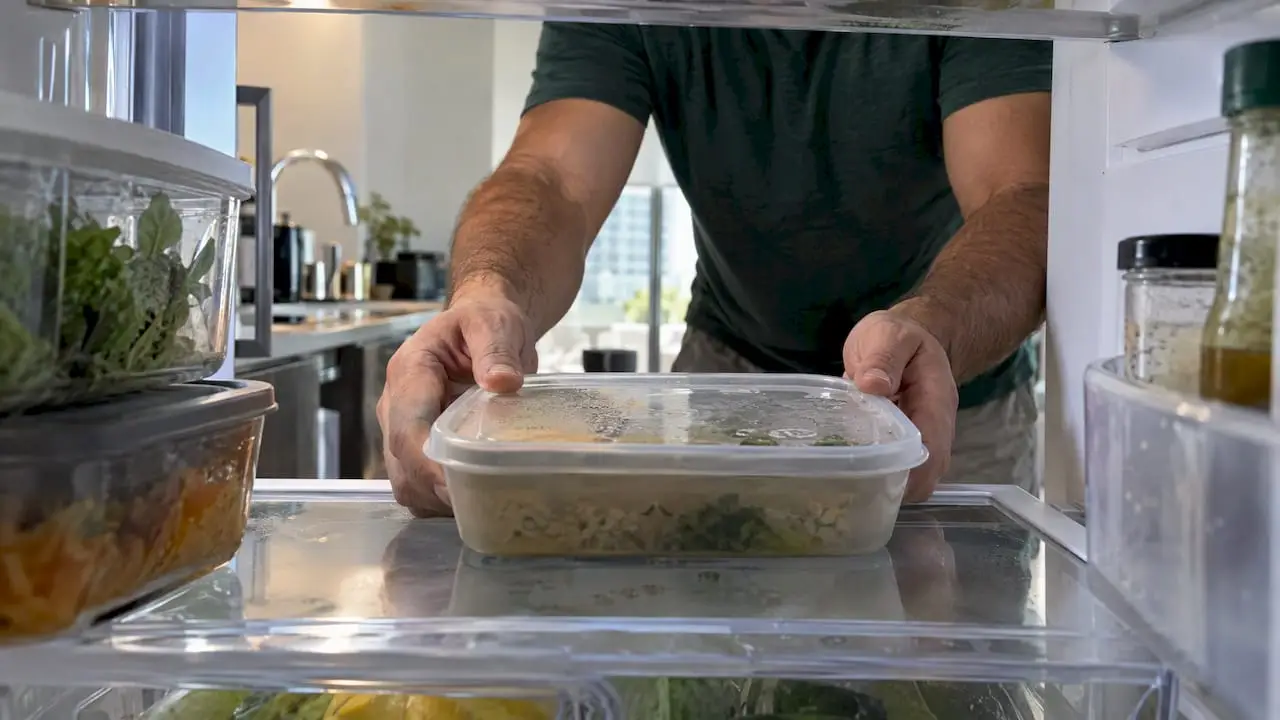
A container that arrives above 40°F or a hot dish below 140°F has already spent time in the danger zone, according to FSIS guidance on take-out food handling, which is exactly the scenario a reliable provider’s packaging is designed to prevent.
On arrival, check these points:
- The box should feel cold, with gel packs or ice still solid, per Foodsafety.
- Frozen items should show visible ice crystals or feel solid, not just cool.
- A food thermometer is the only reliable way to confirm a meal is below 40°F or, for hot delivery, above 140°F.
- Refrigerate promptly and plan to eat refrigerated leftovers within a few days, or freeze for longer storage.
Reheat any meat or poultry dish to a high enough internal temperature to ensure safety. If a delivery arrives warm, without ice packs, or past its stated window, the safest move is to contact the provider and ask about their replacement policy rather than risk the meal.
Choosing a small batch chef service without guesswork
A one-page checklist beats an hour of scrolling reviews. Before you commit, compare providers on the basics that actually affect your experience: how flexible the menu is, how meals are packaged, what delivery windows look like, and how pricing and cancellations work.
| Evaluation criteria | What to ask | Red flag |
|---|---|---|
| Menu flexibility | Can dishes rotate weekly or be swapped for allergies? | Fixed menu with no substitutions |
| Safety and packaging | How are meals insulated and labeled? | No mention of temperature control |
| Delivery windows | What is the lead time for fresh, never-frozen meals? | Same-day promises with no explanation |
| Pricing and cancellation | Is pricing per meal, per plan, or per event? | Vague refund or cancellation terms |
| Dietary accommodations | Can the chef adjust for specific restrictions? | Generic “we can probably do that” answers |
When you inquire, ask directly: “How do you keep meals cold or hot during delivery, and what happens if something arrives at the wrong temperature?” A provider with nothing to say here, or one who can’t describe their own handling instructions, is worth skipping. Favor providers who mention chef oversight of every batch, show photos of actual plated meals, and offer specific safe-handling instructions with each order, points echoed in FoodSafety.gov’s buyer guidance for prepared food delivery.
What I insist on for every small batch menu
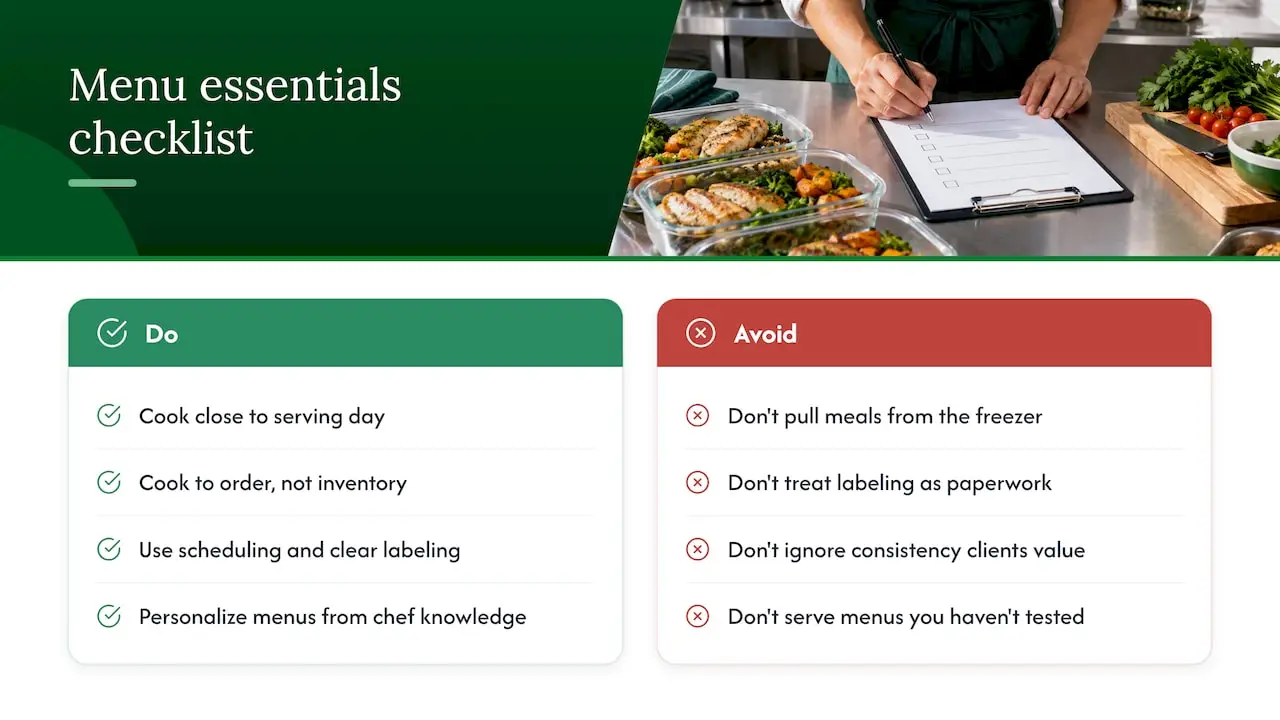
Every meal I send out is cooked close to the day it’s eaten, never pulled from a freezer to fill a gap. That’s the whole point of small-batch work: a kitchen that cooks to order instead of to inventory. Scheduling and clear labeling aren’t paperwork, they’re what keeps a fresh meal safe between my kitchen and your table.
Clients tell me the consistency is what keeps them ordering, whether it’s a weekly plan or a one-time private dinner. I built VJ Cuisine around Haitian-Lebanese flavors because that’s the food I grew up on, and because personalized menus mean more when the chef actually knows what you like.
Book a chef-crafted small batch experience
VJ Cuisine offers meal plans, private dinners, boutique catering, and culinary gifting, all built around fresh, never-frozen, Haitian-Lebanese inspired menus.
To get started, have your dates, headcount, and any dietary restrictions ready, then reach out through Vjcuisine to discuss which service fits your table.
Sources
For temperature charts and storage details, see FSIS and FoodSafety.gov.