A well-portioned meal fills half the plate with vegetables, a quarter with protein and a quarter with a whole grain or starchy vegetable, and for most adults that means roughly 3 to 5 ounces of cooked protein. The exact amount shifts with age, size and activity, which is why a plan built around you works better than a one-size tray. At VJ Cuisine, Chef Virginia designs each menu personally and you talk to her directly about preferences and dietary needs, so portions fit the person eating them.
TL;DR
- A portion is what you actually eat. A serving is the amount printed on a Nutrition Facts label. They are often different.
- Use the plate method: half vegetables and fruit, a quarter protein, a quarter whole grains or starchy vegetables, plus a little healthy fat.
- Plan about 3 to 5 ounces (20 to 35 grams) of protein per meal, and 1 to 2 ounces at a snack.
- Needs vary by age, sex, activity and goals, so scale each person’s plate rather than the whole household’s.
- Chef-designed plans let you set portions around your own needs instead of guessing.
Table of Contents
- Portion vs. serving: the difference that trips people up
- The plate method: portions without a scale
- How many ounces per meal
- Why your numbers differ from the average
- Portion distortion at restaurants and in packaged food
- Scaling meals for a household
- Perspective: portions are a conversation, not a chart
- Chef-crafted portions delivered in Miami
- FAQ
- Sources
Portion vs. serving: the difference that trips people up
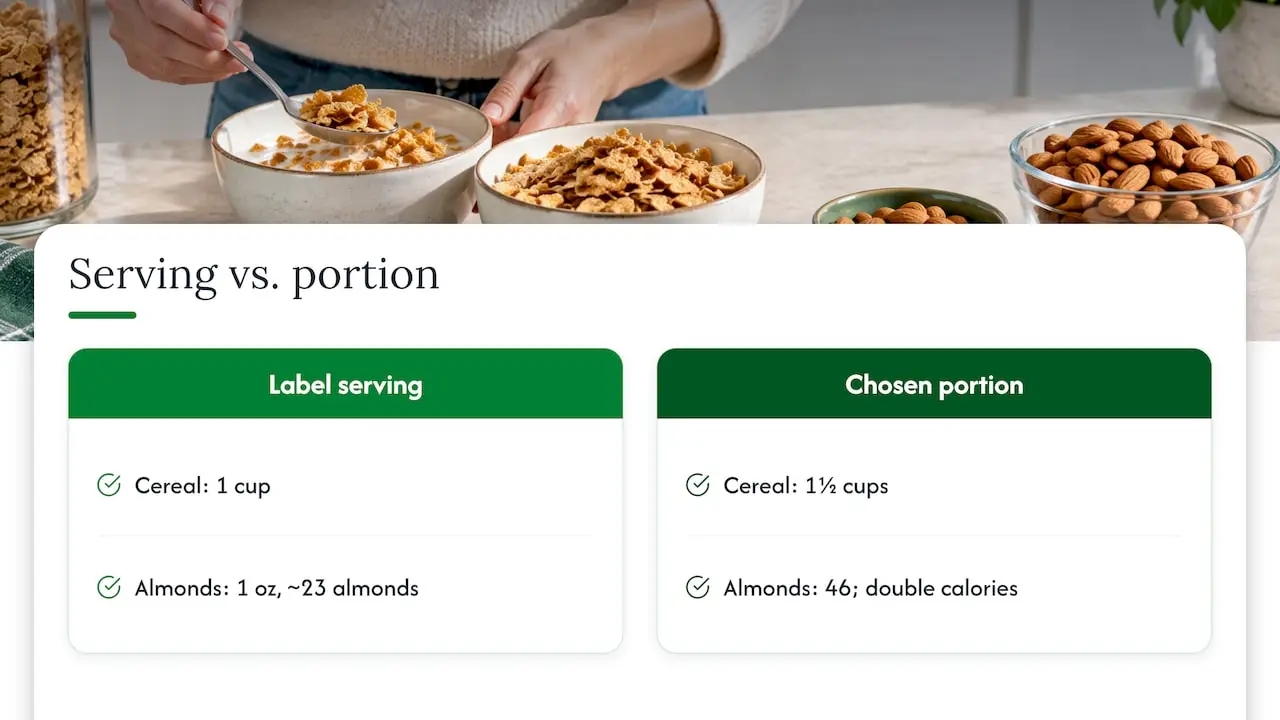
The NIDDK explains that a portion is how much food you choose to eat at one time, while a serving is the amount listed on a product’s Nutrition Facts label. Your portion may or may not match the serving size.
The National Institute on Aging gives a simple case: a cereal label may list a 1 cup serving, but if you pour 1½ cups, your portion is bigger than the serving. Serving sizes are standard amounts for comparing foods, not recommendations of how much to eat.
The American Heart Association adds that a portion is fully under your control, and a single portion can contain several servings. Cleveland Clinic offers an example with almonds: a serving is 1 ounce, about 23 almonds and around 160 calories, so 46 almonds doubles the calories.
When you plan meals, you are choosing portions. Labels are a reference point, not the target.
The plate method: portions without a scale
The easiest way to portion a meal is by proportion. Boston Children’s Hospital describes it like this:
- About half the plate: non-starchy vegetables or fruit
- A quarter: protein
- A quarter: beans, a starchy vegetable or a whole grain
- A drizzle, sprinkle or dollop of healthy fat
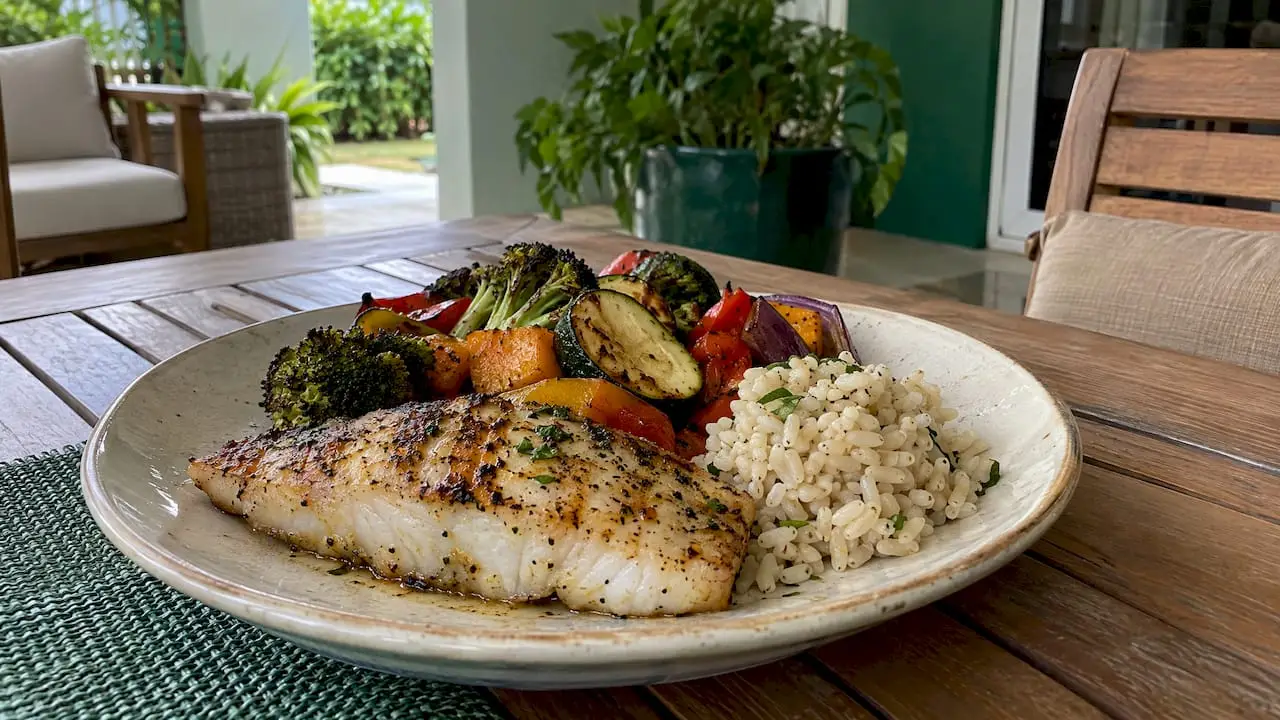
Their dinner example is salad greens and fruit, grilled chicken breast, sweet potato and a light dressing. The American Heart Association’s plate method uses a small plate and the same split, with healthy carbohydrates such as sweet potato, brown rice, whole-wheat couscous or whole-grain pasta, and lean protein such as beans, tofu, non-fried fish or skinless chicken.
This works at home and in any cuisine. A Haitian-Lebanese plate, for instance, can be grilled fish or chicken, a generous portion of roasted or fresh vegetables, and a scoop of rice or a grain, with the sauces and seasoning doing the flavor work.
How many ounces per meal
Here is the practical range for an adult meal, built from the sources above.
Protein
The VA’s plant-based cooking guide gives a rule of thumb of 20 to 35 grams of protein per meal (3 to 5 ounces of protein food, at about 7 grams per ounce) and 7 to 15 grams at a snack. The Administration for Community Living uses 25 to 30 grams per meal as its rule of thumb for senior meal programs.
The American Cancer Society notes that 3 ounces of meat, poultry or fish, about the size of a deck of cards, is often recommended for a meal. NDSU Extension gives a checkbook as the visual for 3 ounces of fish.
Common protein equivalents from the American Heart Association:
| 1 ounce of protein equals | Amount |
|---|---|
| Cooked seafood, meat or poultry | 1 ounce |
| Eggs | 1 egg or 2 egg whites |
| Cooked beans | 1/4 cup |
| Tofu | 1/4 cup (2 ounces) |
| Nuts | 1/2 ounce |
| Peanut butter | 1 tablespoon |
So a 4-ounce piece of cooked chicken, fish or beef sits comfortably in the range for most adults. If you eat mostly plant proteins, the volumes are larger: 3 ounces of soy protein such as tofu or tempeh, or 1/2 cup of cooked beans or lentils, per NDSU.
Grains and starches
For a 2,000-calorie day, the American Heart Association suggests 3 to 6 ounces of grains daily, with at least half as whole grains. Spread across three meals, that is a modest scoop at each, in line with the quarter-plate guidance.
Vegetables
Vegetables take the biggest share of the plate. Because they are the one part most people undereat, do not measure them tightly. Fill half the plate and add more if you are still hungry.
Why your numbers differ from the average
The American Cancer Society says the right portion varies by age, height, weight, activity level and weight goals. NDSU Extension says the same and advises planning around each family member’s calorie level.
That has real consequences at the table:
- A marathon trainer and a desk-bound parent should not get the same protein portion. Our guide to athlete meal plans with weight-adjusted macros shows how portions change with body weight.
- Teenagers, older adults and kids all need different amounts of the same dinner.
- Protein needs can vary from person to person and shift over time, as the VA guide notes.
For adults whose appetite or protein targets are changing, this overview of protein per meal covers the 25 to 30 gram figure in more detail.
Portion distortion at restaurants and in packaged food
The American Heart Association warns of “portion distortion”: the suggested serving is often less than what you are typically served, especially at restaurants, where portions of food prepared outside the home have grown over the years. The National Institute on Aging suggests ordering a smaller appetizer instead of an entrée, sharing, or eating half and saving the rest for the next day.
Packaged food has its own trap. The NIDDK notes the FDA updated some serving sizes so labels better match what people actually eat, for example ice cream moved from 1/2 cup to 2/3 cup and yogurt from 8 ounces to 6 ounces. Always check how many servings a package holds before you decide how much to put on the plate.
If you compare store-bought options by cost, a price-per-serving formula helps you see what each serving really costs.
Scaling meals for a household
The USDA’s MyPlate family meals handout recommends cooking one meal the whole family enjoys rather than separate meals, for example setting aside plain vegetables, meat or rice for a picky eater before adding other ingredients.
A workable routine for a family of four:
- Cook the same protein and sides for everyone.
- Plate by person: adults get the 3 to 5 ounce protein range, younger children less, an active teen more.
- Keep vegetables unlimited and go lighter on the starch for anyone who is not very active.
- Plan leftovers on purpose by cooking one extra portion for lunch.
For parties and events, the math changes again. Our catering portions per person guide walks through it. If dinner prep is the bottleneck, these 30 minute high-protein family dinners keep portions simple.
Perspective: portions are a conversation, not a chart
We cook small batches, never frozen, and we do it for specific people. A chart can tell you that 4 ounces of protein suits an average adult, but it cannot tell us that you train at six in the morning, that your husband skips breakfast, or that your daughter will only eat the rice if the sauce is on the side.
That is why our clients speak to the chef directly. When the person designing the menu knows your preferences and dietary needs, portions stop being a guess. You get the right amount of fish, vegetables and grain on the plate, seasoned the way you actually like to eat.
The best portion is the one that leaves you satisfied, nourished and not thinking about food again until the next meal.
Virginia Jiha
Chef-crafted portions delivered in Miami
If you would rather not weigh chicken on a Tuesday night, our meal plans in Miami bring fresh, small-batch, never-frozen meals to your door, designed around your preferences and dietary needs. For a dinner party or event, our catering service applies the same attention to how much each guest needs.
FAQ
How many ounces of food should one meal be?
There is no single number, but most adults do well with 3 to 5 ounces of cooked protein, a quarter plate of whole grains or starchy vegetables, and half a plate of vegetables. Your age, size, activity and goals move that range up or down.
What is the difference between a portion and a serving?
A serving is the standard amount on a food’s Nutrition Facts label. A portion is what you actually put on your plate. One portion can contain more than one serving.
How do I portion meals without measuring?
Use the plate method: half vegetables and fruit, a quarter protein, a quarter grains or starchy vegetables. A deck of cards is a handy visual for 3 ounces of meat or poultry, and a checkbook for 3 ounces of fish.
How much protein should I eat per meal?
The VA suggests a rule of thumb of 20 to 35 grams per meal, which is about 3 to 5 ounces of a protein food. Your own needs depend on your calorie needs and health considerations, so talk to your doctor or a registered dietitian if you have a medical condition.
Sources
- Food Portions: Choosing Just Enough for You, NIDDK
- How Much Should I Eat? Quantity and Quality, National Institute on Aging
- Portion Size Versus Serving Size, American Heart Association
- Portion Sizes: How Much Are You Really Eating?, Cleveland Clinic
- Balanced Meals, Boston Children’s fit kit
- Diabetes and Your Diet, American Heart Association
- Practical Plant-Based Cooking, U.S. Department of Veterans Affairs
- Dietary Guidelines for Americans Protein Tip Sheet, Administration for Community Living
- Understanding Portion Sizes, American Cancer Society
- Now You’re Cookin’, NDSU Extension
- Suggested Servings From Each Food Group, American Heart Association
- Price per serving formula
- Protein per meal