

Aim for 20 to 50 grams of net carbs a day, keep protein moderate, and lean on batch-cooked dinners you can repeat with small tweaks. That range comes from the Harvard T.H. Chan School of Public Health’s Nutrition Source, which uses it as the standard threshold for reaching and holding ketosis. Below you’ll find two ready-to-use weekly plans, a grocery list, quick recipes, a prep schedule, and the safety notes worth reading before you start.
Key Takeaways:
- Most people will stay within the 20 to 50 grams of net carbs per day by focusing on nonstarchy vegetables and simple sauces, with optional snacks like olives or nuts.
- Batch-cooking proteins and vegetables allows for quick meal assembly, with cooked foods lasting up to four days in the refrigerator to simplify weeknight dinners.
- Emphasize heart-healthy fats such as olive oil, avocado, and fatty fish while limiting saturated fats from butter and red meats to protect cardiovascular health.
- Using a consistent meal structure, like eggs for breakfast and mixed proteins for dinner, reduces boredom and prevents diet fatigue, improving adherence.
- People taking SGLT2 inhibitors or managing serious health conditions should consult a healthcare professional before starting a ketogenic diet.
|
Make Keto Meals Easier
VJ Cuisine creates fresh, small-batch meal plans with personalized service and options for specific dietary needs, delivered to Miami homes. Explore VJ Cuisine |
Two sample weekly plans you can use tonight
The easiest way to start a ketogenic meal plan is to pick a structure and repeat it with small variations, rather than reinventing dinner every night. Here’s a 7-day plan built around that logic.
- Breakfast, every day: eggs in some form (scrambled with spinach, a baked egg muffin, or an omelet with cheese and peppers), which keeps net carbs near zero and protein steady.
- Lunch, most days: a big salad topped with leftover dinner protein, olive oil and vinegar, and a handful of nuts or seeds.
- Dinner, rotating: grilled salmon with asparagus, sheet-pan chicken thighs with broccoli, ground beef lettuce wraps, baked cod with zucchini, pork chops with green beans, shrimp stir-fry with cauliflower rice, and a rotisserie chicken night using store-bought bird plus a side salad.
- Snack, optional: a small handful of macadamia nuts or a few olives if you’re hungry between meals.
If you’d rather cook less often, try a 5-night one-pan dinner plan instead with simple roasted or baked proteins and vegetables you can repurpose over consecutive meals. Batch-cook a double portion of whatever protein you’re making so lunch is already handled.
Most days on either plan land comfortably within the 20 to 50 gram net-carb range as long as vegetables stay nonstarchy (leafy greens, broccoli, zucchini, peppers) and sauces stay simple. If a day runs high, swap a starchy side for an extra serving of greens or skip the nuts at snack time.
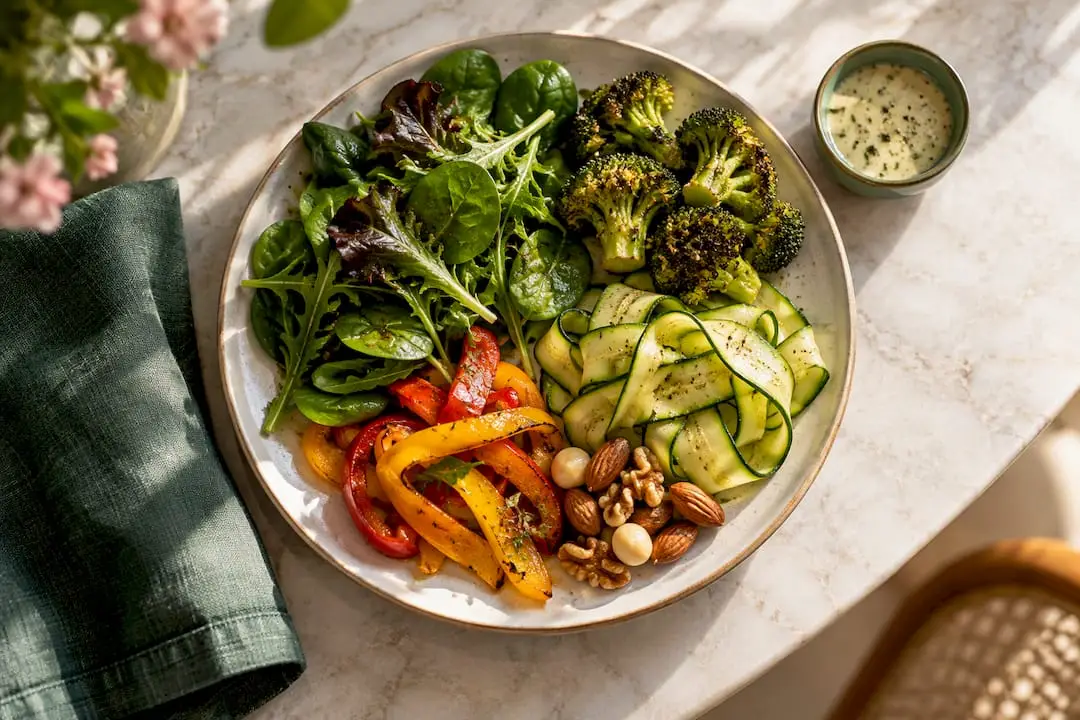
Your one-week keto grocery list, organized by aisle
A little organization at the store saves real time during the week. Group your list by category before you shop:
- Produce: spinach, broccoli, zucchini, bell peppers, asparagus, cauliflower, mixed greens, avocados.
- Proteins: eggs, chicken thighs, salmon, cod, shrimp, ground beef, ground turkey, sausage.
- Dairy and fats: cheese, butter, heavy cream, olive oil, avocado oil.
- Pantry and condiments: nuts (almonds, macadamias), olives, mustard, vinegar, low-sugar hot sauce.
- Snacks: olives, pork rinds, string cheese, nut packs.
For two people, roughly double the protein and vegetable quantities above; for four, triple them and buy proteins in bulk trays to save per-pound cost. Frozen vegetables and canned fish like sardines or salmon hold their nutrition well and cost less than fresh, and buying nuts in bulk bags instead of snack packs cuts the price noticeably over a month. Favor olive oil and avocado oil over heavily processed “keto” snack products, which often carry more sodium and additives than a plain handful of nuts.
Pro Tip: Buy a rotisserie chicken on your shopping day. It covers one dinner, two lunches, and saves you a full cooking session.

Quick recipes and a build-a-plate rule for busy nights
You don’t need a recipe box full of specialty dishes. Three simple frameworks cover most weeknights.
- Egg muffin cups: whisk eggs with chopped spinach, cheese, and cooked bacon or sausage, then bake in a muffin tin for 18 minutes. Roughly 1 to 2 grams of net carbs per cup, and they reheat in under a minute.
- Cauliflower fried rice: sauté riced cauliflower with scrambled egg, soy sauce, and whatever protein you have on hand. Around 4 to 5 grams of net carbs per serving, and it’s a fast way to use up leftover chicken or shrimp.
- Sheet-pan chicken: toss chicken thighs with olive oil, garlic, and a low-carb seasoning blend, surround with broccoli or green beans, and roast at 425°F for 30 minutes. Close to 5 to 7 grams of net carbs per serving depending on vegetable choice.
For everyday swaps that lean heart-healthier, trade butter for olive oil in dressings and pan sauces, and swap bacon for smoked salmon or avocado when you want richness without as much saturated fat. When in doubt, build your plate with one portion of protein, a generous pile of nonstarchy vegetables, and a fat source like olive oil, avocado, or a handful of nuts. Snacks that stay under about 5 grams of net carbs include olives, celery with cream cheese, and a small serving of macadamia nuts.
A 90-minute prep session that covers your whole week
Set aside 90 to 120 minutes on one day and you can prep most of what the week needs.
- Roast two trays of vegetables first since they take the longest and hold well in the fridge.
- Cook your proteins next: grill or bake chicken, salmon, and ground meat in batches while the oven is already hot.
- Portion everything into containers by component, protein separate from vegetables, so you can mix and match instead of eating the same combination four nights running.
- Cooked proteins and vegetables keep well in the refrigerator for about four days; reheat gently in a skillet or microwave until heated through to avoid drying out fish or eggs.
Leftover roasted chicken becomes tomorrow’s salad topping, the next day’s lettuce wrap filling, and a quick soup base by the end of the week.
Pro Tip: Cook double the protein you think you need. Extra chicken or salmon turns into tomorrow’s lunch with zero extra effort.
Staying safe and heart-healthy while you transition
The 20 to 50 gram net-carb target is the standard range used to reach and maintain ketosis, but how you fill your fat calories matters for heart health. The American Heart Association’s guidance on saturated fat recommends limiting saturated fat because it raises LDL cholesterol, so favor olive oil, avocado, nuts, and fatty fish over butter and fatty cuts of red meat where you can. Many people experience “keto flu” during the first week, fatigue, headache, and nausea, and clinical recommendations for ketogenic diet therapy point to hydration, electrolyte attention, and a gradual carbohydrate reduction as the main ways to ease the transition.
People using SGLT2 inhibitors face a documented risk of euglycemic diabetic ketoacidosis when starting very-low-carbohydrate diets, and should coordinate with their prescribing clinician before beginning a ketogenic plan.
Clinical review, PMC
Anyone managing diabetes or another serious condition should loop in a clinician before making this kind of dietary shift.
What I’ve learned designing keto menus for real clients
Practical keto planning is less about restriction and more about rhythm: the same reliable proteins, rotating vegetables, and fats that actually taste good. Clients rarely fall off a plan because of carbs. They fall off because dinner gets boring or takes too long on a Tuesday. A menu built for flavor and repeatable structure solves both problems at once, which is the core of how I approach chef-crafted meal plans for keto clients.
When you’d rather have someone else cook it
If building and shopping for your own keto week isn’t how you want to spend your evenings, VJ Cuisine designs chef-crafted weekly meal plans built around your macros, allergies, and taste preferences, prepared fresh in small batches and never frozen. Chef Virginia works directly with clients to keep menus varied and appropriately portioned, whether that means heavier on seafood, dairy-free, or nut-free.
Meals arrive ready to eat, which means no shopping list, no Sunday prep session, and no guessing whether a dish fits your carb target. Visit the meal plans page to see current menu options and get started.
Sources
- Harvard T.H. Chan School of Public Health: The Nutrition Source: Ketogenic Diet
- Saturated fats: PubMed / American Heart Association materials
- International Recommendations for the Management of Adults Treated With Ketogenic Diet Therapies: PMC
This article is general information, not a substitute for advice from a qualified doctor. Consult a qualified healthcare professional about your own circumstances before acting on anything here.