
Chef-crafted family meal plans are fresh, ready-to-heat meals that a private chef designs and prepares around your household’s tastes, allergies, and schedule. They suit busy families and professionals who want real meals without the planning, shopping, or cleanup. If you are weighing the option, the most useful next step is booking a consultation or tasting so you can see the menu, ask questions, and confirm the fit before committing.
Key Takeaways:
- Most chef-crafted family meal plans are priced per week or per event, including groceries, prep, packaging, and cleanup, with no hidden fees.
- Meals are prepared fresh, never frozen, and should be stored in shallow containers in the fridge, then reheated to 165°F with clear instructions provided.
- A consultation is essential to customize menus for allergies, dislikes, and health goals, with questions about credentials and insurance to ensure safety.
- Families should allocate enough fridge space for multiple meals and plan for schedule changes or picky eaters by maintaining ongoing communication with the chef.
- Seasonal menu rotation and diverse cooking techniques prevent repetition, while involving children in planning can improve meal acceptance and adherence.
|
Make Family Dinners Easier
VJ Cuisine delivers fresh, small-batch meal plans tailored to your family’s tastes, dietary needs, and busy schedule. Explore VJ Cuisine |
What you get from a chef-crafted family meal plan
A chef-crafted plan is not a box of ingredients waiting to be cooked. It is finished food, often made in small batches and never frozen, delivered ready to warm and serve. That distinction matters because it removes the three steps families dread most: deciding what to eat, shopping for it, and cleaning up afterward.
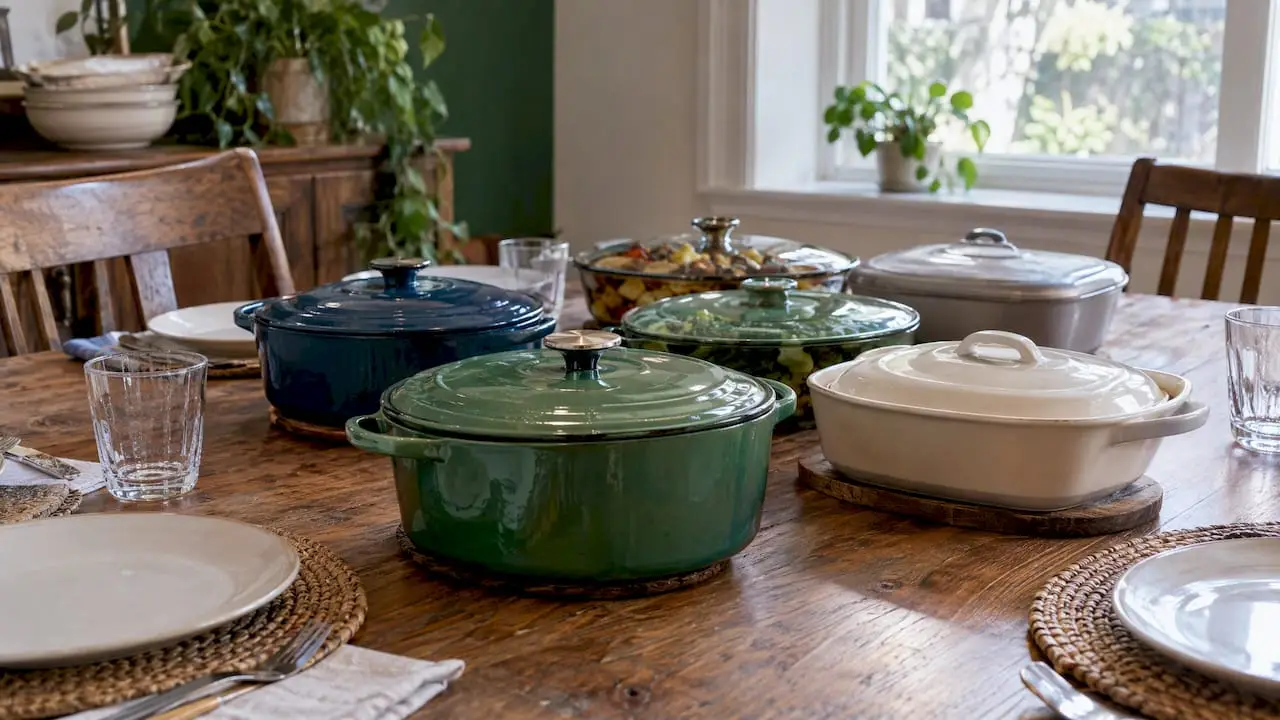
Customization sits at the center of the model. The American Personal & Private Chef Association defines personal and private chef services by a high degree of menu personalization, where the chef builds meals around a household’s allergies, tastes, and health goals instead of offering one fixed rotation. That means a parent managing a child’s nut allergy and a professional watching sodium can be served from the same kitchen, on the same week, with menus built specifically for each.
What is typically included:
- Menu planning based on an intake conversation about preferences and restrictions
- Grocery shopping and ingredient sourcing
- On-site or licensed-kitchen preparation in small batches
- Packaging, portioning, and labeling for each meal
- Written heating and storage instructions for every dish
Pricing usually takes one of three shapes: per serving, per week, or per event. Each generally bundles groceries, prep time, packaging, and cleanup into a single fee, so there are no separate line items to track.
How chef-crafted family meal plans work from booking to table
The process is more structured than it looks from the outside, and knowing the sequence helps you plan around it.
- Consultation and intake. The chef asks about allergies, dislikes, portion needs, and your weekly schedule so the menu reflects your household, not a generic template.
- Menu building. You review proposed dishes, swap out anything that does not fit, and confirm a plan for the week or cycle ahead.
- Preparation day. Depending on the service, the chef cooks in your kitchen or in a licensed commercial kitchen, then transports meals to you in small batches.
- Packaging and labeling. Each meal is portioned into containers marked with contents, preparation date, and reheating instructions.
- Delivery or pickup. Meals arrive chilled and ready for the refrigerator or freezer, timed to your week’s schedule.
Most families settle into a weekly or biweekly rhythm. Special events, like a dinner party or a holiday gathering, usually need more lead time, often a week or two, so the chef can source specialty ingredients and plan a larger batch.
Before your first delivery, clear refrigerator space and think through portion sizes. A family of four eating five dinners a week needs more shelf space than most people expect, and shallow containers stack better than deep ones.
Pro Tip: Ask your chef for a suggested container layout so your fridge stays organized and nothing gets pushed to the back and forgotten.
Choosing a private chef: questions to ask and warning signs
Not every chef service operates the same way, and a short conversation up front can save you a disappointing month.
Ask directly about credentials. Membership in the American Personal & Private Chef Association or the United States Personal Chef Association is not universal among chefs, but it signals a commitment to ongoing training and professional standards. USPCA certification specifically requires a minimum of two years of personal-chef experience along with demonstrated knowledge of food safety, sanitation, and nutrition.
Questions worth asking before you sign anything:
- Are you certified or a member of APPCA or USPCA, and do you carry food-handler or food-manager certification?
- Do you carry liability insurance, and can you share references from current clients?
- How flexible is the menu for allergies, picky eaters, or specific health goals?
- What are your cancellation terms, order minimums, and delivery windows?
- Will I receive written reheating and storage instructions with every meal?
Red flags include vague or evasive answers about insurance, no willingness to share references, and no written food-safety process. A chef who cannot describe how meals are stored or reheated safely is one to avoid, regardless of how good the sample tasting was.
Food safety rules your chef should already be following
Prepared meals are only as good as the safety practices behind them, and this is one area where you should expect clear answers, not vague reassurance.
Hot food should be held at 140°F or warmer, cold food at 40°F or colder, and perishable food refrigerated within two hours, or within one hour if the temperature is above 90°F, according to USDA/FSIS guidance on keeping food safe. These thresholds exist because bacteria multiply fastest in the range between those two numbers, often called the danger zone.
Storage and reheating practices to insist on:
- Store meals in small, shallow, airtight containers labeled with the preparation date.
- Most prepared leftovers are safe in the refrigerator for a few days when stored properly, according to food-safety storage and reheating guidance.
- Reheat to an internal temperature of 165°F, confirmed with a food thermometer rather than a guess.
- Stir microwaved food partway through, then let it stand for two minutes before checking the temperature, since microwaves can leave cold spots.
- Avoid stacking hot containers directly in the refrigerator; let food cool briefly with lids vented before sealing and chilling large batches.
A reputable chef provides written storage and reheating instructions with every delivery. If that is missing, ask for it before your next order.
Building a balanced weekly menu with real variety
A good chef-crafted plan should not feel repetitive by Thursday. Balance starts with protein, vegetables, and whole grains represented across the week, but variety is what keeps a family actually eating the plan instead of defaulting to takeout.
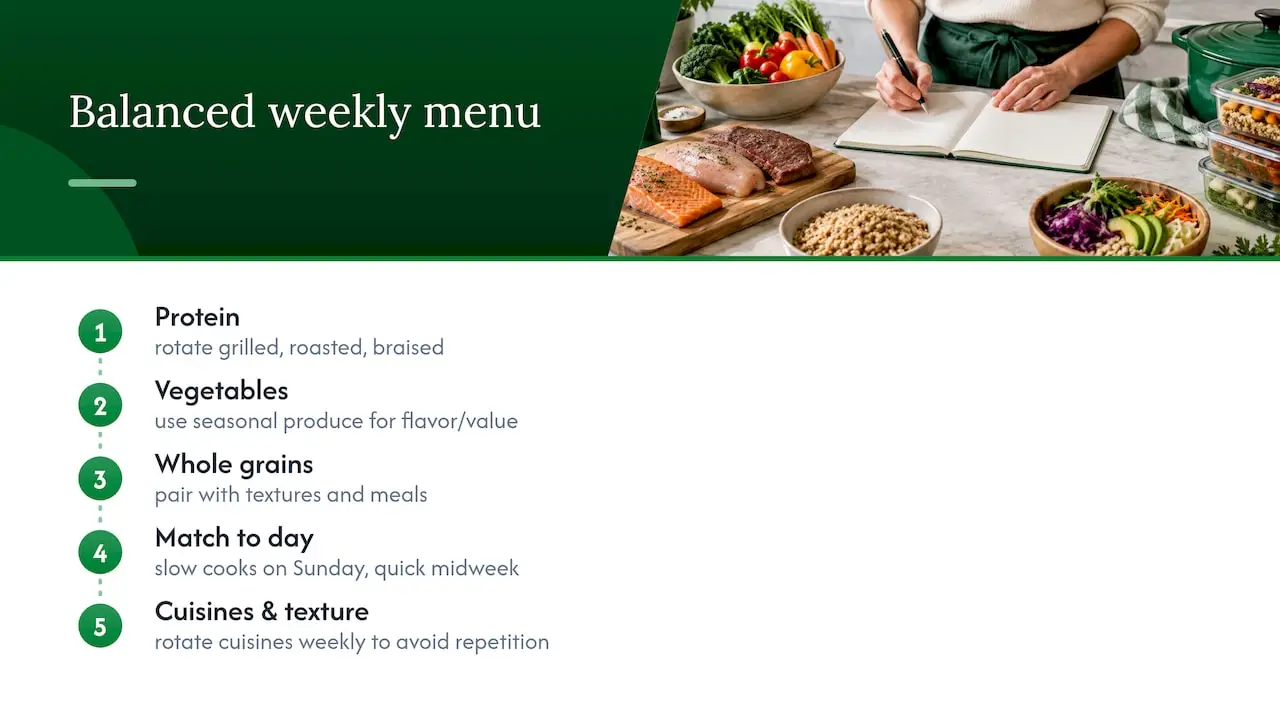
Seasonality plays a bigger role than most people realize. A Miami household eating mango and stone fruit in summer and root vegetables in cooler months gets fresher flavor and often better value, since in-season produce tends to be at its peak quality. A chef who rotates menus with the seasons is also rotating cooking techniques, from grilled proteins in warmer months to braises and roasts when temperatures drop.
Balance also means accounting for how a week actually unfolds. A heavier, slow-cooked dish makes sense for a Sunday when there is time to enjoy it, while quicker, lighter meals fit better on a Tuesday after a long workday. A well-built plan pairs the dish to the day, not just to a nutrition checklist.
Texture and cuisine variety matter too. Rotating between grilled, roasted, and braised preparations, and drawing from different culinary traditions week to week, keeps the same core ingredients, like chicken or rice, from feeling repetitive. This is where a chef’s personal culinary background can make a real difference in how varied a plan feels over a month rather than just a week.
Getting kids and the rest of the family involved
Even with a chef handling the cooking, family buy-in affects how well a meal plan actually gets used. Kids who feel some ownership over what shows up on the table are more likely to eat it without a fight.
Simple ways to build that involvement:
- Let children pick one dish or ingredient to include in the week’s menu during the planning conversation.
- Ask older kids or a partner to taste-test new dishes before they go into regular rotation.
- Involve the family in deciding plating or presentation touches for a weekend meal.
- Use the consultation stage to flag foods a child refuses to eat so the chef can work around them instead of guessing.
A chef who takes intake seriously will treat a child’s preferences with the same weight as an adult’s dietary restriction. That collaboration, rather than a rigid preset menu, is often what makes a plan stick past the first few weeks.
Common obstacles families run into and how to handle them
Even a well-designed meal plan runs into friction. Knowing the usual sticking points ahead of time makes them easier to manage.
Storage space is the most frequent complaint. Families underestimate how much refrigerator room five or six meals actually need, especially during a first delivery. Clearing a dedicated shelf before the first order arrives solves most of this.
Schedule changes are another common issue. A canceled dinner plan or an unexpected late night can leave a meal sitting longer than intended. Confirming your chef’s policy on skipped deliveries or schedule adjustments during the consultation avoids surprises later.
Picky eaters or shifting preferences can also derail a plan if the menu is not revisited. A quick check-in every few weeks, rather than locking in a static rotation, keeps the plan aligned with what the family actually wants to eat.
Finally, some households struggle with reheating multiple meals correctly on a busy night. Clear, written instructions from the chef, specific to each dish, remove the guesswork and keep food both safe and tasting the way it was meant to.
How VJ Cuisine designs family meal plans
VJ Cuisine is a Miami-based private chef service built around chef-crafted, fresh, small-batch meals rooted in a Haitian-Lebanese culinary heritage. The approach centers on personalized meal plans, boutique catering, and private dining, each built around specific dietary needs rather than a fixed menu. Meals are prepared in small batches and delivered directly to a client’s home, which simplifies healthy eating without requiring any prep work on the family’s end.
Booking typically starts with a consultation, moves into a menu sampling, and ends with written storage and reheating instructions delivered alongside the first batch of meals, often followed by a plan adjustment as needed.
Start here: booking a consultation or viewing meal plan options
VJ Cuisine builds every menu around a conversation first, so the meals that arrive reflect your family’s actual preferences and restrictions, not a generic rotation. Meals are prepared fresh in small batches, never frozen, which means the dish you taste at a sampling is the same quality you get delivered on a Tuesday night.
If you are ready to move forward:
- Schedule a consultation to discuss your household’s tastes, allergies, and schedule.
- Ask about catering or private dinners if you are planning an event rather than a weekly plan.
Dietary needs, from allergies to specific health goals, are part of the intake conversation from the start, so there is no need to choose between convenience and eating the way your family actually needs to.