Homemade baklava comes down to three things: keeping the phyllo pliable, using a light hand with butter, and pouring cooled syrup over a hot pastry. Get those right and you have a tray of flaky, honeyed diamonds. This guide walks through the full routine, from ingredients to storage, and explains where each step tends to go wrong. It also covers how to fit baklava into a dinner you are hosting, which is where we come in at VJ Cuisine: our menus are rooted in Haitian-Lebanese heritage, and we are happy to talk through dessert as part of a private dinner, a catered event or a gift.
TL;DR
- Plan on a long timeline: America’s Test Kitchen lists 2½ hours of work, plus 3 hours of cooling and 8 hours of standing, so bake a day ahead.
- Thaw frozen phyllo in the refrigerator overnight, keep it under a damp towel, and brush butter lightly rather than drenching each sheet.
- Cut the baklava all the way through before baking, then pour cooled syrup over it the moment it leaves the oven.
- Let it rest at least 8 hours. Flavor and texture improve, and it keeps well at room temperature for several days.
- For a dinner party or a gift, you can hand the whole dessert course to a chef instead.
Table of Contents
- What baklava is, and why it feels like a project
- Ingredients and equipment
- Step 1: Thaw and handle the phyllo
- Step 2: Make the nut filling
- Step 3: Clarify the butter and make the syrup
- Step 4: Layer, fill and cut
- Step 5: Bake until deeply golden
- Step 6: Syrup, cooling and resting
- Timeline for a dinner at home
- Storing leftovers
- Variations that are easy to pull off
- Our perspective
- Let us handle the dinner
- FAQ
- Sources
What baklava is, and why it feels like a project
Baklava is a pastry of many thin phyllo sheets layered with chopped nuts and butter, cut into diamonds or squares, baked until golden and soaked in a honey or sugar syrup. Phyllo is the paper-thin dough sold frozen in most U.S. supermarkets. The pastry is common across the Eastern Mediterranean and the Middle East, and each region adjusts the nuts, the spices and the syrup.
If you have wondered why bakery baklava is priced the way it is, the recipe answers it. A single 13-by-9-inch pan uses 1½ cups of clarified butter, a pound of phyllo and 12 ounces of nuts, then needs hours of rest before it is ready to serve. The cost is mostly ingredients and time.
None of it is technically difficult. It is a patient assembly job, and it rewards organization.
Ingredients and equipment
The classic America’s Test Kitchen recipe, which yields 32 to 40 pieces, calls for the following.
Syrup
- 1¼ cups sugar
- ¾ cup water
- ⅓ cup honey
- 1 tablespoon lemon juice and some lemon zest
- 1 cinnamon stick, 5 cloves and a pinch of salt
Filling
- 8 ounces slivered almonds and 4 ounces walnuts
- Cinnamon, cloves, 2 tablespoons sugar and salt
Pastry
- 1½ cups clarified unsalted butter (3 sticks)
- 1 pound frozen phyllo
Equipment: a 13-by-9-inch straight-sided metal baking pan (the same source says a glass dish also works), a food processor, a pastry brush and a serrated knife.
Other respected recipes vary the proportions. The New York Times version uses a pound of walnuts, or a mix of walnuts, pistachios and almonds, with a syrup of sugar, honey and lemon peel. Simply Recipes bakes a 9×13-inch pan serving 24 at 350°F. Pick one recipe and follow it through, because the bake temperature, butter amount and syrup ratio are balanced against each other.
Step 1: Thaw and handle the phyllo
Most failed baklava is decided before the first layer goes down. Phyllo dries in minutes and, once dry, cannot be rescued: Tasting Table is blunt that there is no way to save it.
What works:
- Thaw it slowly. America’s Test Kitchen found that an overnight refrigerator thaw followed by a 30-minute rest at room temperature produced the least tearing. The American Society of Baking also says to thaw it completely before taking it out of the package.
- Prepare everything first. The same professional guide advises making the filling before you unroll the dough.
- Keep it covered. Unroll the sheets and cover them with a damp (not dripping) towel, uncovering only to lift a sheet.
- Expect small tears. They disappear between layers. Only the top sheets need to look good, so save your best ones for the surface.
A common mistake is thawing on the counter in a hurry. Sheets that thaw unevenly stick together in clumps and crack when you peel them.
Step 2: Make the nut filling
Pulse the almonds and walnuts in a food processor with the cinnamon, cloves, sugar and salt until finely chopped but not powdery. Powder turns pasty once the syrup hits. Divide the filling into three equal portions, one for each nut layer.
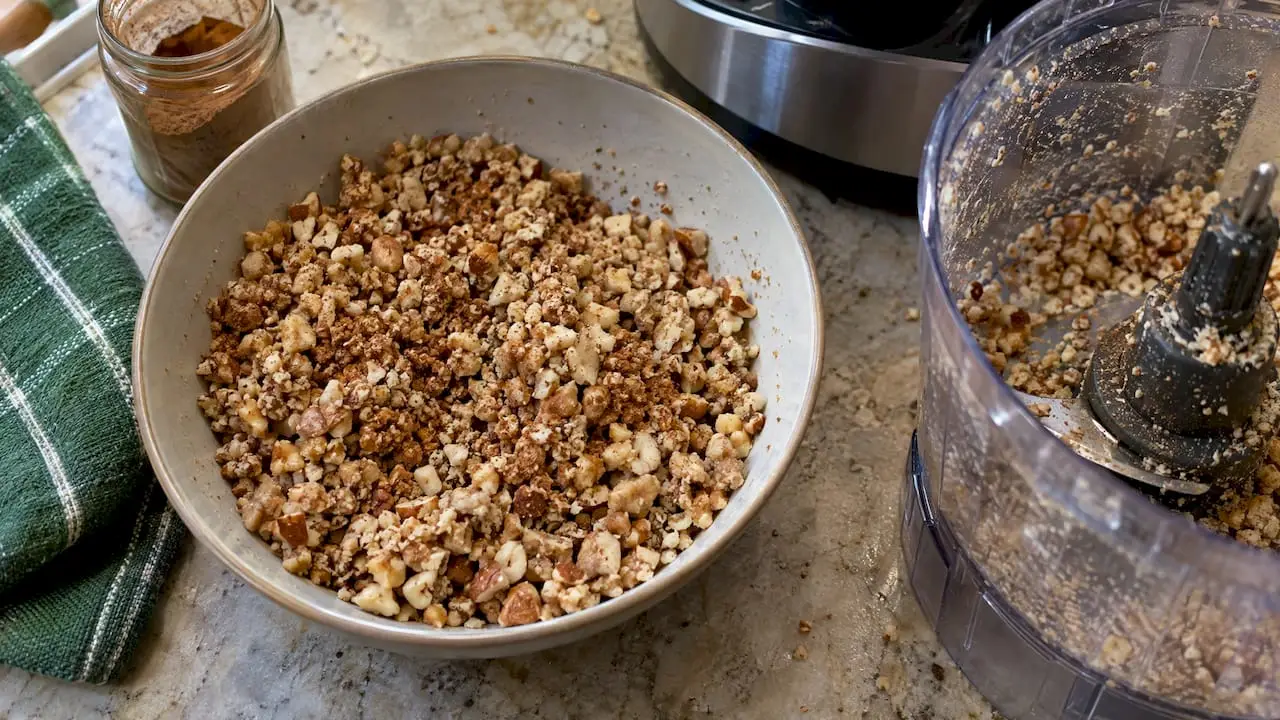
Nuts are the easiest place to personalize. America’s Test Kitchen’s pistachio version uses 12 ounces of shelled raw pistachios with 1 teaspoon of ground cardamom and a tablespoon of rosewater stirred into the cooled syrup. Bake School notes that pistachios can be swapped weight for weight with hazelnuts or cashews, or with ground pumpkin or sunflower seeds for a nut-free version. If you are serving guests with allergies, ask about nuts before you commit to a recipe, and keep seeds and nuts in clearly separate containers.
Step 3: Clarify the butter and make the syrup
Clarified butter is butter with the milk solids removed. America’s Test Kitchen says this produces even browning. Melt the butter gently, skim the foam, and pour off the clear golden fat, leaving the milky residue behind.
For the syrup, combine the sugar, water, honey, lemon juice, zest, cinnamon stick, cloves and salt in a small saucepan and bring it to a full boil over medium-high heat. Set it aside to cool while the baklava bakes, then remove the spices and zest. Lemon juice and honey also help keep the syrup from crystallizing, the same principle used in caramel.
If you like floral notes, rose or orange blossom water is optional, and a little goes a long way.
Step 4: Layer, fill and cut
Here is the America’s Test Kitchen layering plan for a 13-by-9-inch pan, as published in its recipe:
- Butter the pan and lay in 8 phyllo sheets, brushing each lightly.
- Sprinkle over 1 cup of the nut filling.
- Add 6 more sheets, then another cup of nuts.
- Add 6 more sheets, then the last cup of nuts.
- Finish with 8 to 10 sheets, the nicest on top and the final sheet left unbuttered.
- Press down with your palms to push out air pockets, spoon 4 tablespoons of butter over the top, and cut into diamonds with a serrated knife using a gentle sawing motion.
Where it goes wrong: too much butter. Taste of Home warns that too much butter makes the dessert soggy and recommends a delicate brush on each sheet. Gimme Some Oven makes a similar point: sheets moisten one another, so not every sheet needs full coverage.
Where it goes wrong: only scoring the top. America’s Test Kitchen cuts all the way through before baking because this helps the pastry absorb the syrup. The New York Times suggests dipping your fingertips in cold water while cutting so the dough doesn’t drag, and slicing cleanly down to the bottom of the pan.
While you are assembling, it also helps to know there is a simple Pacific Island dessert collection with easier bakes if you want a second sweet on the table that doesn’t need layering.
Step 5: Bake until deeply golden
Bake times differ because recipes balance temperature and thickness differently. Pick the one that matches your recipe:
| Recipe | Temperature | Bake time |
|---|---|---|
| America’s Test Kitchen | 300°F | About 1½ hours, rotating halfway |
| New York Times | 350°F | 35 to 50 minutes, checking from 35 |
| Once Upon a Chef | 350°F | 40 to 45 minutes, until golden and bubbling |
| Silk Road Recipes | 350°F | 50 to 55 minutes |
The doneness cue is the same everywhere: the top should be deep golden and crisp, not pale. Rotate the pan halfway because home ovens have hot spots. A pale baklava will turn chewy once syrup soaks in.
Step 6: Syrup, cooling and resting
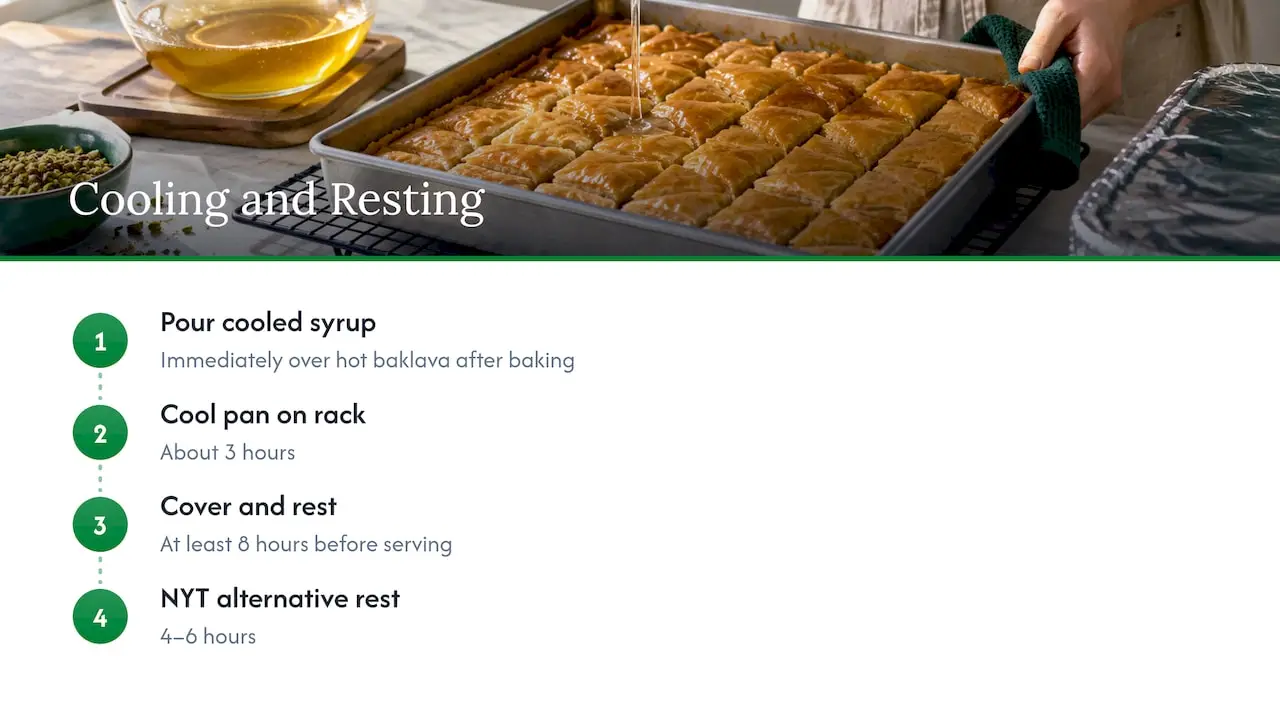
This is the step that separates crisp baklava from soggy. Pour the cooled syrup over the cut lines immediately after the pan leaves the oven. It should sizzle. America’s Test Kitchen pours until about 2 tablespoons remain, then drizzles those over the surface. Gimme Some Oven calls cold syrup over very hot baklava the key to crispness and chills the syrup in a shallow bowl, or for 30 minutes in the freezer, to speed things along.
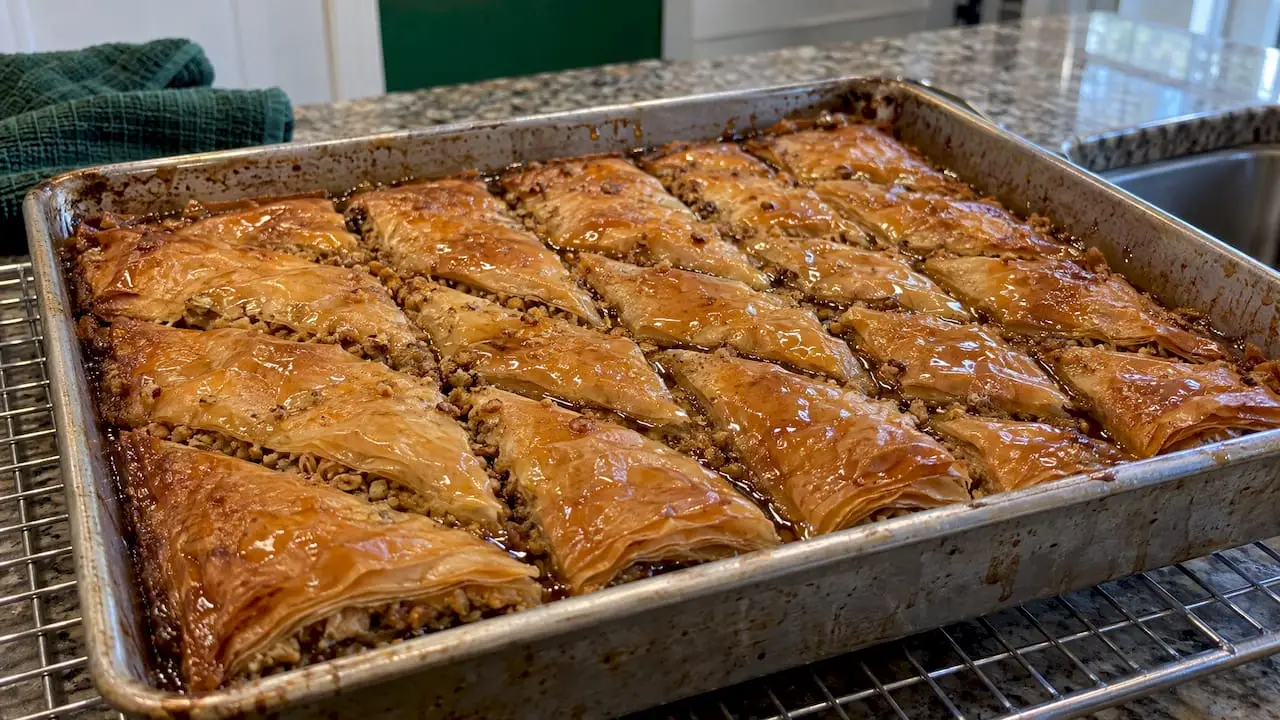
Then leave it alone. America’s Test Kitchen cools the pan on a wire rack for about 3 hours, covers it with foil, and lets it stand at least 8 hours before serving. The New York Times rests its version 4 to 6 hours. Cutting into a warm pan is the most tempting mistake. The syrup has not set and the layers have not firmed up.
Timeline for a dinner at home
Because of the resting time, baklava is a make-ahead dessert by nature. A sensible plan for a dinner on Saturday evening:
- Thursday night: move the phyllo from the freezer to the refrigerator.
- Friday afternoon: make the syrup and filling, assemble, bake and syrup.
- Friday night to Saturday: cool, cover and let it stand.
- Saturday: cut along the lines, plate and serve with strong coffee or tea.
We use the same make-ahead logic in our Mediterranean dinner party plan, and if you want savory dishes to go with dessert, our Lebanese mezze recipes pair well with a syrupy finish.
Storing leftovers
Storage advice differs by source, so use the range from your own recipe:
- America’s Test Kitchen: wrapped tightly in foil at room temperature up to 10 days.
- Gimme Some Oven: lightly covered at room temperature for 8 to 10 days, crispiest in the first 5.
- Once Upon a Chef: 5 days at room temperature, up to 2 weeks refrigerated, or up to 2 months frozen, thawed at room temperature before serving.
The pattern is consistent: keep it covered but not sealed airtight against moisture, and eat the best of it early.
Variations that are easy to pull off
- Pistachio and cardamom: keeps the same bake and rest as the classic, with rosewater added to the cooled syrup.
- Greek-style walnut: walnuts with cinnamon and clove, and a lemon-honey syrup. Silk Road Recipes says pecans or pistachios work as substitutes.
- Nut-free: pumpkin or sunflower seeds, as noted above.
- Ghee instead of butter: some recipes use melted butter or ghee, which suits those who like a nuttier flavor.
Change one element at a time. Syrup, butter and nuts are in balance, and changing all three makes it hard to tell what went wrong.
Our perspective
Dessert is where a dinner is remembered, and it is also where a host runs out of time. Baklava rewards patience, but the hours it needs are the same hours you want to spend with your guests.
At VJ Cuisine, I design and prepare every menu myself, from fresh ingredients, in small batches, never frozen. My Haitian-Lebanese heritage shapes how I think about hospitality: a table should feel generous, and the food should taste like someone cared about it.
When clients plan a private dinner, a catered gathering or a gift, they talk with me directly about preferences and dietary needs. That conversation is where a menu becomes personal, including how a meal should end.
Virginia Jiha
Let us handle the dinner
If you would rather spend the evening with your guests than with a pan of phyllo, we cook for Miami homes and events. Our private dinners bring a chef-prepared meal to your table, our catering covers small events, and our meal plans and gifting deliver fresh, small-batch food across Miami. Tell us about your guests and dietary needs, and Chef Virginia shapes the menu with you.
For a client or colleague, our corporate holiday gifts are chef-made as well.
FAQ
Why is baklava so expensive?
The ingredients and the time both add up. A standard pan uses a pound of phyllo, about 12 ounces of nuts and 3 sticks of clarified butter, and it needs several hours of cooling and standing before serving.
How far ahead can I make baklava?
Bake it at least a day ahead, since it needs time to rest. Depending on the recipe, it keeps from about 5 days to 10 days at room temperature, and is crispest early on.
Can I freeze baklava?
Once Upon a Chef says baklava can be frozen for up to 2 months and thawed at room temperature before serving. Phyllo itself thaws best in the refrigerator for 12 to 24 hours before use.
Why did my baklava turn soggy?
Usually it is too much butter, warm syrup or a short bake. Brush each sheet lightly, bake to a deep golden color, and pour cooled syrup over the hot pastry, as Gimme Some Oven recommends.
Sources
- Baklava, America’s Test Kitchen
- Pistachio Baklava with Cardamom and Rose Water, America’s Test Kitchen
- Working with Phyllo Dough, America’s Test Kitchen
- Phyllo Dough, American Society of Baking
- How To Stop Phyllo Dough From Drying Out, Tasting Table
- Baklava Recipe, New York Times Cooking
- Baklava Recipe, Simply Recipes
- Baklava Recipe: How to Make It, Taste of Home
- Baklava Recipe, Gimme Some Oven
- Best Baklava Recipe, Once Upon a Chef
- Pistachio Baklava Recipe, Bake School
- Easy Greek Baklava Recipe, Silk Road Recipes