
Sumac is a single spice: a tart, deep red powder made from dried berries. Za’atar is a blend, and sumac is one of its ingredients, alongside dried herbs, toasted sesame seeds and salt. So you are not choosing between two versions of the same thing. Sumac gives a dish sourness and color. Za’atar is a ready-made seasoning that adds herbs, nuttiness and tang in one shake.
At VJ Cuisine, our Haitian-Lebanese heritage means both belong in the conversation about everyday cooking. This guide covers what each one is, how they taste, how to use them and what to do when you only have one of them.
TL;DR
- Sumac is one ingredient: ground dried berries from the sumac shrub, crimson, sour and lemony.
- Za’atar is a blend of dried herbs (thyme, oregano or marjoram), sumac, toasted sesame seeds and salt. It is green to olive and tastes herbal, nutty and tangy.
- Use sumac to add brightness and color at the end. Use za’atar as a complete seasoning for bread, eggs, vegetables and chicken.
- They are not a one-to-one swap, but they work well together in the same dish.
- Culinary sumac is not the same as the irritating plants sometimes called poison sumac, so buy it from a food shop and leave foraging to experts.
Table of Contents
- What is sumac?
- What is za’atar?
- Za’atar vs sumac at a glance
- How do they taste different?
- How to use za’atar
- How to use sumac
- Can you substitute one for the other?
- Buying and storing both
- Culinary sumac and poison sumac
- What this means for your table
- Fresh Lebanese-inspired meals, without the shopping
- Our perspective
- FAQ
- Sources
What is sumac?
Sumac is the dried, ground fruit of a sumac tree or shrub in the genus Rhus. The Institute of Culinary Education notes that the genus has about 35 species. The culinary kind most associated with Middle Eastern cooking is Rhus coriaria. Food & Wine explains that its bright red berries are harvested, dried, cured with a little salt and ground into a crimson powder. The name comes from the Arabic summaq, meaning dark red.
The flavor is tart and fruity. It is often compared to lemon, though it tastes rounder and more aromatic. A spice expert quoted by the Institute of Culinary Education compares it to hibiscus, with an iron-like savory note underneath. That savory edge is why it works on food, not just in drinks or desserts.
In Lebanon, Syria, Palestine and Turkey, sumac sits on the table much as salt and pepper do in an American home, according to the same source. It is a finishing spice and a souring agent. It gives acidity without adding liquid.
Sumac in the United States
Sumac is not only a Middle Eastern ingredient. A July 2026 segment from Utah Public Radio describes how Navajo cuisine uses three-leaved sumac as a flavoring. It also notes that Lakota, Cherokee and Navajo cooks make sumacade, a tart drink that resembles pink lemonade.
What is za’atar?
The word za’atar has two meanings. It names a wild, oregano-like herb, also called wild thyme, wild oregano or hyssop in parts of the Middle East. It also names the spice blend made with that herb. Food & Wine’s guide to za’atar says the blend typically includes sesame seeds and ground sumac, and cooks sometimes add salt, coriander, cumin, chili or citrus zest.
The Institute of Culinary Education describes the blend as built on thyme, oregano, marjoram or a mix of the three. It dates the blend to the 12th century, with origins in Palestine. It also says sumac is the one ingredient found in every za’atar worth buying.
That detail matters for the comparison. If you took the sumac out of za’atar, you would lose the tang and the red-brown tone that tie the herbs and sesame together.
A standard za’atar recipe
The Institute of Culinary Education’s za’atar guide gives a simple proportion:
- 1/3 cup dried thyme or oregano
- 1/4 cup ground sumac
- 2 tablespoons toasted sesame seeds
- 1 teaspoon salt
So sumac makes up a significant share of the jar, but it is one of four building blocks. Another recipe, from chef Lior Lev Sercarz in Food & Wine, uses unhulled sesame seeds, which keep the edible husk and add a slightly bitter edge. It says the blend keeps in an airtight glass jar at room temperature for up to one month.
A note on the herb: chef Zachary Engel of Galit in Chicago tells Food & Wine that many domestic producers use thyme, oregano or marjoram instead of the actual za’atar plant. That is why jars from different shops can taste noticeably different.
Za’atar vs sumac at a glance
| Sumac | Za’atar | |
|---|---|---|
| What it is | A single spice | A blend of herbs, sumac, sesame and salt |
| Made from | Dried, ground berries of the sumac shrub | Dried thyme, oregano or marjoram, plus sumac, toasted sesame seeds and salt |
| Color | Deep crimson to purple-red | Green to olive-brown with flecks of red and pale seeds |
| Texture | Fine powder, slightly moist | Coarser and flaky, with whole sesame seeds |
| Flavor | Tart, fruity, lemony, with a savory edge | Herbal, nutty, tangy and salty |
| Best role | Finishing spice and souring agent | Complete seasoning |
| Salt | Usually just a little from curing | Added as part of the blend |
The salt row is worth remembering in practice. Because za’atar is a seasoned blend, a heavy hand can make a dish salty. Sumac on its own will not do that.
How do they taste different?
Sumac tastes of one thing, tartness, with fruit and a hint of earthiness. Sprinkle it on plain popcorn and you get a clean sour note, which Food & Wine suggests as an easy first taste.
Za’atar tastes of several things at once. Chef Engel describes the balance as vegetal, nutty, lemony and zesty because it is not one singular spice: the herbs bring earthy and floral notes, the sumac brings tartness and the sesame brings toasty richness. Each bite changes slightly depending on whether you catch a sesame seed or a bit of herb.
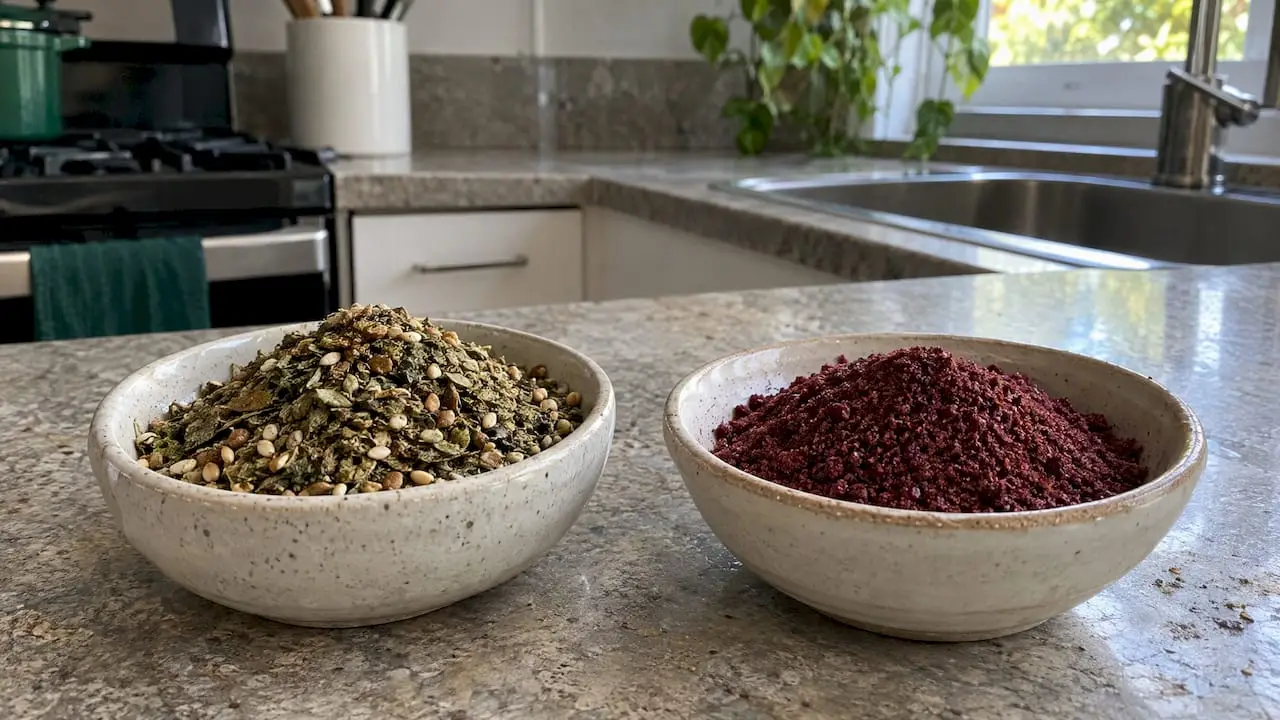
If you are cooking for a mixed table, the practical difference is this. Sumac is sharp and may need a gentle hand for children. Za’atar is mellower and more familiar, since thyme, oregano and toasted sesame are flavors most American palates already like.
How to use za’atar
Traditionally, za’atar is stirred into olive oil and spread on flatbread, or baked onto manakish. It also works well beyond bread:
- Roasted vegetables and potatoes. Toss with olive oil and za’atar before roasting.
- Chicken. Rub it on before baking or grilling.
- Eggs. Sprinkle over fried or scrambled eggs.
- Fruit. Chef Engel suggests melon or peaches, calling it “sort of like a Middle Eastern Tajín”.
- Chickpeas. The Institute of Culinary Education has a roasted chickpea recipe using 3 tablespoons of za’atar, 2 tablespoons of olive oil, 1/2 teaspoon of kosher salt and 1/4 teaspoon of black pepper. They bake at 400°F for 45 to 60 minutes until golden and crisp.
- Snacks. Senior Chef-Instructor Stephen Chavez likes it on bagels with cream cheese, crackers or crudité, as a bold accent rather than a background note.
The Levant treats the pairing of za’atar and olive oil as more than a snack. Utah Public Radio notes a saying about having nothing to eat but za’atar and olive oil, used to express endurance. It also notes that mothers make children za’atar sandwiches during school exams.
How to use sumac
Sumac belongs at the end of cooking, or in marinades and dressings where you want acidity without more liquid. Food & Wine lists several uses:
- A bright sprinkle over hummus, grilled kebabs or quick pickles
- A traditional ingredient in fattoush, the Levantine bread salad
- A dry rub or marinade for vegetables and meats such as lamb
- A gremolata with scallions, or a dressing
- Custards, cake toppings and a rim salt for margaritas
Chef José Andrés told Food & Wine he keeps sumac around for a quick tart punch without citrus. He uses it in tomato sauces and rice, over scrambled eggs and in guacamole. The same piece notes that sumac has more flavor when fresh and tends to be better at Middle Eastern, Mediterranean or Levantine grocers.
For a Lebanese example, Food & Wine’s Lebanese coleslaw uses sumac to give cabbage a lemony lift. Our own guide to cookable Lebanese mezze shows how acidic, herbal and creamy dishes balance each other on one table, which is where sumac earns its place.
Can you substitute one for the other?
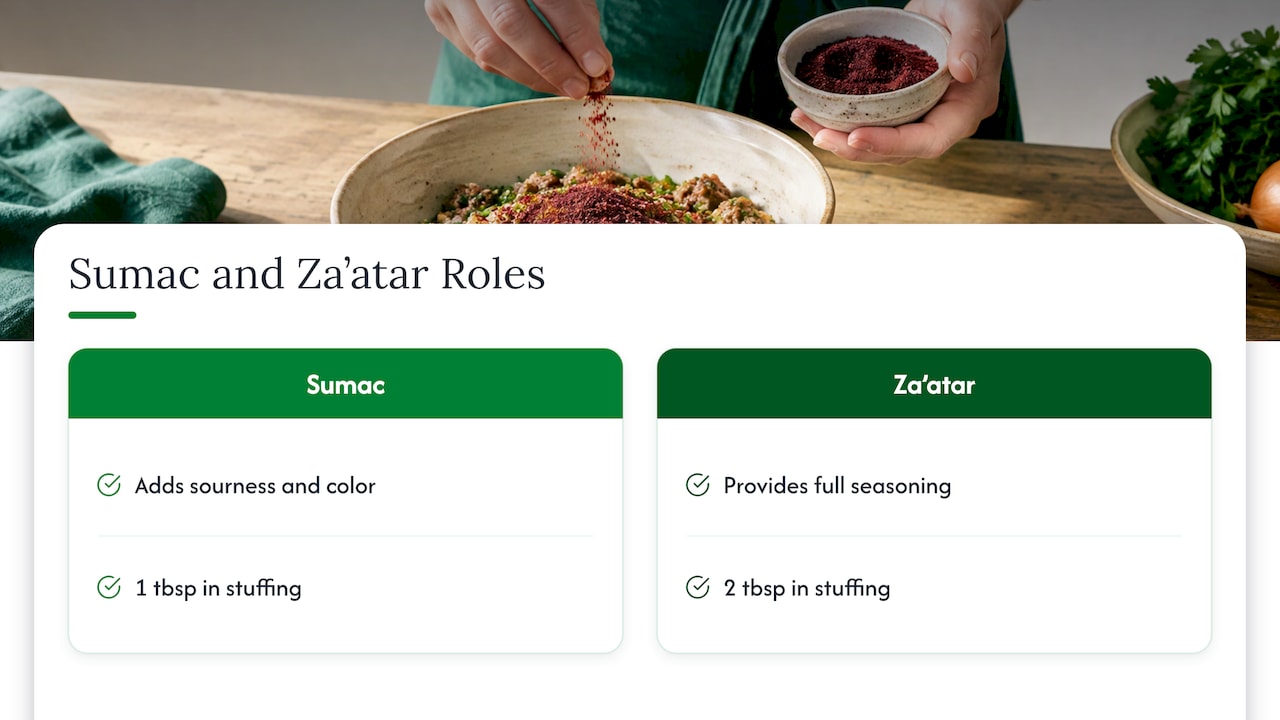
Not directly. Sumac gives sourness and color. Za’atar gives a full seasoning. Swapping them changes the dish, and in a recipe that calls for both, you need both. The Institute of Culinary Education’s seasonal stuffing recipe by Chef Stephen Chavez uses 1 tablespoon of sumac and 2 tablespoons of za’atar in the same bread cubes.
If you only have za’atar
Use it where you want an all-in-one seasoning, and add lemon juice or zest if the dish needs more brightness. Hold back on extra salt.
If you only have sumac
Sumac alone will give you the tart note but not the herbs or sesame. You can approximate za’atar by mixing it with dried thyme or oregano and toasted sesame seeds, using the ratios above.
If you have neither sumac nor a shop nearby
Food & Wine suggests lemon zest, tamarind paste, pomegranate molasses or apple cider vinegar in a marinade or sauce. It cautions that none is a seamless swap, so taste and adjust. Chopped parsley with lemon zest can replace sumac as a garnish. If you want that sour note in a dressing form, a bottled sumac sauce works over salads and grilled meat.
Buying and storing both
Good sumac looks rich, shiny and almost oily, with a deep crimson color. Food & Wine advises that if it looks dry, dusty or dull, you should keep shopping. Stored in a cool, dry place, it lasts up to two years.
Za’atar varies more from jar to jar, because every maker blends differently. Syrian versions add coriander, ground fennel and Aleppo pepper flakes, Palestinian ones favor toasted sesame and a little caraway, and Jordanian-style mixes add mint and anise, according to Utah Public Radio. Lebanese versions are known for a pronounced red tone from sumac. Check the label, and look for sumac and sesame among the first ingredients.
Culinary sumac and poison sumac
The sumac in your spice rack is not the plant that causes rashes. Culinary sumac is the dried, ground fruit of specific Rhus species, sold for eating. The Institute of Culinary Education notes that berries from some species can irritate the skin, so it is best to leave harvesting to experts. Buy ground sumac from a food retailer and do not pick wild berries to grind at home.
What this means for your table
If you cook at home, keep both. Reach for za’atar when you want dinner to taste finished with one step, and for sumac when a dish needs a final lift. If you are hosting, a bowl of za’atar with olive oil and warm bread, and a small dish of sumac for the table, covers a lot of ground with very little work. Our Mediterranean dinner party plan shows how a private chef sequences a menu like that ahead of time.
If you are curious about how Lebanese flavors meet Caribbean ones, read how Haitian-Lebanese cooking brings the two pantries together. And if garlic sauce is your next question, we explain what toum is.
Fresh Lebanese-inspired meals, without the shopping
Sourcing good sumac, finding a jar of za’atar you like and working out how to use both takes time. If you would rather have the result on the plate, VJ Cuisine’s meal plans in Miami bring fresh, small-batch, never-frozen meals to your home, shaped around your dietary needs in direct conversation with Chef Virginia. For gatherings, our catering is boutique and chef-crafted. For someone who loves food, our gift boxes are handcrafted and delivered across Miami.

Tell us what you like and what you avoid, and the menu is built around it.
Our perspective
Lebanese cooking is half of our heritage, and the lesson it teaches is balance. Sourness, herbs, richness and salt each get a role, and none of them shouts over the others. That is exactly what sets sumac and za’atar apart. One is a single sharp note. The other is a small, complete composition.
We design every menu ourselves, in small batches, and we never freeze the food. Freshness matters most with ingredients like these, where aroma and color are the point. A dish finished with a bright, tart spice only works when everything under it tastes alive.
It also works because you can talk to the cook. Some clients want gentler acidity, others need to avoid certain ingredients. Speaking directly with the chef means those preferences shape the menu from the start, not as a footnote after the order is placed.
Virginia Jiha
FAQ
Is za’atar the same as sumac?
No. Sumac is one spice made from dried, ground berries. Za’atar is a blend that typically contains dried herbs, sumac, toasted sesame seeds and salt. Sumac is an ingredient in za’atar, which is why the two share a tangy note.
What does za’atar taste like?
It tastes herbal, nutty and tangy, with a salty finish. The herbs give earthy and floral notes, sumac adds lemony tartness and the sesame adds a toasty richness. The blend suits bread with olive oil, eggs, roasted vegetables and chicken.
What is in za’atar?
A standard recipe from the Institute of Culinary Education uses dried thyme or oregano, ground sumac, toasted sesame seeds and salt. Other versions add marjoram, cumin, coriander, chili or citrus zest. Regional blends vary, so check the label.
What can I use instead of sumac?
Lemon zest, tamarind paste, pomegranate molasses or apple cider vinegar can supply sourness in a marinade or sauce. For a garnish, parsley with lemon zest works. None is an exact match, so taste as you go.
Is sumac spice the same as poison sumac?
No. Culinary sumac comes from specific Rhus species and is sold ground for eating. Berries from some species can irritate skin, so leave harvesting to experts and buy it from a food shop.
Sources
- What Is Sumac? | Institute of Culinary Education
- What is Za’atar Seasoning? | Institute of Culinary Education
- Garbanzo Bean Recipes | Institute of Culinary Education
- Za’atar Seasonal Stuffing Recipe | Institute of Culinary Education
- What Is Sumac? A Guide to the Bright and Lemony Middle Eastern Spice | Food & Wine
- What Is Za’atar? A Guide to the Flavorful Middle Eastern Spice | Food & Wine
- Za’atar Seasoning | Food & Wine
- Salatet Malfouf (Lebanese Coleslaw) | Food & Wine
- Eating the Past: Sumac and its uses | Utah Public Radio