
The most natural Caribbean and Middle Eastern fusion is not a chef’s experiment. It is Haitian-Lebanese cooking, a blend that began in Haitian kitchens more than a century ago, when Arab immigrants arrived and their dishes became part of everyday Haitian meals. It is also the cooking behind VJ Cuisine, a Miami private chef service rooted in a Haitian-Lebanese heritage, where small-batch, never-frozen meals are designed by Chef Virginia and delivered to your door.
This guide explains where the two cuisines meet, how they differ, which flavors pair well, and how to bring the result to your table.
TL;DR
- Haitian cuisine already contains Lebanese and Syrian influence: kibbeh, called “kibby” in Haiti, is a staple dish there.
- Haitian cooking is built on epis, a fresh herb and pepper base. Lebanese cooking leans on olive oil, lemon, garlic and parsley. Both are bright and herb-driven, which is why they combine so well.
- The easiest fusion moves: epis in hummus, Haitian pikliz beside grilled meats, toum with plantains or fried fish.
- Both traditions are plant-forward, so menus adapt readily to vegetarian and other dietary needs.
- In Miami, you can order this cooking as a meal plan, a catered event or a private dinner from our kitchen.
Table of Contents
- What Caribbean–Middle Eastern fusion really means
- Haitian vs. Lebanese cuisine: what each brings
- Flavor pairings that work
- Fusion dinner ideas
- Adapting the menu to dietary needs
- Perspective
- Bring Haitian-Lebanese cooking to your table in Miami
- FAQ
- Sources
What Caribbean–Middle Eastern fusion really means
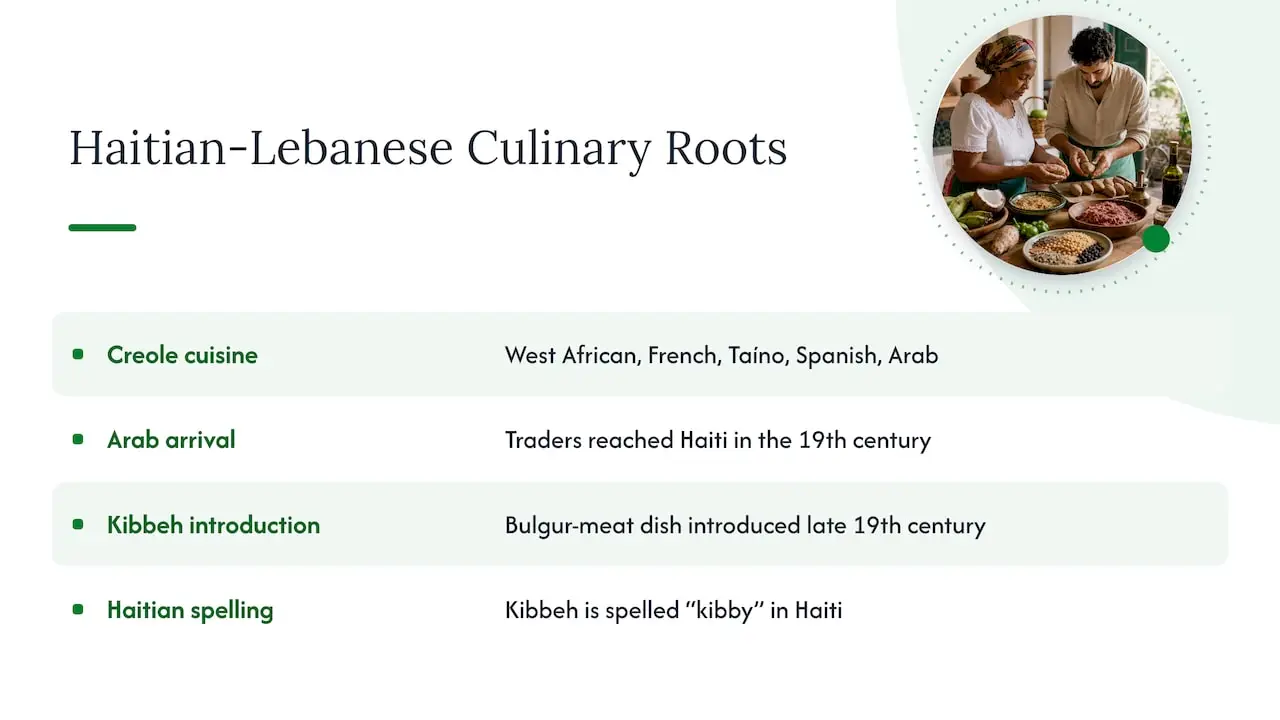
“Fusion” often suggests a clever mashup invented for a menu. Here the history came first. Haitian cuisine is a Creole cuisine, a blend of West African, French, Taíno, Spanish and Arab influences, according to the Ayiti Community Trust. Arab traders and migrants reached Haiti in the nineteenth century, and the Somerville Arts Council’s primer notes that a bulgur and meat dish similar to kibbeh was introduced by Arab traders in the late nineteenth century.
The link is also personal. Many Arab Haitians trace their ancestry to Lebanon and Syria, and kibbeh, spelled “kibby” in Haiti, is found throughout the country. The Globe and Mail describes kibi as a Haitian version of Lebanese kibbe, shaped into ground-meat torpedoes.
So when you eat Haitian-Lebanese food, you are tasting a cuisine that has been blending for generations. Our own heritage is Haitian and Lebanese, and our menus come from that kitchen.
Haitian vs. Lebanese cuisine: what each brings
The two share a love of herbs, garlic and acid, but they get there differently.
| Haitian | Lebanese | |
|---|---|---|
| Flavor base | Epis: garlic, parsley, scallions, thyme, peppers, acid | Garlic, olive oil, lemon juice, salt |
| Staples | Rice, beans, plantains, yams, corn | Whole grains, chickpeas, vegetables, fresh fish |
| Heat | Scotch bonnet, pikliz | Gentle, with spice used lightly |
| Typical dishes | Diri kole ak pwa, griot, poulet en sauce | Hummus, tabbouleh, falafel, kibbeh |
| Meat | Pork, chicken, goat, seafood | Poultry more than red meat, usually lamb and beef |
The Haitian side
Bon Appétit describes epis as a base of chopped garlic, parsley, scallions and thyme, usually with green and red bell peppers, acid and olive oil. It goes into rice and beans, stews and soups. Chef Gregory Gourdet calls Haitian food Caribbean flavors with a big bandwidth: seafood, grains, legumes, plantains, yams, scotch bonnet, sour oranges and spices such as cinnamon, star anise and vanilla.
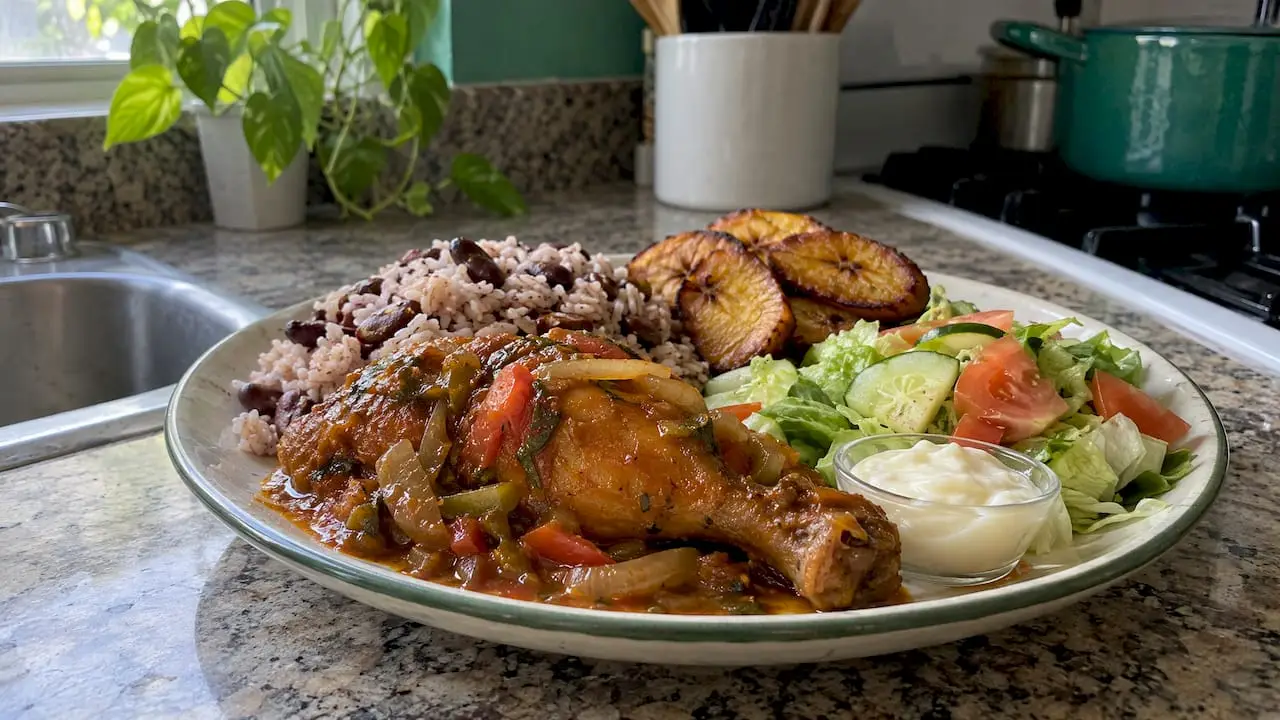
A typical Haitian meal has a protein with two sides, usually rice or rice and beans, plus fried plantains or a cold salad. Our guide to Haitian spices goes deeper on epis and cloves, and pikliz, the spicy pickled slaw, is worth knowing before you plan a menu.
The Lebanese side
Lebanese cooking is fresh and seasonal. FSR magazine explains that flavors are allowed their natural presence rather than being over-seasoned, with many meals built on vegetarian mezze and vegetable stews. If you want to see how a mezze spread comes together, start with our Lebanese mezze recipes and timing, and for the garlic sauce that anchors so many plates, read what toum is.
Flavor pairings that work
Because both traditions run on garlic, herbs and acid, the swaps are easy.
- Epis in hummus. Home cooks and chefs add epis to hummus and other dips, as well as compound butters, dressings, broths and aioli. The result is greener and more herbal than plain hummus.
- Pikliz beside grilled meats. The vinegar heat cuts through rich lamb, chicken or kibbeh the way pickled turnips do in a Lebanese spread.
- Toum with fried plantains or fish. The garlic sauce takes the place of a dipping sauce for tostones or griot.
- Kibbeh with rice and beans. Haitian diri kole ak pwa, rice glazed with a bean marinade, makes a hearty base for a Lebanese-style meat dish.
- Warm spices together. Haitian cooking uses cloves and cinnamon, and Lebanese cooking uses cinnamon and coriander, so a shared spice blend ties a menu together.
The blending has precedent elsewhere in the Caribbean. Caribbean Beat notes that Arabic cuisine’s spicy, garlicky, lime-accented style was perfectly suited to the Caribbean palate, and that immigrant dishes were adapted with local staples. Our overviews of cultural fusion cuisine and how to build a fusion dinner menu explain how to balance such pairings so a plate feels intentional.
Fusion dinner ideas
A weeknight dinner
Stewed chicken is a good starting point. Poulet en sauce is marinated in epis, cooked in about 45 minutes and served with rice and beans, salad and fried plantains. The recipe soaks the chicken in water with lime juice or vinegar first, then rinses and seasons it. Add a spoonful of toum or a cucumber-mint yogurt on the side and you have a Haitian-Lebanese plate with little extra effort.
A dinner for guests
For a special evening, think in courses:
- Hummus swirled with epis, warm pita and pikliz.
- Kibbeh with a fresh tabbouleh.
- Griot or grilled chicken with diri kole ak pwa and plantains.
- A citrus finish with cinnamon.
Balance is the craft: one rich dish, one acidic dish, one fresh dish, with heat kept to a side so guests control it. Planning and prepping that many components takes a full day, which is why many couples and hosts hand it to a chef.
Adapting the menu to dietary needs
Both cuisines are well suited to varied diets. The IFIC notes that Haitian cuisine is plant-forward, with rice, corn and beans as staples, and many meat dishes can easily become vegetarian or vegan while staying hearty. Lebanese mezze, built around chickpeas, vegetables and olive oil, fits the same pattern.
In Miami, the idea is already familiar: The Local Palate reports that a Haitian restaurant serves a vegan sampler with jackfruit, chickpea stew and legume made without meat. For vegetarian and vegan lunches that stay filling, these high-protein vegan meal prep combos show how legumes and seeds carry a meal.
When you order from us, you talk directly with Chef Virginia, so the menu is tailored to your preferences and dietary needs.
Perspective
Every family kitchen we know blends something. Ours blends Haiti and Lebanon, and it never felt like fusion to us. It felt like dinner.
What we care about is that the food tastes like someone cooked it for you: fresh ingredients, small batches, never frozen, with menus designed and prepared personally. Epis is made to be fresh and bright, and a garlic sauce should taste like garlic, not a shortcut.
When clients tell us what they like and what they avoid, we build the menu around it. That is the advantage of working directly with the chef, and why a Haitian-Lebanese meal can be weekday-simple or a full celebration.
Virginia Jiha
Bring Haitian-Lebanese cooking to your table in Miami
Our service covers the ways people want this food:
- Meal plans: chef-crafted, fresh, small-batch meals delivered to your home, built for busy professionals and families. See why Miami professionals choose personal chef meal plans.
- Private dinners: an in-home dining experience for couples and small gatherings.
- Catering: boutique catering for events.
- Gifting: handcrafted culinary gifts, including corporate holiday gifts.
Tell us what you enjoy and any dietary needs, and Chef Virginia shapes the menu. Start at VJ Cuisine.
FAQ
Is Haitian-Lebanese fusion a real cuisine?
Yes. Lebanese and Syrian immigrants brought kibbeh to Haiti, and it was adopted into Haitian cuisine. Haitian and Lebanese flavors have shared kitchens for generations, so the blend feels natural rather than invented.
What is the main difference between Haitian and Lebanese food?
Haitian cooking centers on epis, rice and beans, plantains and scotch bonnet heat. Lebanese cooking centers on olive oil, lemon, garlic, chickpeas, parsley and mezze. Both rely on fresh herbs.
What dishes are typical of Haitian cuisine?
Common dishes include diri kole ak pwa (rice and beans), griot (fried pork), poulet en sauce and soups, with pikliz as a spicy garnish. Many are seasoned with epis.
Can these dinners be made vegetarian or vegan?
Yes. Both cuisines are plant-forward, and many Haitian meat dishes convert easily to vegetarian or vegan versions. Tell us your preferences and we tailor the menu.
Can I order Haitian-Lebanese meals in Miami?
Yes. We offer meal plans, private dinners, catering and gifting across Miami, all made in small batches and never frozen.
Sources
- Goute Peyi M, Ayiti Community Trust
- Haitian Cooking Primer, Somerville Arts Council
- New Haitian-Egyptian Culinary Treats, Uncommon Caribbean
- Find out what you’ve been missing in Haitian cuisine, The Globe and Mail
- Lebanese cuisine, Wikipedia
- What Is Epis, Bon Appétit
- Gregory Gourdet Q&A, Total Food
- Best of Haitian Cuisine, Travels With Nano
- Middle Eastern Cuisine is Ready for its Moment, FSR
- Ah’len: Welcome Arabic Recipes, Caribbean Beat
- Creole Poulet en Sauce, Global Kitchen Travels
- Diversifying MyPlate: Haitian Cuisine, IFIC
- Naomi’s Garden in Miami, The Local Palate
- Haitian cuisine, Wikipedia