
A good backyard dinner party in Miami comes down to three things: choosing the right season and hour, planning for shade and a quick rain shower, and serving a menu that stays safe and tasty in the heat. You can do all of it yourself. If you would rather be at the table than at the stove, a private chef can plan, cook and serve the menu at your home, and that is the work we do at VJ Cuisine through our private dinners.
TL;DR
- Winter is the easy season: November through April is the dry season in Miami, so evenings are comfortable and rain is rare.
- Summer parties need a rain plan and a shade plan. Showers usually come in the afternoon, so set a later start and keep a covered spot ready.
- Perishable food should not sit out more than 2 hours, or 1 hour when it is above 90°F outside.
- Build the menu around dishes that are made ahead, hold at room temperature and need little last-minute work.
- Ask every guest about dietary needs before you finalize the menu, then label each dish.
Table of Contents
- Pick the Season and the Hour First
- Scout Your Yard at the Time of Dinner
- Build a Weather Plan You Can Set Up in Ten Minutes
- Lay Out the Yard in Zones
- Choose a Menu That Survives the Heat
- Keep Food Safe Outdoors
- Plan for Every Guest’s Diet
- Follow a Timeline
- Keep the Evening Comfortable
- When a Private Chef Makes Sense
- Questions to Settle for Outdoor Private Dining at Home
- FAQ
- Sources
Pick the Season and the Hour First
Most Miami hosting advice starts with the menu. Start with the calendar instead, because it decides almost everything else: the shade you need, the food you can serve and how long guests will linger.
The dry season runs from November through April, and it has very little rain at all. From May through October, the pattern is predictable. Mornings are clear, clouds build in the early afternoon, a heavy shower arrives between 2 and 5 PM, and the sky usually clears by evening. The same source notes that Miami averages about 60 inches of rain a year, mostly in short, intense bursts on summer afternoons.
That pattern is useful. A summer dinner that starts around sunset often misses the rain entirely, and guests arrive just as the light turns golden. A party that starts at 3 PM in July is the one that needs a backup.
Heat is the other number to plan for. For late spring and summer, Miami party planners suggest expecting daytime highs of 88°F to 92°F, humidity around 75% to 80% and a UV index of 10 or 11. Your guests will be comfortable in those conditions only if they have shade, cold drinks and a reason to stay seated.
Scout Your Yard at the Time of Dinner
Before you pick a menu or buy a tablecloth, stand in your yard at the hour dinner will actually happen. Ten minutes is enough to check shade, wind direction, insects and the wet-weather plan. A steady breeze is welcome. Gusty, unpredictable wind sends napkins across the lawn and blows out candles.
Walk through these questions while you are out there:
- Where does the sun sit at 6 PM, and will anyone be looking into it while they eat?
- Which side does the breeze come from, and will it carry grill smoke over the table?
- Where do mosquitoes gather? Standing water, thick shrubs and still corners are the usual spots.
- Where can 8 or 10 people move quickly if a shower arrives?
- Is there power nearby for lights, a speaker or a warming tray, and are the outdoor outlets protected? Outdoor receptacles should be GFCI protected, and any new circuits or upgrades should follow the Florida Building Code and be done by a licensed electrician.
A local forecast helps with the details. AccuWeather’s outdoor entertaining forecast for Miami lists humidity, chance of rain, UV strength and cloud cover, and it suggests tablecloth weights for windy days, shade for hot ones and a check of the mosquito and pest index.
Build a Weather Plan You Can Set Up in Ten Minutes
Miami showers are brief, so your plan only has to cover a short gap. Some hosts keep the table set under a 10×10-foot pop-up canopy, which covers a six-person table and goes up in under five minutes, anchored with sandbags on a concrete patio. Florida fall showers often pass in 20 to 40 minutes, so appetizers and drinks can move indoors while the rain passes and the table stays dry.
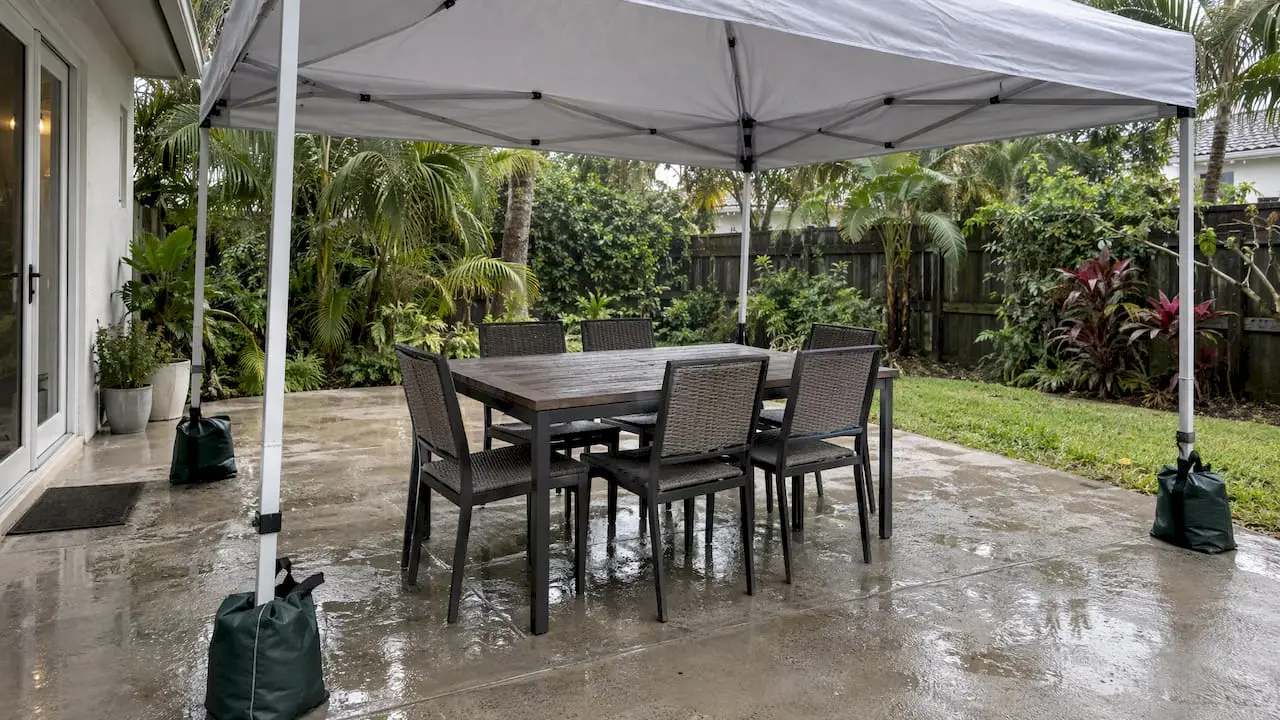
The broader idea is to treat cover as insurance. A covered patio, a pop-up or a rental tent gives you rain backup, sun coverage and a safer place for food, and a structure you can secure properly beats hoping lightweight décor survives the wind. If you use a canopy, weigh down the base properly. The weight you need rises with the canopy size, so follow the manufacturer’s guidance for yours.
Three small additions make the plan work:
- Decide in advance where the table goes if you have to move it, and who moves it.
- Keep a stack of towels near the door for chairs and cushions.
- Build a 30 to 45 minute cushion into the timeline, with something to serve indoors, so a shower feels like an intermission instead of a problem.
Lay Out the Yard in Zones
A backyard dinner works best when guests know where to go. A practical Miami layout separates dining, drinks, lounging and food service. Create one main eating area and add a softer lounge zone nearby. Put the drink station where guests can reach it without cutting through the food line. If children are coming, give them a visible activity corner.
A self-serve drink station is the single best move for a host who wants to sit down. Set it up before anyone arrives, stock it with ice, water, a cold non-alcoholic option and a pitcher of something festive, and guests stop asking you where things are.
Choose a Menu That Survives the Heat
A good summer outdoor menu meets four tests: the produce is seasonal and at its best, most of it can be made ahead, it holds at room temperature or improves as it rests, and the main course can be cooked outside.
That points to a familiar pattern in Miami: grilled or roasted mains, bright vegetable and grain salads, herb-heavy sauces and fruit-based desserts. Our own cooking comes from a Haitian-Lebanese background, and that tradition fits this kind of party well. Marinated grilled meats, seasoning blends built on herbs and citrus, and dishes meant to be shared from the center of the table are all easy to serve outdoors. For more on building a menu around what is at its best now, see our guide to seasonal menu planning in Miami.
A simple structure for six to ten guests:
- To start: one or two cold or room-temperature bites that people can eat standing, such as marinated vegetables, a dip with flatbread, or herb-stuffed bites. Our guide to cocktail party hors d’oeuvres covers what to serve and how much.
- Main: one protein cooked on the grill, with two sides that taste good warm or at room temperature.
- Something fresh: a salad that is dressed at the last minute, with the dressing made the day before.
- Dessert: something that needs no oven or last-minute plating, such as fruit, a chilled custard or a tart baked that morning.
If you want a model for a make-ahead schedule, our Mediterranean dinner party plan breaks a full menu into four steps, and the same logic works for a backyard table.
Keep Food Safe Outdoors
Heat makes food safety the part of a Miami backyard party that matters most. The FDA says never to let food stay in the Danger Zone between 40°F and 140°F for more than 2 hours, or 1 hour when it is above 90°F outside. Cold food should stay at 40°F or below and hot food at 140°F or above. The USDA’s Food Safety and Inspection Service states the same rule: discard perishable food left out longer than that.
Clemson University’s extension service adds that bacteria multiply exponentially faster between 75°F and 125°F, which is exactly the range of a Miami patio in the evening.
In practice:
- Keep cold dishes in the refrigerator or on ice until the moment they go to the table, and bring out smaller portions, then refill.
- Put out dishes with dairy, eggs, seafood, cream or mayonnaise last, and take them back inside early.
- Use a thermometer. Poultry on the grill should reach 165°F.
- Cover food to keep insects away, and keep a fire extinguisher within reach of the grill.
- Start a clock when the food goes out. On a hot evening, you have one hour.
Plan for Every Guest’s Diet
Ask about allergies and preferences when you send the invitation, not on the day. The common ones are gluten, dairy, nuts, eggs, shellfish and vegetarian or vegan diets. The main risk with allergies is cross-contact: a serving spoon moved from one dish to another, a shared grill surface, or a marinade that contains an ingredient a guest avoids.
A few habits make a mixed table easy:
- Plan at least one main and one side that suit every guest, so no one gets a single sad plate.
- Label each dish with a small card that lists the main allergens.
- Give every dish its own serving utensil.
- Grill the allergy-friendly items first, on a clean surface, or on foil.
If a guest has a medical condition or a serious allergy, ask them directly what they can eat, and follow their lead. They know their own needs better than any menu guide does.
Follow a Timeline
Hosts who enjoy their own parties work backward from the guests’ arrival. The night before, set the table completely and cover it with a sheet to protect it from overnight dew, prepare the make-ahead dishes, set out the serveware and charge the speaker. Two hours before guests arrive, light the barbecue early, add the final table touches, put ice in the drinks station and test the string lights.
A workable schedule for a 7 PM dinner:
| Time | Task |
|---|---|
| Night before | Set the table, cover it, make dressings, sauces and desserts, chill drinks |
| 2 PM | Marinated proteins out of the refrigerator only if they will be cooked within the hour, otherwise leave chilled |
| 5 PM | Light the grill, test the lights, fill the drink station with ice |
| 6:30 PM | Put out the first bites, music on, candles lit if the breeze allows |
| 7:30 PM | Main off the grill and rested, sides to the table |
| 9 PM | Dessert, coffee, move leftovers back to refrigeration |
The last row matters. Food that has been out for the whole evening goes into the trash, not into the refrigerator.
Keep the Evening Comfortable
From November through April, Miami evenings are among the best outdoor weather in the country. Evening temperatures in Florida in October and November can fall 15 to 20 degrees from the afternoon high, so a basket of light blankets or shawls, or a tabletop fire pit or patio heater, can extend outdoor dining by two to three hours after dark.
In summer the opposite applies: fans, shade, cold towels and plenty of water. Citronella candles and a fan near the table help with mosquitoes, since moving air makes it harder for them to settle.
Entertainment can lift the evening once dinner is over. For a milestone birthday or a larger gathering, live fire dance performances give guests something to watch after dessert. If you book anything with open flame, confirm the performers’ space requirements and keep it well away from tents, canopies and dry landscaping.
When a Private Chef Makes Sense
Hosting yourself is rewarding, and it is also a lot of work: shopping, prepping, cooking, timing, serving and cleaning, all while watching the sky. A private chef takes the cooking and timing off your hands so you can be a guest at your own party.
At VJ Cuisine, Chef Virginia designs and prepares every menu with fresh ingredients, in small batches that are never frozen. You talk to the chef directly about what you want and what your guests can eat, and the menu is built around that. Our private dinners are in-home dining experiences for couples, families and small groups. For larger events, our catering covers boutique menus across Miami. If you want to know how the process works, read how a private chef dinner party works in Miami. For outdoor settings above ground level, our guide to rooftop and poolside private chef dinners has the details.
If you have a date and a guest count, you can start on our private chef dinner experience page.
Questions to Settle for Outdoor Private Dining at Home
If you decide to hire a chef for a dinner in your backyard, clarify these points when you book, so the evening runs smoothly:
- Guest count and format. A seated multi-course dinner, a family-style table and a standing reception need different setups.
- Menu and dietary needs. Share every allergy and preference up front, and talk through the menu with the chef.
- Space and equipment. Tell the chef what you have outdoors: a grill, a covered area, a kitchen nearby for plating.
- Weather backup. Agree on where dinner moves if rain arrives, and when you will make that call.
- Timing. Settle arrival time, serving time and any cut-off, such as a neighborhood noise rule.
- Service details. Confirm what the booking covers, including who sets up and who clears.
Good answers to these make the difference between a relaxed evening and a stressful one.
Our View: Plan the Party Around the Food
Every Miami backyard party we think about starts with one question: what will taste best at the hour people actually eat, in the heat or the cool air of that evening?
We cook from a Haitian-Lebanese background, and we design every menu by hand. That means we choose dishes that are good warm, good at room temperature and good shared. Fresh herbs, citrus, grilled meats and bright vegetables are at home on a Miami patio.
We prepare in small batches and never freeze, because a backyard table deserves food that tastes like it was made for that night. And we talk with each client directly, because a menu for ten guests with three dietary needs is not a template. It is a conversation.
Hosting well is not about doing everything yourself. It is about making sure the people at your table feel looked after, and that includes you.
Virginia Jiha
FAQ
What is the best time of year for a backyard dinner party in Miami?
November through April is the best window. It is Miami’s dry season, with very little rain and more comfortable evenings. Summer parties work too if you start near sunset and keep a covered backup.
How long can food sit outside at a Miami party?
The FDA says perishable food should not stay out more than 2 hours, or 1 hour when it is above 90°F. Keep cold dishes chilled and hot dishes hot until you serve them, and bring out smaller portions at a time.
What should I do if it rains during dinner?
Miami showers are usually short. Keep a canopy or covered patio ready, move drinks and appetizers indoors for the length of the shower, and return to the table when it passes. A flexible timeline makes this simple.
Can a private chef cook a dinner at my home?
Yes. We offer in-home private dinners across Miami, with a menu planned directly with Chef Virginia around your guests’ tastes and dietary needs. You can start at our private dinners page.
Sources
- The Barn 305: Rain in Miami, seasonal pattern and averages
- Pro Tips for Backyard Party Planning in the Miami Climate
- The Dinner Party Guide: Summer Outdoor Dinner Party
- AccuWeather: Miami Entertaining Weather Forecast
- Fall Outdoor Dinner Party Setup Tips for Florida
- Outdoor Entertaining Readiness for Coconut Grove Estates
- FDA: Handling Food Safely While Eating Outdoors
- USDA FSIS: Safe Food Handling for Take-Out
- Clemson HGIC: Keeping Food Safe When Dining Outdoors
- Live fire dance performances for events