
A good fusion dinner menu is not a list of dishes from two cuisines placed side by side. It is a sequence with one idea running through it: shared ingredients, a common technique, or a story that explains why the two traditions belong at the same table. Below you will find the pairing logic we use, a sample five-course menu, notes on pacing and allergens, and what a tasting-style dinner typically costs in the US.
TL;DR
- Pick one anchor (a spice, a technique or a heritage) and let every course connect to it, rather than mixing cuisines at random.
- Five small courses with a clear arc (bright, rich, acidic, main, sweet) work better than three heavy plates.
- Decide allergens and cross-contact rules before the menu is final, not after guests arrive.
- A flexible, chef-led format often beats a fixed printed menu, because it lets the cook buy what is freshest.
- Tasting-style dinners in the US commonly run from $125 to $350 per person, so set a budget before you choose the format.
Table of Contents
- What a fusion dinner menu should actually do
- Start with an anchor, not a cuisine list
- A sample five-course Haitian-Lebanese fusion dinner
- How many courses, and how big?
- Pace the evening like a tasting menu
- Why a flexible menu can beat a printed one
- Our perspective: fusion is about restraint
- Plan for allergens before you finalize the menu
- What a fusion tasting dinner costs
- Menu ideas for different occasions
- Common mistakes to avoid
- Book a fusion dinner with VJ Cuisine
- FAQ
- Sources
What a fusion dinner menu should actually do
Search for this topic and you mostly find restaurant ordering pages: crab rangoon, teriyaki bowls, fried rice, spring rolls. Those are useful if you want takeout. They do not help if you are hosting a dinner at home and need a menu that feels designed.
A fusion menu has three jobs:
- Make the connection obvious. Guests should taste why two cuisines are on the same plate. If you have to explain it at length, the pairing is forced.
- Keep the meal balanced. Two bold cuisines can easily pile richness on richness. The menu needs rests: acid, herbs, crunch, something cold.
- Stay practical for the kitchen. Every extra technique multiplies prep, timing and the chance of a mistake during service.
The best fusion cooking usually comes from people with a real connection to both traditions, not from swapping a sauce on a familiar dish. That is the principle behind how we cook at VJ Cuisine, and it shapes the advice below.
Start with an anchor, not a cuisine list
Before choosing dishes, choose what holds the menu together. Three anchors work reliably.
A shared ingredient
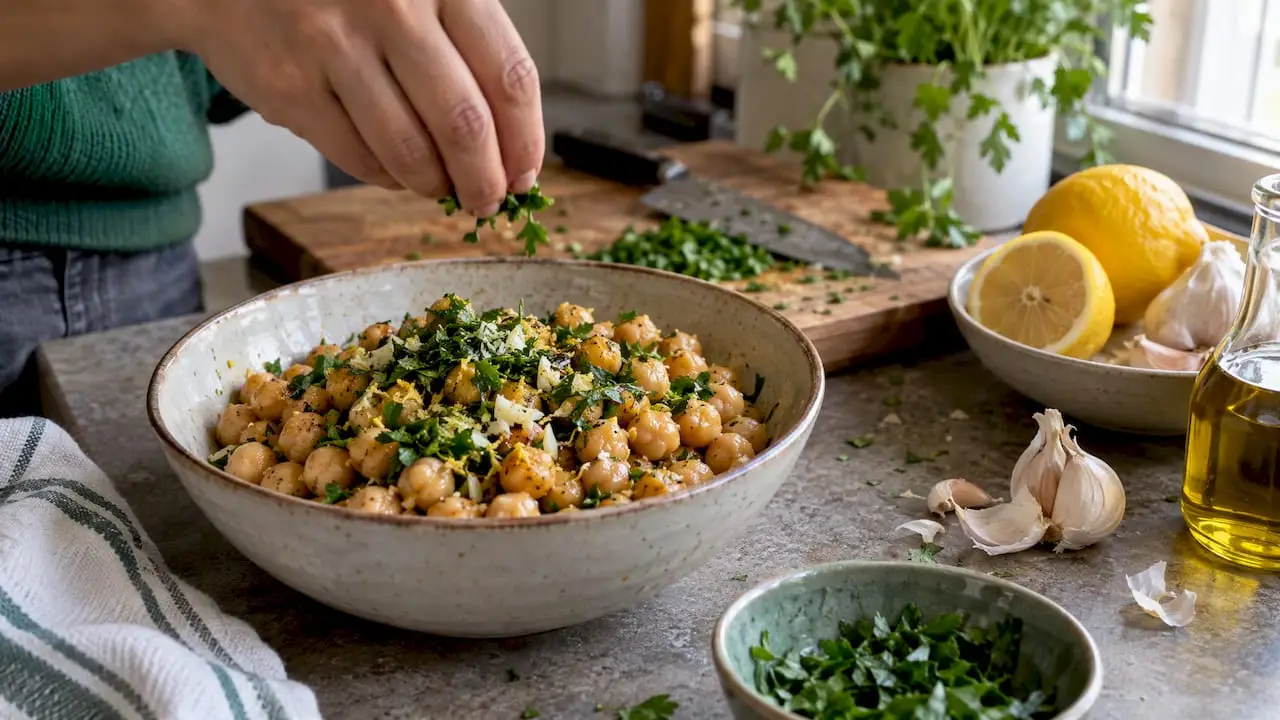
Look for ingredients that both cuisines already love. Citrus, garlic, parsley, mint, chickpeas, eggplant, rice, fried plantains, cured or grilled meats and pickled vegetables show up across many cooking traditions. Build one dish around each overlap and the menu feels inevitable rather than clever.
A shared technique
Grilling over high heat, long marinades, slow braises and quick pickling cross borders easily. If every main course is marinated overnight in a different seasoning blend, guests sense a consistent hand even when the flavors change.
A personal story
Menus built on real heritage read differently. Ours draws on Haitian and Lebanese cooking, two traditions that both rely on bright marinades, herbs, pickles and generous seasoning. That overlap is the anchor. A menu rooted in your own family history, a favorite trip or a city you love can do the same job.
A sample five-course Haitian-Lebanese fusion dinner
This is an illustration of how the pairing logic turns into a menu, not a published VJ Cuisine menu. Real menus change with the season, the market and the guests.
| Course | Idea | Why it works |
|---|---|---|
| Opening | Chilled labneh with pickled vegetables and warm flatbread | Cool, tangy and light. The pickle nods to a Haitian condiment tradition, the labneh to the Levant. |
| Second | Tabbouleh-style herb salad with citrus-marinated shrimp | Parsley, lemon and garlic sit comfortably in both kitchens. Acidity resets the palate. |
| Third | Crisp fried plantain with spiced lamb or beef kibbeh-style filling | Crunch and richness, a deliberate break before the main. |
| Main | Marinated, slow-cooked pork or chicken with rice, herbs and a sharp pickled slaw | The heart of the meal. Long marination, a hot finish, and a sour counterpoint on the side. |
| Dessert | Orange-blossom and spiced cream with roasted fruit | Fragrant and lighter than a heavy cake after four rich courses. |
Notice the shape: light, bright, crisp, rich, sweet. Each course answers the one before it. That arc matters more than the individual dishes, and you can borrow it for any pairing, whether Korean and Mexican or Italian and Japanese.
How many courses, and how big?
The most common mistake is overfeeding. Fusion dishes tend to be intensely flavored, so portions should be smaller than you expect.
- Four to five courses suits most home dinners for two to eight people.
- Six to seven courses works if portions are very small and the pace is unhurried. It demands more kitchen coordination.
- Three courses is a fine choice for a relaxed family dinner, as long as each plate is composed carefully and one of them provides acidity.
A useful guide: a guest should finish the main feeling satisfied, not stuffed, with room to enjoy dessert. If you are weighing a fixed set menu against choosing from a list, our guide to prix fixe versus à la carte covers cost, pace and practical tips.
Pace the evening like a tasting menu
Omakase, the Japanese format whose name means leaving it to the chef, is a good model even if you are not serving sushi. As the San Francisco Chronicle described it, you are not ordering individual items so much as spending an evening in the hands of one cook. In practice the chef controls the sequence, balancing rich and acidic bites and varying texture.
You can apply the same thinking at home:
- Alternate weight. Follow a rich course with something sharp or herbal.
- Vary temperature and texture. Cold, warm, crisp, creamy and chewy should all appear at least once.
- Leave gaps. Ten to fifteen minutes between courses lets conversation breathe and gives the kitchen time to plate well.
- Serve the boldest flavor in the middle. Starting with the strongest dish dulls everything after it.
Why a flexible menu can beat a printed one
Some of the most interesting fusion cooking skips the printed menu altogether. A Miami profile of a Little Haiti restaurant explained that it has no fixed menu, because the chef did not want to limit what he could cook. The same idea applies to private dining. When the cook is not locked into a list, they can buy what looks best at the market that morning and adapt to who is sitting at the table.
There is a related restaurant tradition: off-menu tiers where kitchens offer elevated or limited ingredients that are not available in steady enough supply for a permanent menu. For a home host the lesson is simple. Agree the framework with your chef (number of courses, dietary needs, spice level, what to avoid) and leave room for the market to decide the rest.
This works best when you can talk directly with whoever is cooking. That is how we run private dinners: you tell us the occasion, the guests and any restrictions, and the menu is designed around them.
Our perspective: fusion is about restraint
We get asked often whether fusion means putting two cuisines together as boldly as possible. In our experience it means the opposite. When you grow up with two food traditions, you learn quickly which flavors already agree and which ones fight. The skill is in choosing the three or four connections that are genuine and leaving the rest alone.
Our own cooking comes from a Haitian-Lebanese background, and we design and prepare every menu personally. We cook in small batches with fresh ingredients and we do not freeze meals. That discipline carries into a fusion dinner: fewer components, each one made properly, with seasoning that is confident rather than loud.
Three habits we recommend to any host:
- Taste the pickle, the sauce and the salt level of every dish together, not separately. A plate can be perfect alone and wrong beside its neighbor.
- Keep one element per course very simple. If the sauce is complex, the starch should be plain.
- Ask about dietary needs at the very beginning. A menu rebuilt around an allergy on the day always looks like a compromise. A menu designed around it from the start does not.
— Virginia Jiha
Plan for allergens before you finalize the menu
Fusion menus carry more allergen risk than they appear to. Sauces, marinades and seasoning blends often contain soy, wheat, sesame, fish or tree nuts, and a small-batch kitchen cooking many different dishes shares tools, boards and oil.
Professional guidance is clear on the principle. Food service guidance based on the FDA Food Code describes the need for written allergen information on unpackaged items and strict time and temperature control for foods that can spoil. Allergen policy specialists also stress that cross-contact through shared tools, surfaces or fryers is easy to overlook, and that policies should be written down rather than trusted to memory, especially at busy moments. The same source recommends reviewing every part of a dish, including sauces, marinades, dressings and garnishes, against the major allergens.
What that means when you book a chef:
- Tell them every allergy, with severity. An intolerance and an anaphylactic allergy need different handling.
- Ask how cross-contact is prevented. Look for separate tools, cleaned surfaces and labeled components.
- Ask to see the full ingredient list for sauces and blends, not only the dish names.
- Do not rely on a guest’s self-assessment from an online test. Home food sensitivity testing is not an allergy diagnosis, so anyone with a suspected allergy should hear from their own physician or an allergist before the menu is set.
If gluten is the concern at your table, our guide to gluten-free catering in Miami goes into what to ask and what good answers sound like.
What a fusion tasting dinner costs
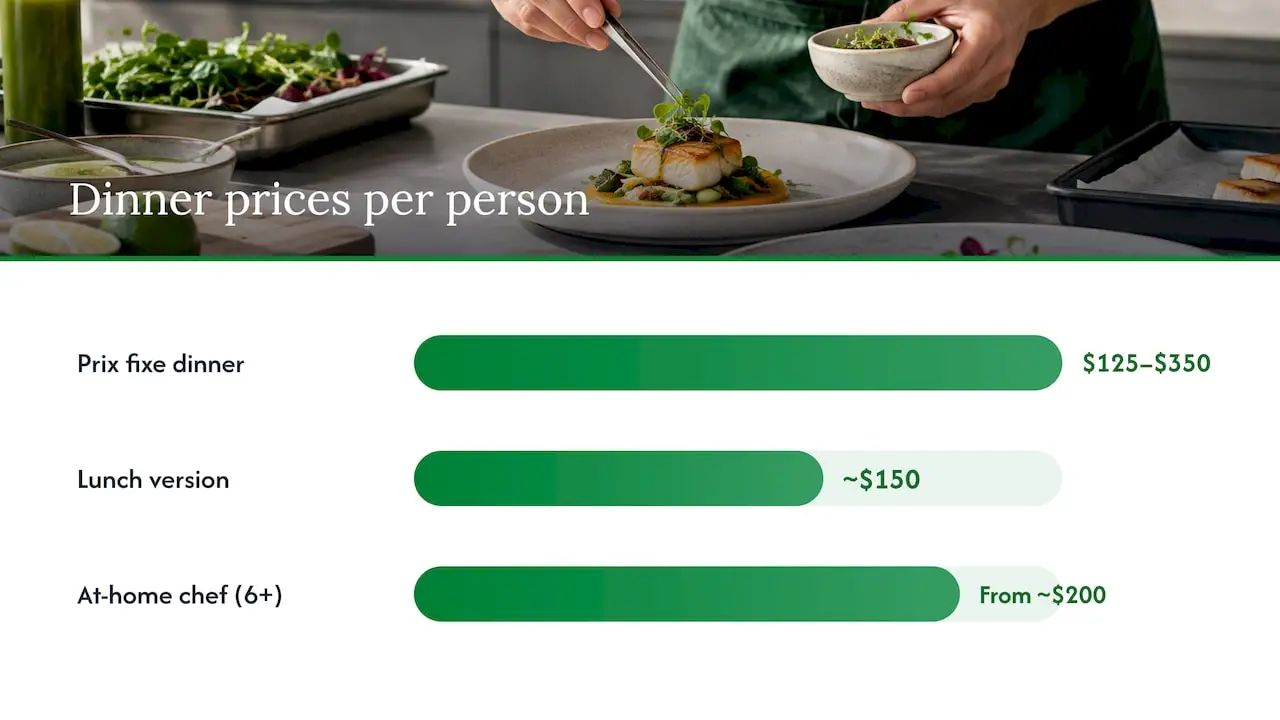
Prices vary widely because the biggest drivers are ingredients and service level. According to the Charlotte Observer’s guide to omakase, fusion or omakase-style prix fixe dinners in the US typically range from $125 to $350 per person, depending on the number of courses and premium items such as Wagyu or specialty seafood. The same source notes lunch versions can be lower, around $150 per person, and that private at-home chef omakase experiences can start near $200 per person for parties of six or more.
Those figures are market context, not our pricing. VJ Cuisine does not publish set prices for private dinners, because the menu, guest count and ingredients change each booking. For a broader look at what drives chef fees and what to check before hiring, see our guide on how to hire a private chef in Miami.
Ways to keep a fusion dinner within budget without losing the point of it:
- Put the money into one or two premium ingredients and keep the other courses humble.
- Choose a four-course format instead of six.
- Lean on technique (marinades, pickles, sauces) rather than luxury products.
- Decide the guest count early, since it affects both cost and menu design.
Menu ideas for different occasions
A dinner for two
Keep it to four small courses and let one be genuinely luxurious. Shared plates make it feel social, and a short menu keeps the kitchen calm so the evening stays about the two of you. Our notes on how a private chef dinner party works in Miami show what a chef handles on the night.
A birthday at home
Choose dishes that can be passed and shared, with one signature course that tells a story about the guest of honor. Start planning two to four weeks ahead; our birthday dinner at home guide lays out the timeline.
A seafood-led evening
Fusion and seafood pair well because citrus, herbs, chili and pickles lift delicate fish. Our guide to a seafood dinner at home covers buying, cooking and serving.
A casual housewarming or larger gathering
Switch from plated courses to grazing: platters, skewers, dips and flatbreads in a fusion style. For portions and safe serving temperatures, see housewarming catering ideas.
Common mistakes to avoid
- Too many cuisines. Two traditions with a clear link beat four with none.
- Fusion as decoration. A sauce from one country on a dish from another is a garnish, not a menu.
- No acid. Rich dishes pile up fast. Every course should have a counterpoint, even a squeeze of citrus or a pickled side.
- Ignoring service logistics. If three courses need the same oven at the same moment, simplify.
- Late dietary questions. Allergies and preferences belong in the first conversation, not the last.
- Overlong menus. More courses do not make a better dinner. Better pacing does.
Book a fusion dinner with VJ Cuisine
If you would rather taste a menu like this than build it, we cook it. Our private dinners bring a chef-designed, Haitian-Lebanese inspired menu to your home in Miami, shaped around your guests and dietary needs. For larger gatherings, we also offer boutique catering, and for everyday eating, fresh small-batch meal plans. You speak directly with the chef about what you want, and we take it from there.
FAQ
What is the difference between a fusion menu and a regular menu?
A regular menu usually stays within one cuisine. A fusion menu deliberately combines techniques or ingredients from two or more, ideally with a clear reason. The best ones feel like a single point of view rather than a mix of unrelated dishes.
Is fusion food expensive?
It depends on format and ingredients. Tasting-style fusion dinners in the US commonly fall between $125 and $350 per person, while a casual fusion restaurant meal costs far less. At-home private dining typically sits closer to the upper range because of the personal service.
How many courses should a fusion dinner have?
Four or five courses suits most home dinners. Keep each portion small, because fusion flavors are bold and guests fill up faster than expected. Add courses only if the pacing stays unhurried.
Can a fusion menu be built around allergies?
Yes, if the chef knows from the start. Share every allergy and its severity, and ask how cross-contact is prevented in the kitchen. Designing around a restriction from the beginning gives a better result than adapting a finished menu.
Do I need a printed menu?
Not necessarily. Many chefs prefer a flexible format, agreeing on courses and dietary needs, then cooking what is freshest. A short written card at the table is still a nice touch, and it can list allergens for guests who need them.
Sources
- Where can I find omakase sushi near me in Charlotte NC? (Charlotte Observer)
- Secrets of the omakase menu (San Francisco Chronicle)
- House of Food Porn in Miami Little Haiti (Digest Miami)
- Sugarfish secret new Trust Me sushi menu (Eater LA)
- 9.9: Off-Premise Food Service, Food Safety and Sanitation
- How to Create a Restaurant Food Allergen Policy (Altametrics)
- Food Sensitivity Testing: 5 Tests; Home IgG Cannot Diagnose Allergy