
Bulgur and couscous look alike in a bowl, but they are different foods. Bulgur is cracked whole wheat that has been parboiled and dried. Couscous is a tiny pasta made from semolina. Bulgur is chewier, nuttier and higher in fiber. Couscous is softer, milder and ready in minutes. Both contain gluten, and quinoa is the usual gluten-free stand-in.
Below, we walk through how each grain is made, how they differ on the plate, what the nutrition numbers say, and which one fits which dish. We also cover quinoa, since most people who search for one of these grains end up weighing all three.
TL;DR
- Bulgur is cracked, partially cooked wheat. It has a nutty flavor, a chewy texture and more fiber. It is the grain for tabbouleh and kibbeh-style dishes.
- Couscous is a pasta made of steamed, dried semolina. It cooks by soaking in 5 to 10 minutes and works as a light bed for stews and spiced vegetables.
- Quinoa is naturally gluten-free and a complete protein, but it needs 15 to 20 minutes of simmering and has its own flavor.
- Bulgur and couscous both contain gluten and both are high-FODMAP, so neither suits celiac disease, and some people with sensitive digestion react to them.
Table of Contents
- What bulgur, couscous and quinoa actually are
- Bulgur vs. couscous: taste, texture and cooking
- Bulgur nutrition and how it compares
- Bulgur vs. quinoa: when each makes sense
- Couscous vs. quinoa: speed against protein
- Gluten, FODMAPs and digestion
- How to choose: a short decision guide
- How we use these grains in our kitchen
- Our perspective
- Want it cooked for you?
- FAQ
- Sources
What bulgur, couscous and quinoa actually are
The three are often shelved together as “grains,” but only one of them is a whole grain in the botanical sense, and one of them is not a grain at all.
Bulgur is cracked wheat that has been partially cooked. The wheat kernels are boiled, dried and then cracked into coarse, medium or fine pieces. Because the cooking is already done, the grain only needs a soak or a short simmer at home.
Couscous is made differently. Cooks take semolina, which is coarsely ground wheat endosperm, moisten it, rub it into tiny pellets, then steam and dry them. That makes it technically a pasta, which is why the traditional box in the grocery aisle looks so uniform and cooks so fast. The couscous most American shoppers buy is this small, dried kind.
Quinoa is a different plant altogether. It is the fruit of an herb, eaten like a grain, which is why it contains no wheat.
So the shortest honest comparison is this: bulgur is wheat that has been cracked, couscous is wheat that has been ground and reshaped, and quinoa is a seed from an unrelated plant.
Bulgur vs. couscous: taste, texture and cooking
Flavor and texture
Bulgur has a nutty, slightly earthy flavor and a chew that holds up in cold salads, marinades and juicy fillings. Couscous is milder and softer. It takes on whatever it sits under, which makes it excellent with a flavorful sauce and forgettable on its own.
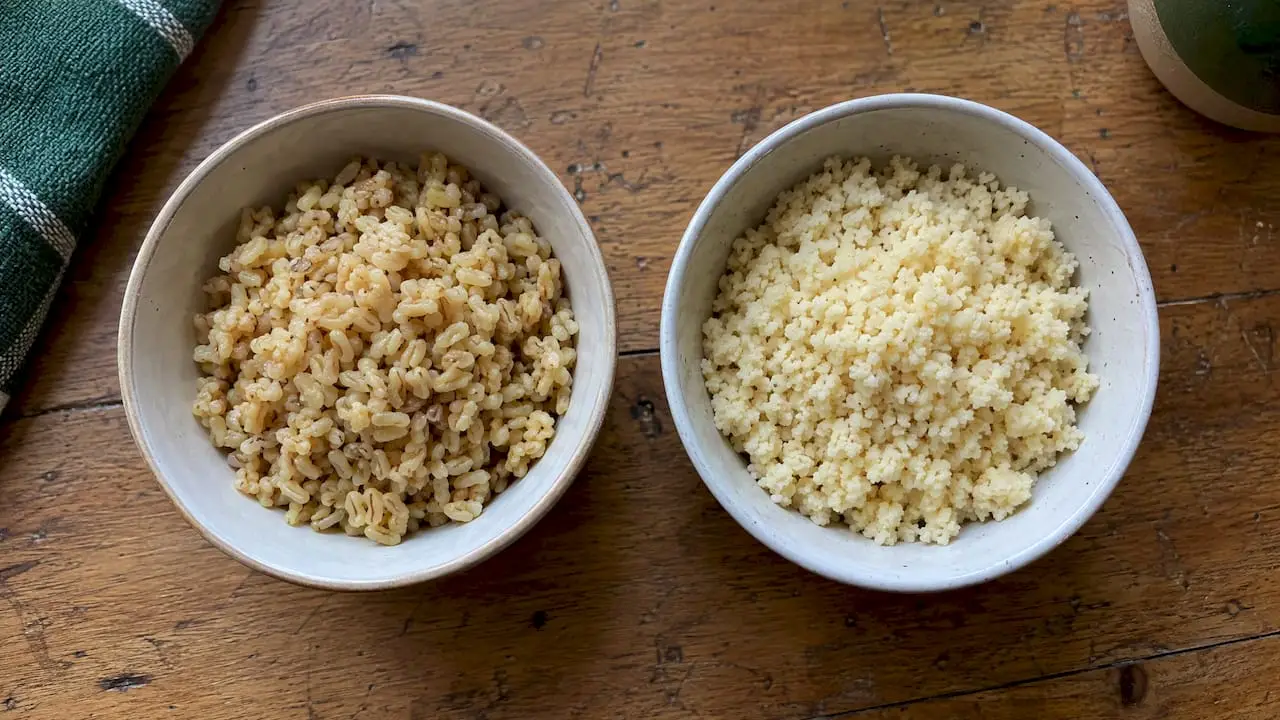
Bulgur also comes in grinds. Fine bulgur softens with a simple soak and suits tabbouleh and kibbeh shells. Coarse bulgur needs simmering and works for pilafs and stuffings. Couscous is usually one size in the supermarket, though larger pearl couscous exists and behaves more like small pasta.
Cooking time and the one mistake to avoid
Couscous is the faster of the two. It is a very fast-cooking option, often needing only 5 to 10 minutes of soaking in boiled water. The risk is the timing. One British cookbook author notes that couscous can turn from fluffy grains to claggy mush in seconds if soaked too long. Pour the hot liquid over, cover, let it sit, then fluff with a fork. Do not leave it to stew.
Bulgur is more forgiving. Its quick cooking time and mild flavor make it a good starting point for people new to whole-grain cooking. Fine grinds need only hot water and patience, and a minute or two of extra soaking rarely ruins the texture.
Where each one belongs
Bulgur is most often used in tabbouleh, where parsley, tomato, mint and lemon outweigh the grain. It also turns up in pilafs, stuffed vegetables, soups and kibbeh. Couscous is a light bed for spicy vegetables and stews, and it can also be a salad base, go into soups or sit beside meats and vegetables, as a wheat-industry guide to wheat foods lists.
A practical rule: if the dish is a salad or a filling that needs structure, choose bulgur. If the dish has a lot of sauce and you want something that soaks it up in ten minutes, choose couscous.
Quick comparison
| Bulgur | Couscous | Quinoa | |
|---|---|---|---|
| What it is | Parboiled, dried, cracked wheat | Steamed, dried semolina pellets (a pasta) | Seed of an herb |
| Flavor | Nutty, earthy | Mild | Slightly grassy, distinct |
| Texture | Chewy | Soft, fluffy | Light with a small pop |
| Typical prep | Soak (fine) or simmer (coarse) | 5 to 10 minutes soaking | 15 to 20 minutes simmering after rinsing |
| Contains gluten | Yes | Yes | No, if uncontaminated |
| Classic use | Tabbouleh, pilaf, kibbeh | Stews, tagines, side dishes | Bowls, salads, pilafs, soups |
Prep times for couscous and quinoa come from a grocer’s grain guide.
Bulgur nutrition and how it compares
The headline for bulgur is fiber. A cup of cooked bulgur has about 151 calories, 5.6 g of protein and 8.2 g of fiber. That fiber figure is high for a grain. A university extension fact sheet states that bulgur contains more dietary fiber than quinoa, oats, millet, buckwheat or corn.
Couscous made from refined semolina is lighter on fiber, because the bran and germ are not part of the product. Whole wheat couscous exists and narrows the gap, so check the package for the word “whole.” Quinoa’s strength is different. According to the USDA’s WIC resource, quinoa is a complete protein with all nine essential amino acids, while bulgur is fiber-rich.
That gives a simple way to choose by goal:
- Want more fiber and a lasting full feeling: bulgur.
- Want a protein-complete base, especially in a plant-based meal: quinoa.
- Want speed and a neutral base: couscous, preferably whole wheat.
No single grain is “the healthy one.” Portion size, what you pair it with and how it is dressed matter at least as much. If sodium is a concern in what goes on top of the grain, our low sodium dinner ideas show how to build flavor without leaning on salt.
Bulgur vs. quinoa: when each makes sense
These two get compared most because both are used as the base of a bowl or salad. They are not interchangeable in every dish, but they swap more easily than you might expect.
Choose bulgur for tabbouleh, stuffed vegetables, and anything where you want a chewy, wheaty body and the most fiber. It is quick and inexpensive.
Choose quinoa when you need gluten-free, want a complete protein, or are building a warm grain bowl. It takes longer, since it usually needs 15 to 20 minutes of simmering after rinsing, and the rinse matters.
If you substitute quinoa for bulgur in a salad, cook it a little firmer, spread it out to cool and dry, and add extra lemon and herbs, because quinoa’s own flavor is more assertive. For a different grain-versus-grain comparison and more on swapping ingredients in a kitchen, see this piece on quinoa compared with rice.
Couscous vs. quinoa: speed against protein
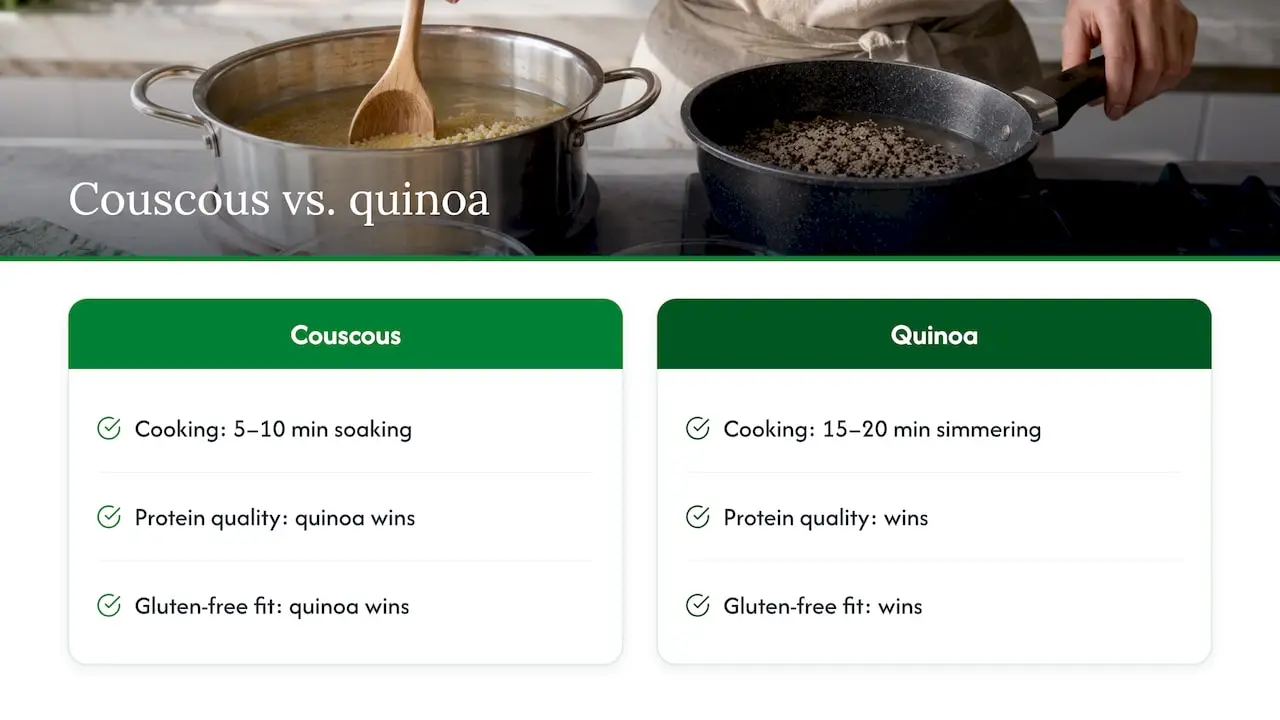
Couscous wins on time. It is technically pasta and cooks in 5 to 10 minutes by soaking, while quinoa simmers 15 to 20 minutes and suits soups, salads and pilafs. Quinoa wins on protein quality and on suitability for gluten-free eating.
For a weeknight, couscous gets a stew onto the table fast. For meal prep that has to hold up in a container for a few days, quinoa and bulgur are sturdier. Couscous can firm up and dry out once chilled, so it is best served soon after it is made.
Gluten, FODMAPs and digestion
This is where the choice stops being about taste.
Is bulgur gluten-free?
No. Bulgur is wheat. Bulgur and couscous both contain gluten, while quinoa is naturally gluten-free, as long as it has not been cross-contaminated in production. The Celiac Disease Foundation also warns that naturally gluten-free foods such as quinoa can pick up gluten during manufacturing and recommends choosing products labeled “gluten-free.” If you have celiac disease or a diagnosed wheat allergy, skip bulgur and couscous, and buy labeled quinoa. Your gastroenterologist or registered dietitian can confirm what is safe for you.
Does bulgur cause bloating?
It can. Mayo Clinic Press lists bulgur and couscous as high-FODMAP foods, meaning they contain fermentable carbohydrates that some people with irritable bowel syndrome find hard to tolerate. The same source puts quinoa among the low-FODMAP foods that are usually fine in reasonable portions. If grains leave you bloated, try a smaller serving, or a swap to quinoa, and talk to a dietitian before cutting out whole food groups.
Cross-contact matters for events, too
If you are hosting someone who avoids gluten, a grain salad is the kind of dish where a mistake hides. Tabbouleh made with bulgur is not gluten-free, and a shared serving spoon is enough to cause cross-contact. Our guide to Miami catering companies with gluten-free options explains what to ask a caterer about prep surfaces, labeling and separate utensils.
How to choose: a short decision guide
- Does anyone eating have celiac disease or a wheat allergy? Use labeled gluten-free quinoa. Skip bulgur and couscous.
- Is the dish a cold herb salad like tabbouleh? Bulgur, fine grind.
- Is it a saucy stew or tagine and you are short on time? Couscous.
- Do you want the most fiber? Bulgur, or whole wheat couscous as a second choice.
- Do you want complete protein without meat? Quinoa.
- Is the grain sitting in a container for several days? Bulgur or quinoa hold better than couscous.
How we use these grains in our kitchen
Bulgur has a special place in Lebanese cooking, and our Haitian-Lebanese roots mean it shows up in the dishes we cook most. If you want to try it at home, our Lebanese mezze guide has recipes, plating and timing for dishes where these grains and herbs work together.
Our perspective
We get this question from clients more often than you might think, usually in the form “which grain should I be eating?” Our honest answer is that it depends on the person at the table. Bulgur is our default when someone wants a satisfying, high-fiber base with real flavor. Couscous earns its place in a saucy dish where the sauce is the star. Quinoa is the one we reach for first when a client avoids gluten, and then we are careful about sourcing and cross-contact, because naturally gluten-free is not the same as safe.
What matters more than the grain is how a meal is built: fresh ingredients, cooked in small batches, seasoned properly, and never frozen. When we design a menu, we talk with each client about preferences and dietary needs first, then choose grains, marinades and seasoning blends to fit. A grain that is right for one household can be wrong for the next, and a conversation with the chef is the simplest way to find out which is which.
— Virginia Jiha
Want it cooked for you?
If you would rather skip the soaking, rinsing and timing, we cook small-batch, never-frozen meals with Haitian-Lebanese flavors and deliver them across Miami, built around your dietary needs. See our chef-crafted meal plans, or book a private dinner at home when you want the full experience.
FAQ
What is the main difference between bulgur and couscous?
Bulgur is whole wheat that has been parboiled, dried and cracked, so it is chewy and nutty. Couscous is a pasta made of steamed, dried semolina, so it is soft and mild. Bulgur has more fiber, and couscous cooks faster.
Can I substitute couscous for bulgur?
Sometimes. In a stew or as a side dish, couscous works well and saves time. In tabbouleh or kibbeh, it will turn out softer and less structured, so fine bulgur is the better choice. Cut the soaking time and fluff gently to avoid mush.
Is quinoa healthier than bulgur?
They are strong in different ways. Quinoa is a complete protein and gluten-free, while bulgur has more fiber than quinoa. The better choice depends on whether you need to avoid gluten, how much fiber you want and what the dish requires.
Is couscous gluten-free?
No. Traditional couscous is made from wheat semolina and contains gluten. People with celiac disease should choose labeled gluten-free alternatives such as certified gluten-free quinoa.
Why do bulgur and couscous bother some people’s stomachs?
Both are high-FODMAP foods, which can cause gas and bloating in people who are sensitive to fermentable carbohydrates. Smaller portions or a switch to quinoa may help. A registered dietitian can guide a proper elimination and reintroduction plan.
Sources
- Guide to Grains, Whole Foods Market
- Wheat Foods Around the World, Eat Wheat
- How to Cook Grains, The Old Farmer’s Almanac
- Couscous, bulgur and quinoa recipes, The Guardian
- Very Delicious Varieties of Whole Grains, Ohio State University Extension
- Bulgur, cooked, 1 cup nutrition facts, University Hospitals
- What Do I Do With Whole Grains?, USDA WIC Works
- Celiac Disease Foundation newsletter, January 2016
- Gluten-Free Diet and Food Label Reading Guide, Celiac Disease Foundation
- What is a low-FODMAP diet?, Mayo Clinic Press