
Haitian cooking does not run on a dry spice rack. Its core flavor is epis, a fresh paste of garlic, herbs and peppers that goes into the marinade, the pot and the rice before anything else. Cloves, thyme, Scotch bonnet and a splash of citrus or vinegar finish the picture. This guide covers what is in a Haitian spice blend, how to use it, how to store it safely, and how we use it in our own Miami kitchen.
TL;DR
- Epis (also spelled epise or zepis) is the foundation of Haitian seasoning: garlic, parsley, scallions, thyme and bell peppers, usually with lime juice or vinegar and oil.
- There is no single correct recipe. Households vary the ratios and the extras, such as ginger, cilantro, cloves or Scotch bonnet.
- Use about 2 to 3 tablespoons per pound of protein, marinate overnight when you can, and sauté epis in oil before adding it to stews.
- Fresh epis is a raw garlic-and-herb mixture, so keep it refrigerated and use it within 4 days, or freeze it for up to 6 months.
- Pikliz, the spicy pickled condiment, is the usual partner at the table.
Table of Contents
- What people mean by Haitian spices
- Where the flavor comes from
- How to use Haitian epis
- Making epis at home
- Storing epis safely
- Buying versus making
- Our perspective: why we cook with epis
- Epis and a Haitian-inspired meal in Miami
- Quick reference: common questions about the flavor profile
- FAQ
- Sources
What people mean by Haitian spices
Search for “Haitian spices” and you will find jars, bundles and recipes for the same thing. That is because the answer to the question “what are Haitian flavors?” starts with one ingredient, not a list of powders.
Epis is the flavor base of Haitian cuisine, made from bell peppers, garlic, citrus juice, parsley and other herbs and spices. Think of it as a green, wet seasoning. Some cooks compare it to Latin American sofrito or to the green seasoning of the English-speaking Caribbean, and one recipe writer draws exactly that parallel.
The distinction matters if you are used to American spice blends. A dry rub is applied at the end or just before cooking. Epis goes in at the start. It seasons the meat from within, then becomes the base of the sauce.
The core ingredients
Culinary historians and chefs list a consistent core: garlic, parsley, scallions, thyme and bell peppers, balanced with lime juice or vinegar and olive oil. Common additions include Scotch bonnet peppers for heat and cloves or nutmeg for warm undertones.
| Ingredient | What it does in epis |
|---|---|
| Garlic | Sharp, savory backbone |
| Parsley | Fresh, green volume |
| Scallions | Mild onion flavor without cooking |
| Thyme | Earthy, slightly floral note |
| Bell peppers | Sweetness and moisture |
| Lime juice or vinegar | Brightness, and some tenderizing action on meat |
| Olive oil | Carries flavor and helps it cook evenly |
| Scotch bonnet (optional) | Heat with a fruity edge |
| Cloves (optional) | Warm, aromatic depth |
Other versions add celery, ginger, red or yellow onion, cilantro or a bouillon cube. Those are choices, not requirements.
One recipe does not exist
Ask ten Haitian cooks for their epis and you will get ten answers. Culinary experts describe epis as a personalized seasoning in which garlic, parsley and scallions stay constant while the ratios and extras reflect family and regional preference. The goal is a clean, aromatic foundation, not a standardized sauce.
That is also why a store-bought jar and a grandmother’s batch can taste so different, and why it is worth knowing what is in yours.
Where the flavor comes from
Haitian food is often described as a meeting of influences. Fine Haitian Cuisine, as cited by House Jako, describes foundations in African and French cooking with significant Spanish and Native American influences. Epis is the medium that ties those influences together, from rice to braised meats, into something recognizably Haitian.
Heat is deliberate and controlled. Scotch bonnet can go into the epis itself, or it can stay out so each person adds their own at the table through pikliz. We wrote about that condiment separately in our guide to Haitian pikliz and how to keep it crunchy and store it safely.
Warm spices play a supporting role. A few whole cloves in a batch of epis, a pinch of nutmeg in a stew, and the dish gains depth without tasting “spiced.” The same warm-spice logic shows up in drinks too. If you enjoy that profile in a glass, these spiced rum cocktail recipes show how cloves and warm aromatics carry over into a different tradition.
How to use Haitian epis
Epis is the most versatile ingredient in the Haitian kitchen according to House Jako, and the techniques are simple once you know them.
As a marinade
This is the classic use, for chicken, pork, beef, fish and shrimp. The guidance we have seen is about 2 to 3 tablespoons per pound of protein. Rub it in thoroughly, getting it under the skin of poultry or into scored cuts of meat.
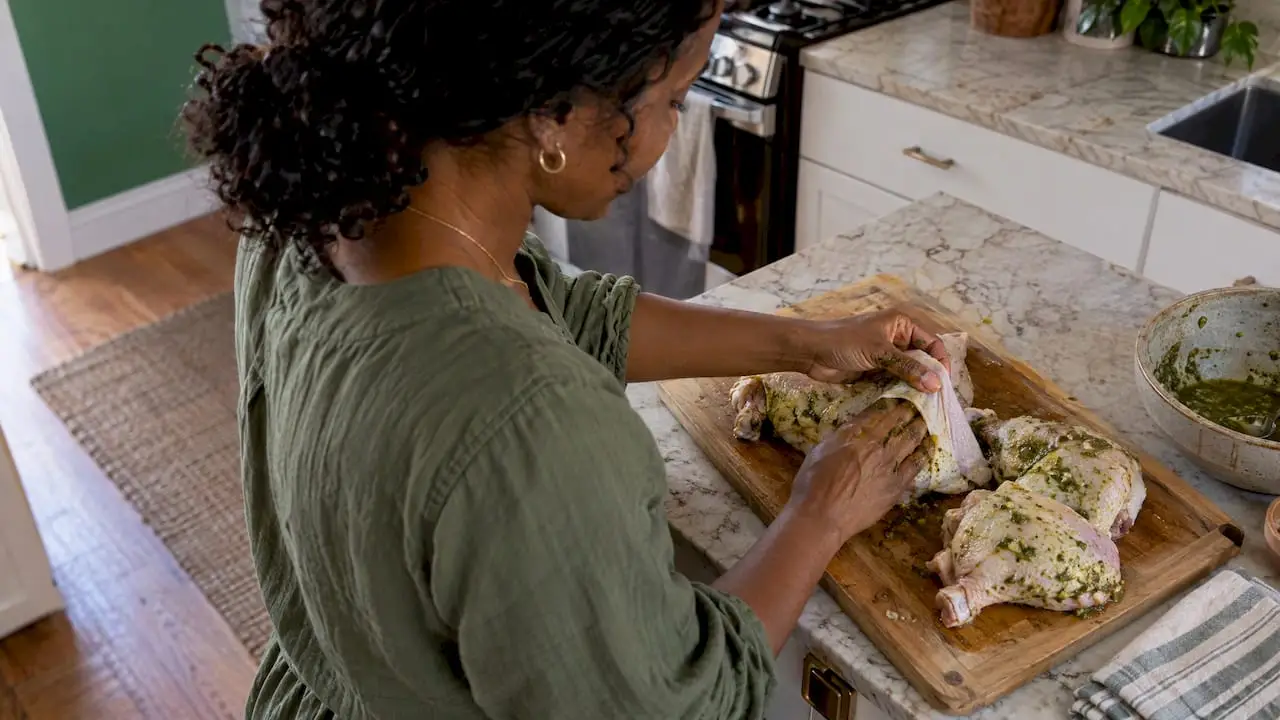
Timing matters more than quantity. Marinate overnight whenever possible so the aromatics and acidity can reach the meat. Fish and shrimp need much less time, because acid can change the texture of delicate seafood. Thirty minutes is plenty for shrimp.
As one example of the range, Haitian-American chef Gregory Gourdet uses epis to marinate everything from fish to chicken thighs to beef short ribs.
As the first step of a pot
For soups, stews, beans and rice, sauté the epis in oil first. Cooking it until fragrant blooms the flavors and builds a deeper base than stirring it in raw. This applies to soup joumou, braised meats, black rice and simple pots of beans.
A practical sequence for a weeknight stew:
- Heat a little oil in a heavy pot.
- Add two or three spoonfuls of epis and stir until the raw garlic smell turns sweet and aromatic.
- Add your protein or vegetables and brown lightly.
- Add liquid, simmer, and taste for salt at the end, since some epis recipes already contain salt.
As a finishing flavor
A small spoonful stirred into cooked rice, roasted vegetables or a pan sauce adds freshness. Keep this use light. Raw epis is strong, and a little goes a long way.
Making epis at home
If you want to try it, the method is straightforward, and the texture is where most people go wrong.
Texture. Good epis is a thick, pesto-like paste, not a liquid puree. Traditionally it is mashed with a wooden mortar and pestle. Many cooks prefer a food processor or mortar over a standard blender. Roughly chop everything first so it does not over-blend, and skip added water, since the vegetables and herbs release enough on their own.
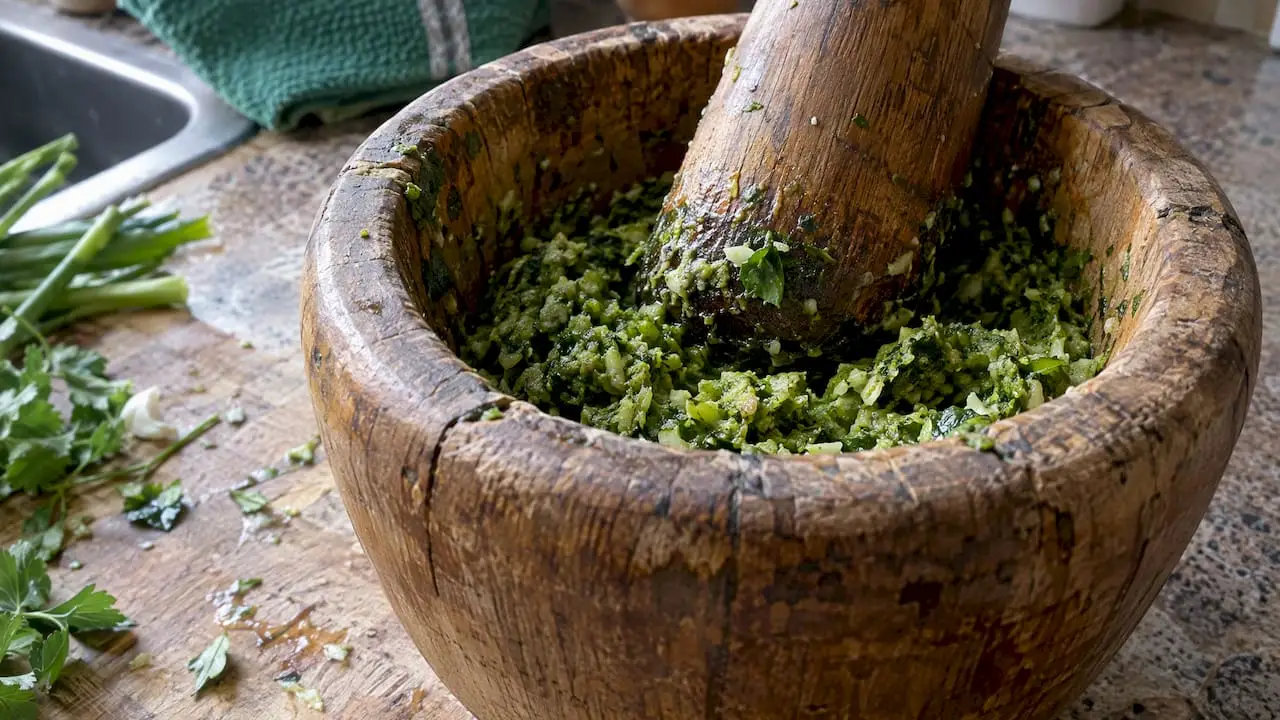
A starting point. One home recipe uses 1 cup of parsley leaves, 2 bell peppers, 1 small onion, 6 sprigs of thyme, 3 scallions, 6 garlic cloves and 3 whole cloves, with optional celery and bouillon, along with lime or vinegar and oil. Treat that as a template. Taste, then adjust garlic, herbs and heat to your household.
Heat. Add Scotch bonnet gradually, and wear gloves when you cut it. You can always add more later. You cannot take it out.
Storing epis safely
This is the part many recipes treat casually, and it deserves more care. Epis is raw garlic and fresh herbs in oil and acid. That mixture is low in acid overall, and bacteria can grow if it is handled loosely.
University extension guidance says such mixtures should be refrigerated and used within 4 days, or frozen for up to 6 months. Many home recipes promise two to four weeks in the refrigerator because of the vinegar and lime juice. Refrigeration is still the baseline, and the extension guidance is the safer standard to follow. The same source notes that boutique producers may use controlled acidification to make shelf-stable products, which home cooks should not try to copy without precise protocols.
Practical habits:
- Never leave epis at room temperature.
- Store it in the coldest part of the refrigerator, usually the back, not the door.
- Use a clean, dry spoon every time you scoop.
- Freeze portions in ice cube trays, then move the cubes to a bag. One cube is a convenient amount for a pot of beans.
- If it smells off, or you are unsure how long it has been there, discard it. If you have a weakened immune system or are pregnant, check food-safety guidance with your doctor or a registered dietitian before relying on long-stored homemade mixtures.
Buying versus making
People also ask where to buy epis. In Miami you can find it in Haitian markets and some grocery stores, and the better versions list their ingredients plainly: herbs, garlic, peppers, oil, citrus or vinegar, salt. Check the label for how it is meant to be stored. A product that needs refrigeration after opening is behaving like fresh epis. A shelf-stable one has been acidified or processed in a way that changes the flavor.
If you cook often, making a batch every week or two and freezing cubes is cheap and gives you the freshest result. If you rarely cook, or you want the flavor without the shopping, chopping and cleanup, a cook who works with it daily is the easier route.
Our perspective: why we cook with epis
At VJ Cuisine, our food comes from a Haitian-Lebanese heritage, and epis is where the Haitian side starts. It is also a good test of whether a kitchen cares. Epis cannot be faked with powder. It needs fresh herbs, real garlic and someone who tastes as they go.
We design and prepare every menu ourselves, in small batches, and our meals are never frozen. That matters most with seasoning. A marinade that has time with the protein, and aromatics that are sautéed rather than dumped in, taste noticeably different on the plate. We also think of epis the way Haitian households do: as a personal signature, not a formula. When a client has dietary needs, such as limiting sodium, avoiding certain ingredients or cooking around allergens, we adjust the blend, because the base is flexible enough to allow it.
One more point from the Lebanese side of our kitchen: both traditions rely on fresh herbs, garlic and acid to lift simple food. If you want to see how that plays out in a different cuisine, our Lebanese mezze guide with three signature recipes covers timing and plating.
— Virginia Jiha
Epis and a Haitian-inspired meal in Miami
If you would rather eat the result than make the paste, we cook Haitian-Lebanese meals for Miami homes. Our meal plans bring fresh, small-batch meals to your door, tailored to your preferences and dietary needs, and you communicate directly with the chef. For an evening at home, private dinners let us build a menu around the flavors you want. For gatherings, see our catering, and for the holidays, our Christmas catering menus. If you want to send something to someone, our guide to sending a food gift that arrives below 40°F explains how we think about cold-chain delivery. Pricing is not published on our site, so reach out for a quote.
Quick reference: common questions about the flavor profile
What are the most common Haitian herbs? Parsley, thyme, scallions and garlic dominate, with celery, cilantro and ginger appearing in many households.
Is Haitian food always spicy? No. Heat is optional in epis and is often added at the table with pikliz.
What is the difference between epis and a dry spice blend? Epis is wet and fresh, used before and during cooking. A dry blend is shelf-stable and typically used as a rub or finish.
FAQ
What is in a Haitian spice blend?
The base is epis: garlic, parsley, scallions, thyme and bell peppers, bound with oil and lime juice or vinegar. Many cooks add Scotch bonnet for heat and cloves or nutmeg for warmth. Ratios and extras vary by household, so there is no single authentic recipe.
How do I use Haitian epis as a marinade?
Use roughly 2 to 3 tablespoons per pound of meat, poultry or seafood, and rub it in well. Marinate overnight for meat and poultry when you can. Seafood needs far less time, often 30 minutes or so.
How long does epis last?
Follow extension-service food-safety guidance: refrigerate it and use it within 4 days, or freeze it for up to 6 months. Some home recipes claim weeks in the refrigerator because of the acid, but that is not the conservative standard. Freezing in ice cube trays keeps portions fresh and easy to use.
Can I make epis in a blender?
Yes, but pulse it, and chop the ingredients first. Epis should stay a thick, pesto-like paste, so avoid adding water. A food processor or a mortar and pestle gives better texture.
Where can I get Haitian-style meals in Miami without cooking?
We prepare Haitian-Lebanese inspired meal plans, private dinners and catering across Miami, made fresh and never frozen. You can start from our meal plans page and tell us about your preferences and dietary needs.
Sources
- Epis, Wikipedia
- Epis Is the Seasoning Base, Bon Appétit
- How to Use Epis in Your Cooking, House Jako
- Haitian Epis recipe, NYT Cooking
- Haitian epis, That Girl Cooks Healthy
- Food safety guidance, University of California Agriculture and Natural Resources (PDF)