

Pick your sit-down time, work backward, and build a 30-minute buffer. That is the whole method, and the sections below turn it into dates, hours and minutes. We anchor every safety step to USDA and FDA food-safety guidance, and we show where a chef-managed option from VJ Cuisine fits if you would rather hand off the clock.
TL;DR:
- Schedule tasks backward from your sit down time: shop for perishables that morning, finish make ahead cooking the day before, and check oven capacity early.
- Keep hot food at 140°F or warmer and cold food at 40°F or colder; refrigerate perishables within 2 hours, or 1 hour above 90°F.
- Cook braises, stews, casseroles, and sturdy desserts the day before, then cool them in shallow containers and label each with the date and time.
- For buffets, hold hot dishes in chafing dishes or warming trays, keep cold platters on ice, and replace empty dishes instead of topping them off.
Table of Contents
- What should you do from weeks out to the morning of the party?
- How do you run party day hour by hour?
- Which dishes can you make ahead, and when?
- What food safety rules should shape your timeline?
- How do you pace the night and brief your helpers?
- What do three ready-made schedules look like?
- A chef’s view on the most common timing mistake
- Want a chef to handle the timing and the cooking?
- FAQ
- Sources
What should you do from weeks out to the morning of the party?
Think of the week before as a calendar, not a to-do pile. Work backward from your sit-down time and slot each task where it belongs. Experienced hosts do exactly this, working backward from dinner and leaving a 30-minute cushion so a late guest or a slow oven does not turn the evening frantic.
- Before the party: Decide the format (cocktail reception, sit-down, buffet) and set the guest list. Ask guests about allergies and dietary needs now, and reserve any rentals or vendors. Our guide to planning a birthday dinner at home follows the same lead-time logic.
- Before the party: Finalize the menu and confirm headcount. Write the shopping list and mark which dishes can be made ahead.
- 2–3 days out: Buy nonperishables, wine and mixers. Prep anything that keeps well, such as dressings, sauces and spice blends. Clear and clean the counters, fridge shelves and serving areas you will use.
- Day before: Finish make-ahead cooking, set the table, pull out serving dishes and label each one with its dish. Chill beverages.
- Morning of: Buy perishables like fresh herbs and bread. Do a final timing check against your sit-down time, set up warmers and clear cold storage space.
Two details save the most stress. First, write the sit-down time at the top of a single page and put every task beneath it with a clock time. Second, do the dish-to-serving-piece labeling the day before, because hunting for a platter while the roast rests is a common source of delay.
If your menu has more than one hot dish, check oven and burner capacity before party day. Two dishes that both need 400°F at the same hour will force a compromise you would rather make on paper.
How do you run party day hour by hour?
Start with the time you want people seated, then count backward. The example below uses a hypothetical sit-down time, so shift the schedule to match yours.
- Morning block: Do the cleaning that shows (entry, bathroom, kitchen surfaces). Complete your mise en place: chop vegetables, measure spices, portion garnishes and cover everything in labeled containers.
- Before cooking: Pick up fresh bread, herbs and ice. Take proteins out of the fridge only when your recipe calls for it, and keep everything else cold.
- Afternoon block: This is your main cooking window. Braises, roasted vegetables, soups and desserts finish here. As each dish is done, cool it quickly in shallow containers and refrigerate. Stage glassware, napkins, serving spoons and a drinks station.
- Before guests arrive: Shower, dress and take a break before the house fills. Light candles last, since they burn down.
- Before guests arrive: Put hot dishes into the oven to reheat. Set the music at low volume and the lights at dinner level. Place cold plates (salad, appetizer, dessert) in the fridge, plated or ready to plate.
- As guests approach: Transfer reheated dishes to warmers or an oven set to a safe holding temperature. Put out a welcome drink and a few simple nibbles.
- When guests arrive: Greet them, hand over a drink and move people toward conversation. Keep the welcome period relaxed, and step away briefly to finish last tasks if needed.
- Call the table: Invite everyone to sit when the first course is ready, not when the host is. Serve the first course when guests are seated.
- Serving cadence: Allow time between courses, longer if conversation is flowing. Resist the urge to rush a table that is having a good time.
- After the meal: Clear plates quickly and quietly, then serve dessert and coffee. Refrigerate perishable food within 2 hours of cooking or removing it from heat, or within 1 hour if the temperature is above 90°F.
Pro Tip: Set phone alarms for the reheat, the warmers and the call-to-table moment, so you never have to check the clock mid-conversation.
The reheat step deserves one more note. Reheating from the fridge takes longer than most hosts expect, especially for dense dishes like lasagna or braised short ribs. Test your dish ahead of time if you can, then write down how long it takes.
Which dishes can you make ahead, and when?
A good make-ahead plan moves the work you can do calmly into the days you have, and leaves only finishing touches for party day. Our four-step Mediterranean make-ahead plan shows how a full menu breaks down this way.
- Ahead of the party: Freeze items that freeze well, such as stocks, soup bases, meatballs, unbaked pastry and cookie dough. Label each with the date.
- Before the party: Make dressings, pickles, spice mixes and sauces that improve with time, like tomato sauce or chimichurri.
- The day before: Cook braises, stews and casseroles, which can benefit from resting. Bake desserts that hold well, such as cheesecake or flourless chocolate cake. Wash and dry greens.
- Morning of: Assemble salads without dressing, slice garnishes and portion butter or dips.
Storage matters as much as timing. Cool food in shallow containers so the center chills fast, and label each container with the date and time it went in. Move frozen items to the fridge ahead of time to thaw.
For finishing, reheat gently and add a final step that restores texture. Re-crisp roasted vegetables in a hot oven, give seared proteins a quick pan finish, and loosen sauces with a splash of stock or water.
If your timeline still feels tight, simplify the menu. One-pan roasts, composed salads and a make-ahead dessert remove entire hot-cooking tasks from the final hour.
What food safety rules should shape your timeline?
Timing is not only about nerves. It is also about keeping guests safe, and a few firm rules should sit on top of every schedule you draw.
Perishable food should be refrigerated within 2 hours of cooking or removal from a heat source, and within 1 hour if the temperature is above 90°F, according to USDA’s Food Safety and Inspection Service. If a dish has sat out longer, discard it rather than gamble.
Hold hot food at 140°F or warmer and cold food at 40°F or colder, and use a food thermometer to confirm both. These limits drive real timeline choices: a hot dish that finishes too early needs a warmer or a low oven, and a cold appetizer should stay in the fridge until the last minute.
Buffets raise the stakes because food sits longer. The FDA’s buffet guidance recommends chafing dishes, slow cookers or warming trays for hot foods, and nesting cold platters in ice. It also advises swapping in a fresh dish instead of topping off a nearly empty one.
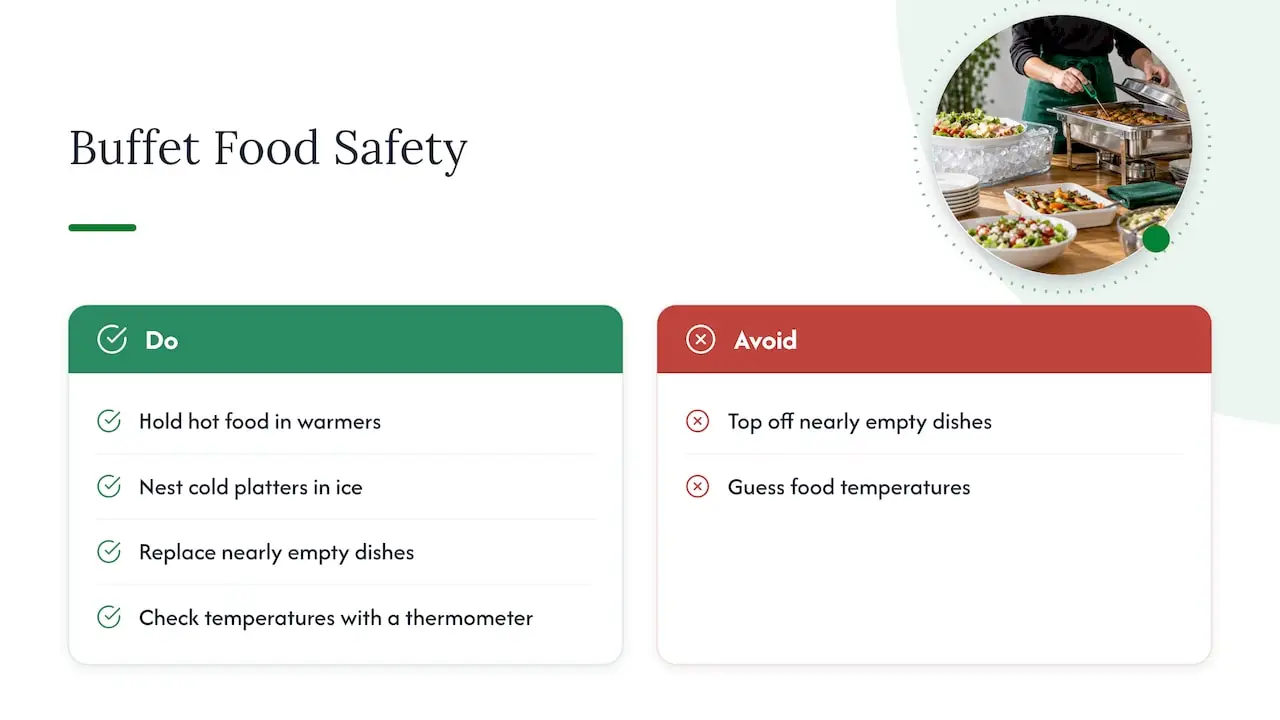
In practice, that means putting out smaller platters and replacing them as needed, and checking temperatures with a thermometer rather than guessing.
Leftovers follow the same clock. USDA says cooked leftovers keep in the refrigerator for 3 to 4 days and can be frozen for 3 to 4 months for best quality, and that dividing them into shallow containers helps them cool quickly. Our guide to sending food gifts that stay cold covers the same cold-chain thinking if you plan to send guests home with a care package.
How do you pace the night and brief your helpers?
A 30-minute buffer can help absorb delays and keep the host calm. It absorbs the late guest, the stubborn oven and the sauce that needs five more minutes, so the host walks in calm instead of sweating. Build it in by setting your internal target for “ready to eat” before you actually plan to seat people.
Pacing comes down to a few habits:
- Between courses: Leave time between courses, longer for hearty menus. Watch plates and conversation, not the clock.
- Calling the table: Say it warmly and plainly (“Dinner is ready, please find your seat”), and have place cards ready so no one hovers.
- Seating and service order: Seat guests with mobility needs closest to the bathroom and kitchen. Serve elderly guests and children first, and bring plates for guests with dietary restrictions out with the others so no one waits and watches.
- Briefing a helper: Give one person a few small jobs with clear start times, such as refilling drinks, clearing plates and replacing platters. Write them on a card so you do not have to repeat yourself.
Cues matter at the end, too. Hosts often let the night find its own close, though expert etiquette guidance notes that dimming lights, changing the music and gradual cleanup signal the evening is winding down.
Pro Tip: Keep a printed run-of-show on the fridge. A helper can glance at it and know what comes next without interrupting you.
What do three ready-made schedules look like?
Pick the format that matches your party and shift every time to your own start. Each uses a hypothetical guest arrival time.
- Cocktail reception: Welcome guests, pass bites as the gathering unfolds, and offer a sweet bite and coffee when the evening begins to wind down.
- Sit-down meal: Welcome guests with drinks, seat them when the first course is ready, and serve the remaining courses at a comfortable pace. Offer a short toast when everyone has settled in.
- Buffet: Open the line when guests are ready to eat, with hot dishes in chafing dishes and cold platters on ice. Check temperatures and replace platters as needed. Open a separate dessert station when the main line has cleared.
A chef’s view on the most common timing mistake
Hosts can schedule the food and forget to make time for themselves. They plan every dish but leave no time to change clothes, greet the first guest or breathe, so the first hour of the party is spent half in the kitchen and half in a panic. Protect a quiet moment before the door opens, and ask yourself what you can cut from the final stretch. When the answer is “nothing,” that is the moment a private chef earns the fee: the clock moves to someone whose full-time job is the clock. If you want to see what that looks like, read how a private chef dinner party works.
Want a chef to handle the timing and the cooking?

If you would rather enjoy your own party, we can run the clock for you. We offer private in-home dinners and boutique catering built around your guest count, your dietary needs and your sit-down time.
- Our Private Dinners put a chef in your kitchen, with a menu tailored to your guests.
- Our Catering handles small events and day-of service so you can stay at the table.
- Every menu is customizable, and we aim to serve food prepared for your event.
Tell us your date and headcount through either page, and we will take it from there.
FAQ
How long should a dinner party last?
How long a dinner party lasts depends on the gathering and the pace of the meal. Plan time for drinks, dinner and a relaxed finish with dessert and coffee. A smaller gathering can run longer if conversation stays lively.
How long does it take to prepare for a dinner party?
Plan on spreading prep over several days rather than one long push. Much of the work happens close to the party, with menu planning, shopping and make-ahead dishes done beforehand. The multi-stage timeline above works backward from your sit-down time to keep each stage short.
What is the basic etiquette for hosting a dinner party?
Greet every guest personally and offer a drink right away. Ask about dietary needs ahead of time, serve everyone at roughly the same pace and let the evening end naturally with cues like softer lighting and a coffee. Hosts who stay present, not stuck in the kitchen, set the tone for the night.
How do you set up a dinner party so everything is ready on time?
Choose your sit-down time first, then write every task backward from it with a clock time. Add a 30-minute buffer, stage your table and drinks beforehand, and set alarms for the reheat and call-to-table moments. Following USDA food safety guidance on holding temperatures keeps the schedule safe as well as smooth.
Sources
- Keep Food Safe! Food Safety Basics | Food Safety and Inspection Service
- Serving Up Safe Buffets | FDA
- Tastingtable