
A good small event catering menu is short, built around one memorable main, and designed so every guest can eat most of what is on the table. For 10 to 30 guests, that usually means two or three passed or stationed starters, one or two mains with shared sides, a dessert, and a clear plan for dietary needs. Below you will find menu structures by format, portion math, a way to handle allergies without a “single sad plate,” and a few Miami venue pointers if you are still choosing a space.
TL;DR
- Keep the menu tight: 2 to 3 starters, 1 to 2 mains, 2 sides, 1 dessert. Fewer dishes, done well, beat a long list.
- Pick the service format first (passed bites, stations, family-style, plated). It sets portions, staffing and the feel of the evening.
- Choose dishes that overlap on dietary needs, then add build-your-own elements so guests self-select.
- Keep hot food hot and cold food cold, and do not leave perishables out for more than two hours.
- Ask for ingredient lists and talk to the chef directly about allergies before the menu is final.
Table of Contents
- Start with the format, not the dishes
- Small event catering menu ideas by occasion
- How much food to plan for
- Build the menu so everyone can eat
- Keep it safe once the food arrives
- Choosing a Miami venue for a small event
- A simple planning timeline
- Our perspective on small event menus
- Let us plan your small event menu
- FAQ
- Sources
Start with the format, not the dishes
Most menu trouble begins when the dishes are chosen before the way they will be served. A braised short rib works beautifully family-style and badly as a cocktail-hour bite. So decide on the format first, then fit the food to it.
One 2026 event catering planning guide describes buffets as flexible and social, family-style as warm and communal, stations as good for cocktail receptions where people move around, plated dinners as controlled but staffing-intensive, and heavy appetizers as the right choice when mingling matters most. For small groups, that translates into a simple rule of thumb:
| Format | Best for | What it asks of the host |
|---|---|---|
| Passed or heavy appetizers | Cocktail-style parties, standing receptions | Enough variety, since guests make a meal from bites |
| Food stations | 20 to 40 guests who will move around | Table space and a clear flow between stations |
| Family-style platters | Dinners of 8 to 20 at one or two tables | Serving dishes and room on the table |
| Plated | Milestone dinners, formal toasts | Service staff and precise timing |
| Buffet | Mixed ages, drop-in guests | A line that does not bottleneck |
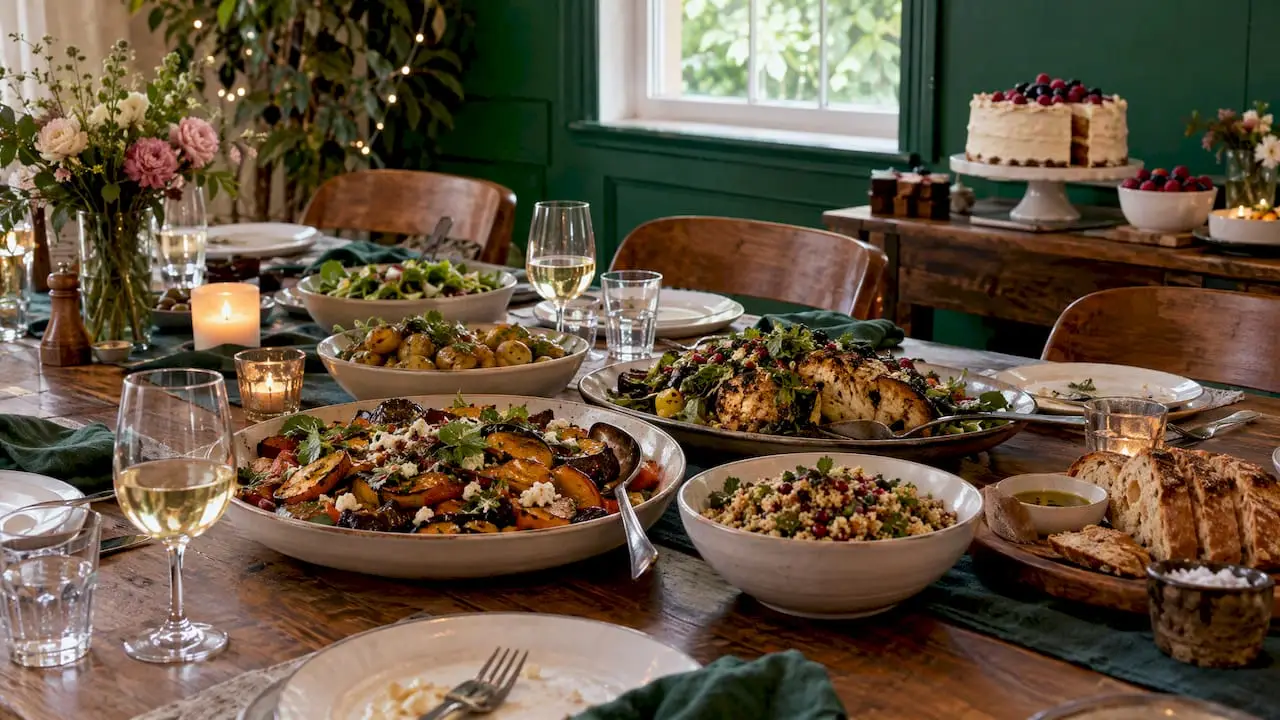
If you want the intimate feel of a dinner without the staffing of plated service, family-style is the format we recommend most for small events. Guests pass dishes, conversation slows down in a good way, and portions adjust naturally to appetites.
Small event catering menu ideas by occasion
The examples below are structures, not fixed menus. A chef should adapt them to your guest list, season and dietary needs.
Intimate dinner for 8 to 12
- To begin: a mezze-style spread with hummus, a smoky eggplant dip, warm flatbread and marinated olives.
- Main: slow-braised chicken or a pan-seared fish with herb sauce on the side, so the plate suits more guests.
- Sides: a spiced rice or grain dish, roasted seasonal vegetables and a crisp green salad.
- Dessert: a citrus or fruit-forward dessert plus something chocolate, served in small portions.
This kind of menu mirrors what we cook in our own kitchen, where Haitian and Lebanese traditions meet. If you like the idea of a make-ahead, Mediterranean approach, our Mediterranean dinner party plan walks through it step by step.
Birthday or celebration for 15 to 25
- Passed or stationed: mini crab cakes or plantain bites, a cheese and fruit board, vegetable crudités with two dips.
- Main stations: a protein carving or skewer station and a build-your-own bowl station with rice, roasted vegetables and sauces.
- Dessert: small pastries or a dessert board that guests can pick at while mingling.
If the occasion is a birthday, our guide on booking catering for a birthday party in Miami covers timing and what to ask for.
Cocktail party or open house for 20 to 40
Here, a menu of hors d’oeuvres carries the entire event. Plan for variety across textures (crisp, creamy, fresh, warm), and make sure at least a third of the items are vegetarian. Our full breakdown of cocktail party hors d’oeuvres and quantities goes further, and the housewarming catering guide covers a similar setup for new homes.
Casual gathering with kids and mixed ages
Build-your-own formats shine here: a slider bar, a taco or rice bowl station, or a pasta station with two sauces. They are familiar to children, interesting to adults and easy to adjust for allergies. For ideas on one-handed food that can be made ahead, these make-ahead snacks and mains for a hosted night show the same principle: food people can pick up and assemble without sitting down.
Micro wedding or rehearsal dinner
With a small guest count, you can afford a menu that feels personal. Two or three starters, a choice of two mains (one of them vegetarian that is a real dish, not an afterthought), shared sides and a cake or dessert table work well. Family-style service gives a micro wedding a warmer feel than a long plated sequence, and it is easier on a small team.
How much food to plan for
Portion math is where small events often go wrong, in both directions. With fewer guests, there is less cushion if you run short, and a missing dish is noticed. Our full catering portions per person guide goes deep. The short version, using WebstaurantStore’s catering portion guide:
- Passed appetizers: 4 to 6 pieces per person per hour.
- Stationary appetizers: 2 to 3 ounces per person for each type, and 2 to 3 tablespoons of dip per person.
- Dinner protein: 4 to 6 ounces per person for plated service, 6 to 8 ounces for a buffet.
- Starch and vegetables: 4 to 6 ounces of each per person.
- Bread: 1 to 2 pieces per person.
- Sliders: 1 to 2 per person before a meal, or 2 to 3 as the entrée.
The same guide notes that buffet and self-service formats generally call for larger portions than plated meals, because guests serve themselves. Two practical adjustments we make for small events: add a little extra when the menu has only one protein, since everyone is choosing the same dish, and trim main portions when you are serving a rich, multi-course starter.
Build the menu so everyone can eat
Dietary needs are the part of a small event menu that most deserves early attention. With 12 guests, one gluten-free guest and one vegan guest are already a meaningful share of the table.
Ask early, ask specifically
Collect restrictions when you send the invitation. Ask about allergies (which are medical) separately from preferences, and ask whether a guest’s family members or plus-ones have requirements too. Then share the list with your chef. Party-planning guidance suggests planning a few dishes everyone can share, keeping optional toppings separate and providing ingredient information for dishes.
Use the overlap principle
Instead of making a separate meal for each restriction, choose dishes that naturally fit several at once. A centerpiece grain or rice dish that is free of gluten, dairy and nuts is one example of this overlap approach: fewer separate items to prepare, and nobody singled out. Roasted vegetables, grilled fish with sauce on the side, and fruit-based desserts do similar work.
Let guests build their own plate
Build-it-yourself meals let people pick foods that work for them and skip those that do not, without putting the host in the position of policing every plate. Bowl bars, taco stations and mezze spreads all do this well. Keep sauces, nuts, cheese and other common allergens in separate, labeled dishes with their own serving utensils.
Plan for cross-contact
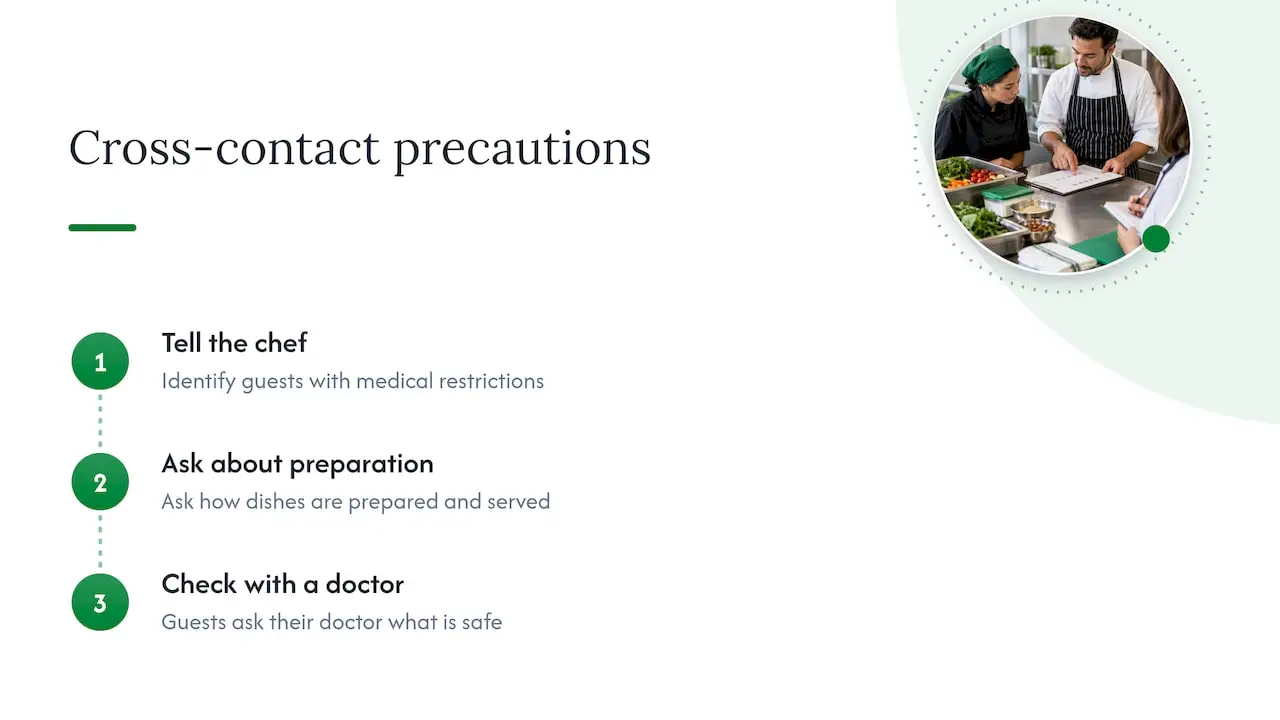
For guests with celiac disease or serious allergies, ingredients are only half the question. Shared utensils, fryers, cutting boards and marinades can all transfer allergens. Tell your chef which guests have medical restrictions, ask how those dishes will be prepared and served, and have the guest check with their own doctor if they have questions about what is safe for them. We cover this in detail in our guide to Miami catering with gluten-free options.
Keep it safe once the food arrives
Small events often run long, and food sits out while people talk. The USDA describes the danger zone for perishable food as 40°F to 140°F, the range where bacteria multiply quickly. Its guidance says perishable food should not sit at room temperature for more than two hours, hot buffet food should stay at or above 140°F, and cold food should stay at 40°F or below.
In practice for a home or small venue event:
- Keep cold dishes refrigerated until just before service, and put out smaller platters that you refill, rather than one large platter that sits for hours.
- Keep hot dishes in warming trays or covered in an oven set to hold temperature until serving.
- Note when each dish goes out, and clear or refrigerate leftovers at the two-hour mark.
- Ask your caterer how the food will be transported and held, particularly in Miami’s heat.
Because our meals are prepared fresh in small batches and never frozen, we plan delivery and service timing so food arrives ready to serve, rather than sitting at a staging area.
Choosing a Miami venue for a small event
If you are still looking for a space, the venue shapes your menu more than most hosts expect: kitchen access, outside-food rules and required vendors can all decide what you can serve.
- Capacity and layout: Tagvenue’s Miami guide suggests matching the space to your guest count and layout, seated or cocktail, and weighing location, transportation, budget and BYOB rules. For groups under 20, it notes per-person booking can be cost-efficient.
- What the price includes: Peerspace advises checking what an hourly rate covers: setup and cleanup time, tables and chairs, kitchen access, refrigeration, trash handling, outside-food and beverage rules, required vendors, extra-guest, cleaning, security and overtime fees, and parking. It also recommends comparing total event cost, not just the advertised rate.
- Small weddings: Fruit & Spice Park in Homestead offers indoor and outdoor spaces for small weddings, including the Citrus House and the Garden Ceremony space, each for up to 50 guests. Check the park’s rental page for current rules on catering and vendors.
Before you sign anything, ask the venue three questions that affect your menu: Can an outside caterer bring and serve food? Is there refrigeration or an oven for holding? Is there a required vendor list? If you are hosting at home instead, see our guide to the best catering for a small gathering in Miami.
A simple planning timeline
- Four to six weeks out: Set the guest count range, the format and a rough budget. Confirm the venue’s food rules.
- Three to four weeks out: Collect dietary needs and share them with your chef. Draft the menu together.
- Two weeks out: Lock the final count and the menu. Confirm delivery or service time, serving equipment and any rentals.
- Two to three days out: Confirm the final headcount and allergy notes. Plan where each dish will be held and served.
- Day of: Set out food in stages, label every dish, and keep a list of ingredients on hand for anyone who asks.
For a holiday event, plan earlier. Our Christmas catering menus in Miami are the place to start if your gathering falls in December.
Our perspective on small event menus
We believe a small event deserves the attention of a private dinner, not the logistics of a large banquet. When the guest list is 12 or 25, every plate is noticed, and that is a reason to cook with more care, not less.
Our approach starts with a conversation. We design each menu ourselves, using fresh ingredients, small batches and nothing frozen, and we draw on the Haitian and Lebanese flavors we grew up with: warm spices, bright herbs, slow-cooked mains and generous shared platters. Clients talk directly with the chef, so dietary needs are discussed at the start rather than patched in the week of the event.
Our advice: fewer dishes, cooked well, with a few thoughtful options so no guest is left with an afterthought. A shared centerpiece, a build-your-own element and a dessert people remember will do more than a long menu ever could.
Virginia Jiha
Let us plan your small event menu
If you are hosting in Miami and would rather spend the evening with your guests than in the kitchen, we can design and deliver the menu. Our boutique catering covers small events with fresh, small-batch food tailored to your guests’ dietary needs, and we can discuss the format, portions and timing with you directly.
Prefer to be served at home? Our private in-home dinners bring the chef’s menu to your table. To see everything we offer, visit VJ Cuisine.
FAQ
How many dishes should a small event catering menu have?
For most gatherings of 10 to 30 people, two to three starters, one or two mains, two sides and one dessert is enough. A shorter menu lets the kitchen cook everything fresh and keeps portions generous. Add variety through build-your-own elements rather than extra dishes.
What is the easiest serving style for a small party?
Family-style or stations are the easiest for most small parties. Family-style suits a seated dinner and feels communal, while stations suit guests who will move around. Plated service works well for formal milestones but needs more staff.
How do I handle several dietary restrictions at one party?
Ask guests early, then build the menu around dishes that suit several needs at once, such as a grain dish free of gluten, dairy and nuts. Add a build-your-own element and label every dish. Tell your chef about any medical allergies so they can plan how those dishes are prepared and served.
How far ahead should I book a caterer for a small event?
Book as soon as you have a date and an approximate guest count, especially for weekends and holidays. Several weeks is a common lead time for menu planning, and more for peak seasons. Contact your caterer for their current availability.
Sources
- Event Catering and Food Planning Guide
- How to Portion Your Catering Menu
- Plan a Party Menu When Guests Have Different Diets
- How to Plan Food for a Crowd with Mixed Dietary Needs
- How to Cook for a Crowd with Different Dietary Requirements
- Don’t Let Bacteria Crash Your Party (USDA)
- The 16 Best Small Party Venues for Rent in Miami
- Best Small Party Venues for Rent in Miami (Peerspace)
- Facility Rentals, Fruit & Spice Park
- Make Ahead Poker Night Food for Hosts