
The best housewarming food is easy to eat while walking through your new home, holds up for a couple of hours, and does not keep you in the kitchen. Guests come to see the space, so the menu should work for people who wander, not sit. Below you will find menu formats, portion math, food safety limits and a way to decide what to cook, what to buy and what to hand to a chef.
TL;DR
- Build the menu for a touring crowd: one-hand bites, a few room-temperature anchors and one or two hot items that stay warm without attention.
- For a two-hour party, plan eight to ten bites per guest, then add two more per extra hour.
- Cold food stays at 40°F or below and hot food at 140°F or above. Perishables should not sit out more than two hours, or one hour above 90°F.
- Design around your new kitchen, not your wish list. Tell any caterer or chef about counter space, oven capacity and outlets.
- Share dietary needs early, including cross-contact concerns, so no guest ends up with a single sad plate.
Table of Contents
- Start With the Style of Party, Not the Dishes
- Menu Ideas That Work for a Touring Crowd
- How Much Food to Plan For
- Design the Menu Around Your New Kitchen
- Keep the Food Safe While Guests Mingle
- Plan for Dietary Needs Without Singling Anyone Out
- Cook, Buy or Hire: How to Decide
- Our Perspective: What Housewarming Food Should Do
- Let a Miami Chef Handle the Food
- A Simple Timeline for the Week Before
- FAQ
- Sources
Start With the Style of Party, Not the Dishes
A housewarming is closer to an open house than a dinner. People arrive in waves, tour the rooms, hold a drink in one hand and talk. A menu that needs forks, knives and a table fights that rhythm.
Pick one of three styles before you pick a single dish:
| Style | Best for | Food looks like | Host effort |
|---|---|---|---|
| Grazing and drop-in | 15 to 40 guests, afternoon or early evening | Boards, skewers, dips, small sweets | Low |
| Heavy appetizers | Evening parties that replace dinner | Hot and cold bites, a few small mains | Medium |
| Seated or semi-seated dinner | 6 to 14 close friends and family | Plated courses or shared platters | High, unless a chef runs it |
Most people choose the first or second. If you want the third, a private dinner in the new home is a strong way to christen the dining room, and it is the format where hiring help makes the biggest difference.
Menu Ideas That Work for a Touring Crowd
Hosts who do this often tend to favor one-hand foods: skewers, pinwheels and cocktail meatballs, rather than dishes that need carving or a plate. The goal is food a guest can eat while looking at your bookshelves.

Room-temperature anchors
These carry the table and need no heat, so they can sit out within safe limits while you greet people.
- A grazing board with cured meats, cheeses, olives, nuts and fruit.
- Hummus, baba ghanoush and whipped feta with warm pita cut into wedges and raw vegetables.
- Tabbouleh or fattoush served in small cups with a fork, so no one needs a plate.
- Mini caprese skewers or cucumber rounds with herbed cheese.
- Pinwheel sandwiches rolled the night before and sliced just before serving.
Hot items that hold well
Choose one or two. More than that and you are back at the stove.
- Cocktail meatballs in a slow cooker.
- Baked kibbeh or spiced beef and herb hand pies, kept warm in the oven and brought out in small batches.
- Chicken or shrimp skewers with a dipping sauce.
- Griot-style marinated pork bites, if you like Caribbean flavors, served with a tangy cabbage-and-pepper slaw such as pikliz on the side.
- Mini quiches or savory tartlets that taste fine warm or at room temperature.
Something sweet
Keep dessert to one hand as well: mini tarts, cookies, brownie bites, baklava or fruit skewers. A single dessert that is distinctive beats four that are ordinary.
Drinks that spare you bartending
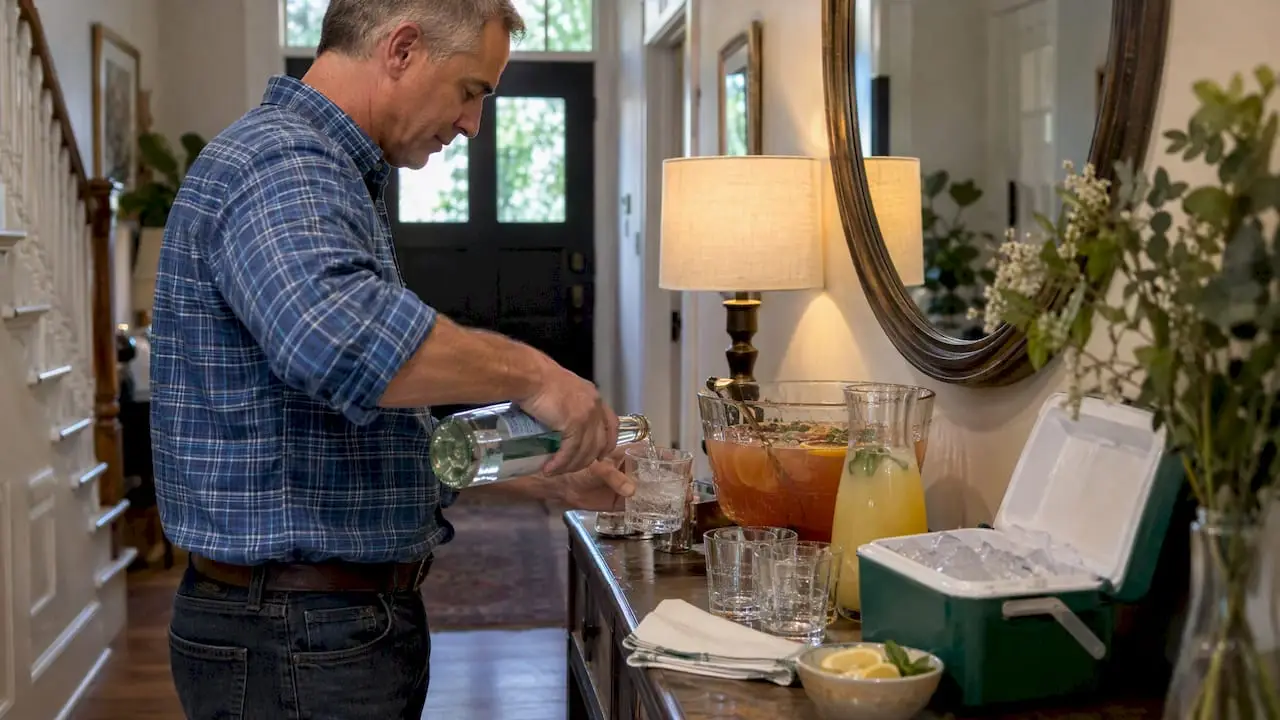
A self-serve station with sparkling water, one batch cocktail or punch, a nonalcoholic option and ice in a cooler removes the need to pour drinks all night. Put it away from the food so the room does not jam up.
How Much Food to Plan For
Portion math is where most hosts either panic or overbuy. A useful rule from a hosting guide: eight to ten bites per guest for a two-hour gathering, plus about two extra bites for each additional hour.
Here is what that looks like at three sizes, assuming a two-hour party and nine bites per guest:
| Guests | Total bites (2 hours) | If the party runs 3 hours |
|---|---|---|
| 12 | about 108 | about 132 |
| 25 | about 225 | about 275 |
| 40 | about 360 | about 440 |
Spread those bites across five or six items rather than two or three. Variety also protects you from the one dish that everyone ignores or everyone loves. If dinner is replaced by the party, move toward the high end and add a heartier item such as small sliders, a grain salad or a pasta tray.
Design the Menu Around Your New Kitchen
This is the part people skip. You may have half-unpacked boxes, one working oven rack or a refrigerator that is still cooling down. One host-focused guide suggests organizing the menu by how much functioning kitchen you actually have, from nothing unpacked to a single appliance plugged in. The aim is to move from cooking to hosting.
Before you commit to a menu, answer these:
- How much counter space can you clear for serving and staging?
- How many oven racks work, and can the oven hold two items at different temperatures?
- Where are the outlets for slow cookers, warmers or a coffee station?
- How much refrigerator and cooler space is free for cold platters and drinks?
- Will guests spill onto a patio or balcony where food needs shade?
If you hire a chef or caterer, give them these answers at the start. A menu can look wonderful on paper and still jam up in a kitchen with one outlet and no counter.
Keep the Food Safe While Guests Mingle
Housewarmings run long and people graze for hours, which is exactly when food ends up out too long. In Miami, with warm weather and open patio doors, it matters even more. The numbers to remember come from the FDA’s guidance on serving safe buffets:
- Keep cold food at 40°F or below and hot food at 140°F or above.
- The range between those temperatures is the Danger Zone. Perishable food should not sit in it for more than two hours, or one hour if the temperature is above 90°F.
- Use chafing dishes, warming trays or slow cookers for hot food, and nest cold dishes in bowls of ice.
- Do not top off an old dish with fresh food. Replace the dish.
The USDA makes the same point with a memorable line: bacteria are party crashers. The practical fix caterers use is simple: do not put everything out at once. Use small platters, keep the rest in the refrigerator or a warm oven, and swap in fresh platters as the old ones empty. A state health department fact sheet offers similar buffet guidance if you want a second reference to print and keep.
A quick timer habit helps: note the time when a platter goes out, and when two hours (or one on a hot patio) is up, it goes back or gets replaced.
Plan for Dietary Needs Without Singling Anyone Out
A housewarming guest list is usually a mix of friends, neighbors, relatives and coworkers, so assume at least a few dietary needs. Vegetarian, gluten-free, dairy-free, nut allergy and low-sodium guests are all common at gatherings this size.
Good practice looks like this:
- Ask on the invitation or RSVP, and ask what the need is, not just that it exists. A preference and an allergy are handled differently.
- Make some dishes naturally suitable for many people, such as vegetable crudités with hummus or grilled skewers with the sauce on the side, rather than a separate token plate.
- Label each dish. Small cards listing main ingredients take minutes and save awkward questions.
- Keep serving utensils separate for each dish. Shared spoons are a common route to cross-contact.
For a guest with celiac disease or a serious allergy, the conversation matters as much as the recipe: how ingredients are stored, how marinades and seasoning blends are made, and which surfaces are used. If gluten-free is part of your guest list, our guide to Miami catering with gluten-free options covers what to ask any caterer before you book.
Cook, Buy or Hire: How to Decide
There are four realistic routes. Mix them freely.
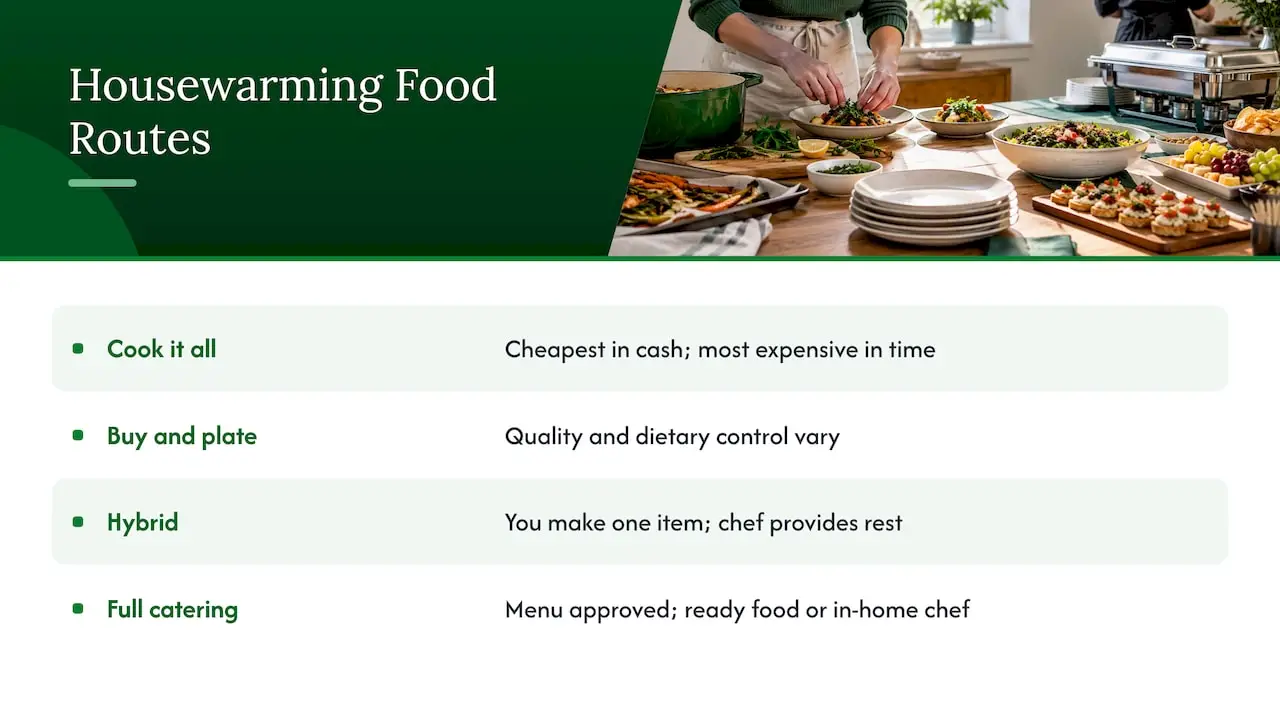
Cook it all yourself. Cheapest in cash, most expensive in time. Works for a small group and a make-ahead menu. Our make-ahead dinner party plan shows how a chef spreads work across several days, and the same logic applies to a housewarming.
Buy and plate. Grocery trays, bakery items and bought dips with a few homemade touches. Fine for a casual open house, though quality and dietary control vary.
Hybrid. You make one signature item, and a chef or caterer provides the rest. This is a popular middle path because the party still feels like yours.
Full catering or private chef. The best choice when you have a larger guest list, a busy week of moving, or guests with dietary restrictions. You approve a menu, and the food arrives ready, or a chef cooks in your home.
A useful test: count the hours you would spend shopping, prepping and cleaning, then picture yourself spending them still surrounded by moving boxes. If that is the week you are having, hire help.
Our Perspective: What Housewarming Food Should Do
We cook small-batch, never-frozen food rooted in a Haitian-Lebanese heritage, and the lesson we return to with housewarming clients is that the menu is there to free you, not to impress at your expense.
The hosts we hear from rarely worry about whether the food is fancy. They worry about being stuck in the kitchen while guests tour the home, or about a guest with a dietary need going hungry. So we start with the people and the kitchen: who is coming, what they can eat, what appliances and counter space exist, and how long the party lasts. Then we design dishes that suit that exact setup.
Flavor is where heritage helps. Bright herbs, citrus, warm spices and tangy pickled vegetables stand up well to room temperature, which is exactly what a long open house needs. Marinades and seasoning blends that we make carefully mean skewers and small bites taste finished even when they have sat for a little while.
Our advice is to resist the long menu. Five or six dishes done well, labeled clearly and replenished in small batches will serve your guests better than fifteen that you cannot keep up with. And talk to your chef directly about dietary needs, because a conversation catches things a form misses.
— Virginia Jiha
Let a Miami Chef Handle the Food
If you would rather greet guests than check the oven, we can help in two ways. For a larger open house, our catering covers boutique spreads for small events, designed with you around your guest count and dietary needs. For a smaller, more intimate celebration of the new home, a private dinner brings the chef to your table. Menus are tailored through direct conversation with the chef, and pricing is discussed when you reach out.
It also helps to book early. Housewarmings often fall on weekends in the busiest parts of the year, and a menu that accounts for your kitchen takes a conversation or two to get right. If your party lands near the end of the year, see our Christmas catering menus too.
A Simple Timeline for the Week Before
Whatever route you choose, the same schedule keeps things calm.
- Two weeks out: confirm the guest count, collect dietary needs and choose a style. If you are booking a chef or caterer, reach out now.
- One week out: finalize the menu and the drinks. Check your serving dishes, ice supply, cooler space and outlets.
- Two days out: shop for anything you are making yourself. Prepare sauces, dressings and marinades.
- The day before: assemble pinwheels, prep vegetables, make any dessert and clear refrigerator space.
- Party day: set up the drink station, label dishes, and put out only the first round of food. Keep the rest chilled or warm, and swap platters as they empty.
If you also want a take-home touch for guests, small edible gifts are a good fit, and our list of make-ahead edible gift ideas has options that travel well.
FAQ
Should I bring food to a housewarming party?
Usually the host is providing the food, so you do not need to bring a dish. A bottle, a plant or a small edible gift is more welcome than something that needs the host’s oven or refrigerator space. If the host asks for a contribution, choose something that needs no reheating and no assembly.
What are good food options for a housewarming party?
Favor one-hand bites such as skewers, pinwheels, dips with pita, mini tarts and cocktail meatballs. Mix room-temperature anchors with one or two hot items that hold in a slow cooker or warm oven. Add one dessert you can eat without a plate.
How much food do I need for a housewarming?
Plan about eight to ten bites per guest for a two-hour party, then add about two bites for each extra hour, according to one hosting guide. If the party replaces dinner, aim higher and add a heartier item. Spread the total across five or six dishes.
How long can food stay out at a housewarming?
The FDA says perishable food should not sit out for more than two hours, or one hour if it is above 90°F. Put out small platters and replace them with fresh ones from the refrigerator or oven. Do not add fresh food on top of food that has been out.
Is a housewarming dinner at home better than an open house?
It depends on your guest list and your kitchen. An open house suits larger groups and drop-in guests. A seated dinner suits a small group of close friends, especially if a chef cooks so you can sit down with everyone.
Sources
- Housewarming Party Food (25 Easy Ideas for a Crowd), The Gourmet Host
- Housewarming Party Food: What to Serve in a New Kitchen, The Kind Host
- Serving Up Safe Buffets, FDA
- Don’t Let Bacteria Crash Your Party, USDA
- Keeping Food Safe During Buffets, Minnesota Department of Health