

A good seafood dinner at home comes down to four decisions: buy fish that was kept cold, buy the right amount, cook it just to doneness, and keep the rest of the meal simple. Get those right and a weeknight fillet or a Saturday dinner for guests can match what you would order at a restaurant. This guide covers each decision, with safe temperatures, portions, methods, menus and a few honest notes on when it makes sense to hand the cooking to a chef.
TL;DR
- Plan on about 1/3 to 1/2 pound of fillets or steaks per person, and buy from a counter that keeps fish refrigerated or on thick, fresh ice.
- Cook finfish to an internal temperature of 145°F, and get seafood into the refrigerator within two hours of buying it (one hour in a hot car).
- Pan-searing, oven-roasting and poaching all work in under 30 minutes. Keep citrus marinades to 30 minutes or less.
- Pregnant or breastfeeding guests and children should be served lower-mercury choices such as salmon, shrimp and cod.
- If you want the dinner without the shopping, timing and cleanup, our private dinners in Miami put a chef in your kitchen.
Table of Contents
- Why seafood is worth cooking at home
- Start with the shopping
- Match the seafood to the occasion
- Cook it right: methods and timing
- Keep the kitchen safe
- What goes with a seafood dinner
- Three menus you can actually pull off
- Our perspective: where a chef changes the dinner
- When it makes sense to hire a chef
- A short checklist before you cook
- FAQ
- Sources
Why seafood is worth cooking at home
Seafood cooks fast, which makes it one of the best weeknight proteins, and it is also one of the most nutritious. The 2025-2030 Dietary Guidelines for Americans point to at least three servings of seafood per week, with omega-3 rich options like salmon and shrimp highlighted for heart health. The same source notes that Americans currently average about 110 mg of EPA and DHA a day, well under the 500 mg target.
The obstacle for most households is not appetite. It is confidence. Fish feels easy to ruin: it dries out, it smells, it sticks to the pan. Almost all of that comes down to the purchase and the clock, both of which you can control.
Start with the shopping
What to look for at the counter
The FDA advises buying fish only if it is refrigerated or displayed on a thick bed of fresh ice, ideally in a case or under a cover. It also cautions that color alone can mislead, since diet, environment and treatment can all change how a fish looks. Use your nose and your eyes together: fresh fish should smell clean and briny, not sharp or sour, and fillets should look moist rather than dried at the edges.
Ask the person behind the counter three things: when it came in, whether it was previously frozen, and where it was caught. A good fishmonger answers quickly. Fish that was frozen at sea and thawed properly can be excellent, so “previously frozen” is not a flaw, but you should know so you do not refreeze it.
Get it home cold
Seafood needs to be on ice or in the refrigerator within two hours of buying it, or one hour if it is exposed to 90°F or more, such as in a car parked in the sun. In Miami, that second number is the one that matters from May through October. Bring a small cooler bag, make the fish counter your last stop, and go straight home.
How much to buy
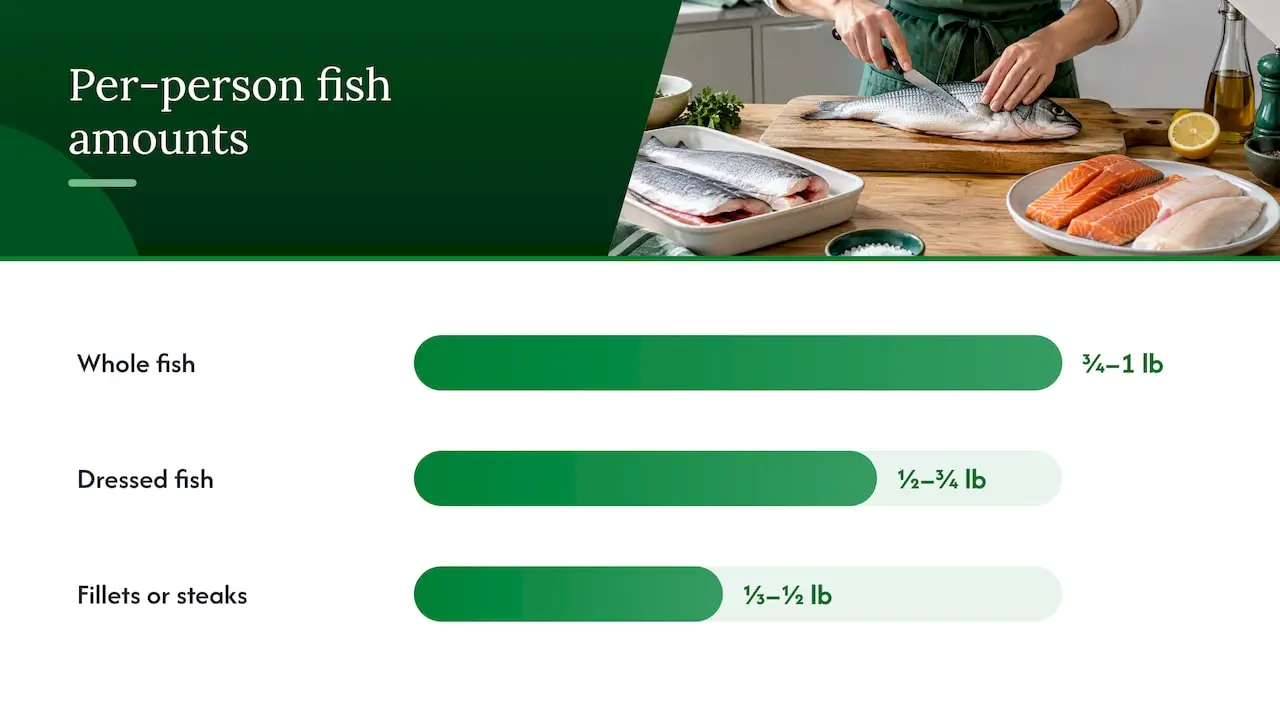
A widely used guide from a seafood retailer gives these amounts per person: 3/4 to 1 pound of whole fish, 1/2 to 3/4 pound of dressed fish, and 1/3 to 1/2 pound of fillets or steaks. For adults, a standard serving is about 4 ounces, roughly the size of your palm, so the upper end of the fillet range gives hearty eaters a generous plate with room for sides.
Choose sustainably
NOAA suggests looking for U.S.-sourced seafood, which is produced under strong environmental management standards, and points shoppers to FishWatch and the Monterey Bay Aquarium’s Seafood Watch for current guidance on which species are sustainable. Check one of them before you commit to a species for a dinner party. Recommendations change as stocks change.
Match the seafood to the occasion
| Occasion | Good choices | Why it works |
|---|---|---|
| Weeknight, 30 minutes | Salmon, cod, shrimp | Cook fast, forgiving, widely available |
| Dinner for guests | Scallops, snapper, halibut | Look elegant, sear well, small portions satisfy |
| Feeding children | Salmon, shrimp, cod | Lower in mercury, mild flavor |
| Casual cookout | Shrimp skewers, mahi-mahi | Hold up to high heat and bold seasoning |
| Light starter | Poached shrimp, crudo-style fish from a trusted counter | Little cooking, clean flavor |
If you are pregnant, breastfeeding, or cooking for young children, the FDA and EPA advice summarized by a university extension service is to choose the lower-mercury “Best Choices” such as salmon, shrimp, cod and canned light tuna. High-mercury species to avoid include swordfish, shark, king mackerel and tilefish. Albacore tuna is a “Good Choice” but limited to 4 ounces per week. If a guest has a specific medical question about seafood, they should ask their own doctor or a registered dietitian.
Cook it right: methods and timing
The safety line: 145°F
The USDA says finfish should reach an internal temperature of 145°F, or until the flesh turns opaque and separates easily with a fork. Shrimp, crab and scallops should turn firm, pearly and opaque. Clams, mussels and oysters are done when their shells open. The federal safe minimum internal temperature chart recommends checking with a food thermometer rather than guessing.
A practical note: many cooks pull a thick fillet a few degrees early and let it rest, since it keeps cooking. If you do that, make sure it reaches the safe temperature, and be more careful when serving children, older adults, pregnant guests or anyone with a weakened immune system.
Three methods that work in under 30 minutes
Cooking seafood at home is often simpler than people expect, and pan-searing, oven-roasting and poaching can all deliver restaurant-quality results in under 30 minutes.
- Pan-sear. Pat the fillet very dry, season, and place it in a hot, lightly oiled pan. Leave it alone until it releases easily, usually a few minutes, then flip and finish. Dry surface plus hot pan is what builds a crust.
- Oven-roast. Put fillets on a sheet pan with vegetables such as tomatoes, zucchini or green beans, drizzle with olive oil, and roast until the fish reaches 145°F. This is the most hands-off method and the best one for a crowd.
- Poach. Gently simmer fish or shrimp in seasoned broth or water with aromatics. Nothing browns, so nothing burns, and the result is tender and clean-tasting. It works well for a lighter meal.
A quick brine for lean fillets
The same Business Insider piece reports that chefs recommend a short saltwater and sugar brine to improve moisture and texture in fillets like halibut or snapper. Rinse and pat dry afterward, then cook as usual.
Marinades: shorter than you think
Citrus and vinegar change the texture of seafood. Keep citrus-based marinades to 30 minutes or less, or the acid will start to firm the flesh and make it tough. Oil, herbs, garlic and spice blends can sit longer. A better habit for most fish: season simply, cook, and add lemon or lime at the table.
Frozen seafood
Never thaw frozen seafood on the counter. The safest way is in the refrigerator, ideally unwrapped and set on several layers of paper towels to manage moisture. Plan for overnight, which means deciding on Tuesday night what you are cooking on Wednesday.
Keep the kitchen safe
Raw seafood is the reason most hosts get nervous, and the rules are not complicated. The CDC’s four steps are Clean, Separate, Cook and Chill. In a seafood dinner, that translates to:
- Use a separate cutting board for raw fish and for anything served raw, like salad or bread. If you only have one board, wash it with soap and hot water between tasks.
- Never put cooked seafood back on the platter that held it raw.
- Do not leave perishable seafood out for more than 2 hours, or 1 hour when it is above 90°F, which includes a Miami patio in summer. The danger zone is between 40°F and 140°F.
- Refrigerate leftovers promptly and keep the cold chain going from store to table.
If you are serving outdoors, our guide to outdoor dining at home covers heat and timing in more detail.
What goes with a seafood dinner
Keep sides bright, light and mostly make-ahead, so you are not at the stove while the fish rests.
- Starch: herbed rice, roasted potatoes, orzo, or crusty bread.
- Vegetables: charred broccolini, shaved fennel salad, blistered tomatoes, grilled asparagus.
- Sauce: a simple lemon-butter, a herb salsa verde, or a garlicky tomato sauce lifts a plain fillet in minutes.
- Drink: a crisp white wine, sparkling water with citrus, or a light beer.
If you are hosting, the planning approach in our Mediterranean dinner party guide works well with fish, and building the evening backward from serving time, as in our dinner party timeline, keeps you at the table instead of in the kitchen.
Cooking for different diets? Our posts on pescatarian versus vegetarian meal planning, low sodium dinners and high-protein family dinners give more ideas for the other nights of the week.
Three menus you can actually pull off
Weeknight: sheet-pan fish and vegetables
Season cod or salmon fillets, scatter cherry tomatoes and green beans on the pan, roast, and finish with lemon and herbs. Serve with rice you started first. Hands-on time is about 10 minutes.
Date night: seared scallops and a simple sauce
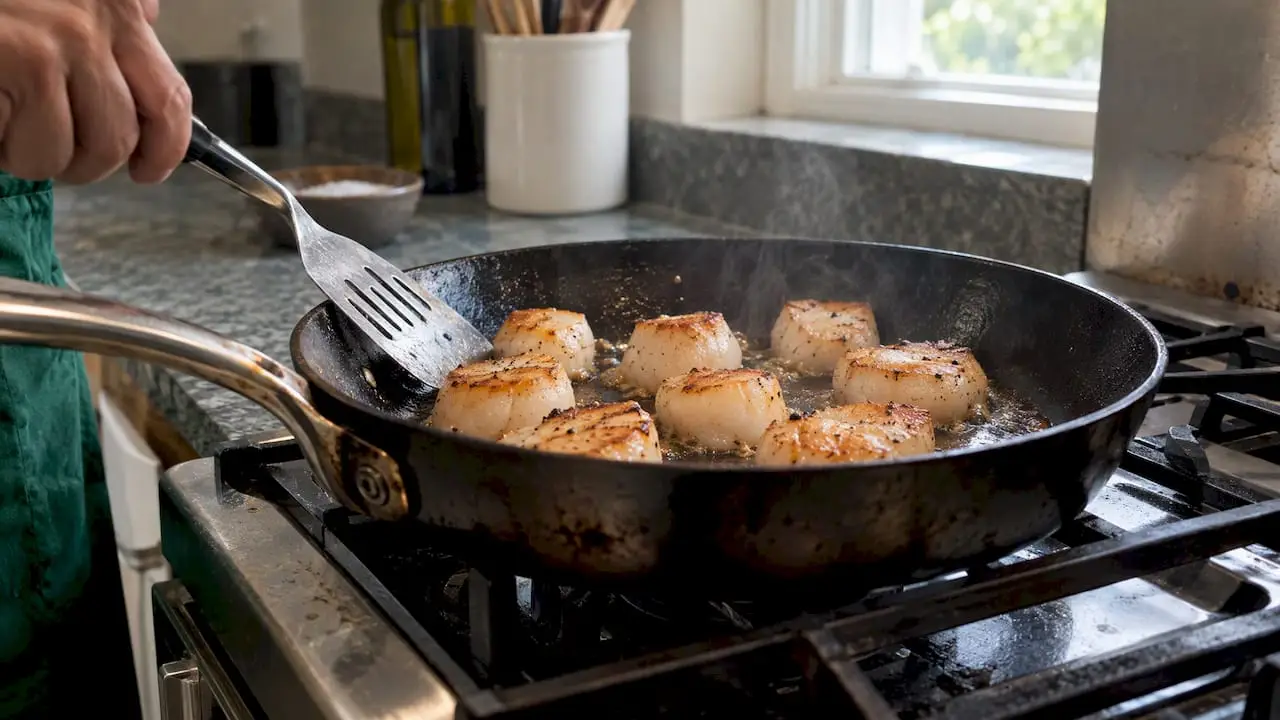
Dry scallops thoroughly, sear in a very hot pan for a short time on each side until firm and opaque, and serve over a creamy base or a bright salad with a pan sauce. Open a bottle, plate it nicely. It looks far more complicated than it is.
Dinner for six: poached shrimp, roasted snapper, make-ahead sides
Start with chilled shrimp and a sharp sauce prepared earlier in the day. Roast whole or filleted snapper, depending on your counter, and serve with a room-temperature grain salad and roasted vegetables. Only the fish needs last-minute attention.
Our perspective: where a chef changes the dinner
We cook with a Haitian-Lebanese heritage, and that shapes how we think about seafood: the flavor should come from marinades, seasoning blends and fresh ingredients, not from heavy sauces covering up the fish. Most of what we cook is small-batch and never frozen, because seafood is the category where freshness is easiest to taste and easiest to lose.
What we see most often is that people do not struggle with the cooking. They struggle with the logistics: finding a counter they trust, getting the fish home cold, timing three dishes to land together, and then cleaning up raw-fish surfaces afterward. Those are the parts a chef absorbs.
Our advice to home cooks is simple. Cook fewer things, better. One well-seasoned fish, one vegetable, one starch. Use a thermometer. Tell us or your guests about allergies and dietary needs early, because shellfish allergies and cross-contact are not areas for improvisation. When a menu needs to be tailored, we talk directly with the client before anything is prepared.
— Virginia Jiha
When it makes sense to hire a chef
Cooking seafood yourself is rewarding, but there are nights when you would rather enjoy the table. If you are celebrating an anniversary, hosting family, or simply have no time to shop and cook, a private chef can do the buying, cooking and plating at your home.
Our private dinners in Miami are designed around your preferences and dietary needs, and for larger gatherings we offer boutique catering. If you want fresh, chef-prepared dinners during the week, take a look at our meal plans. Pricing is quoted per engagement, so reach out through the site with your date, guest count and any allergies, and we will take it from there.
A short checklist before you cook
- Decide on the fish and portion size (1/3 to 1/2 pound of fillet per person).
- Shop last, keep the fish cold, and refrigerate within two hours (one hour in heat).
- Thaw frozen seafood in the refrigerator, never on the counter.
- Set out separate boards and clean platters for raw and cooked food.
- Keep citrus marinades under 30 minutes.
- Cook finfish to 145°F and check with a thermometer.
- Confirm guests’ allergies and pregnancy-related restrictions before you finalize the menu.
FAQ
What is a good seafood dinner for beginners?
Start with sheet-pan salmon or cod and vegetables. The oven does the work, the fish is forgiving, and you can check doneness with a thermometer at 145°F. Add rice or bread and a lemon wedge, and you have a complete meal in under 30 minutes.
How much seafood should I serve per person?
Plan on about 1/3 to 1/2 pound of fillets or steaks per person, 1/2 to 3/4 pound of dressed fish, or 3/4 to 1 pound of whole fish. A standard adult serving is around 4 ounces of cooked fish, so those amounts leave room for hearty appetites.
How do I know when fish is cooked?
Finfish is safely cooked at an internal temperature of 145°F, when the flesh turns opaque and flakes easily with a fork. Shrimp, crab and scallops turn firm, pearly and opaque, and clams, mussels and oysters are done when their shells open. A food thermometer removes the guesswork.
Which seafood is safest for pregnant guests and kids?
The FDA and EPA list salmon, shrimp, cod and canned light tuna among the lower-mercury Best Choices. Swordfish, shark, king mackerel and tilefish are high in mercury and should be avoided, and albacore tuna should be limited to 4 ounces per week. For personal medical guidance, ask an obstetrician, pediatrician or dietitian.
Can I prepare seafood ahead for a dinner party?
Yes, but prepare the sides, sauces and starters ahead and cook the fish last. Poached shrimp can be chilled earlier in the day, as long as it stays refrigerated. Raw fish should stay on ice or in the refrigerator until it goes into the pan.
Sources
- New Dietary Guidelines Emphasize Seafood for Better Public Health, Seafood Nutrition Partnership
- Selecting and Serving Fresh and Frozen Seafood Safely, FDA
- Safe Selection and Handling of Fish and Shellfish, FoodSafety.gov
- Cooking Fresh Fish, Lobster Anywhere
- Seafood for consumers, NOAA Fisheries
- Is Eating Tuna Safe For Me? What About Children?, UNH Extension
- Keep Food Safe! Food Safety Basics, USDA FSIS
- Safe Minimum Internal Temperatures, FoodSafety.gov
- How to cook the best fish at home, Business Insider
- Preventing Food Poisoning, CDC