
Cultural fusion cuisine is cooking that deliberately combines ingredients, techniques, and traditions from two or more food cultures to make dishes that belong fully to neither. A good fusion dish is not two cuisines sharing a plate. It is one idea in which each tradition contributes something the other lacks. Below you will find the definition, real examples, the reasons fusion thrives in cities like Miami, and the principles a chef uses to keep a blended dish balanced.
TL;DR
- Fusion cuisine blends ingredients, methods, and traditions from different regions or ethnic groups into something new, as in Tex-Mex, Italian-American, or Louisiana-Creole cooking.
- Some fusion happened slowly through migration and trade. Other fusion is invented on purpose by a chef, such as Korean tacos.
- Fusion tends to flourish in diverse cities with many restaurants, which is one reason Miami is such a natural home for it.
- The dishes that work are built with technique and balance: acid, sweetness, fat, and spice kept in proportion.
- We cook Haitian-Lebanese food in small batches, never frozen, for Miami homes, dinners, and events.
Table of Contents
- What fusion cuisine actually means
- Examples of cultural fusion in food
- Why fusion grows in cities like Miami
- How cooks combine traditions without making a mess
- A closer look: Haitian and Lebanese flavors together
- Fusion food at home: ways to bring it to your table
- Our perspective on fusion
- Bring Haitian-Lebanese cooking to your table
- How to order or cook fusion well: a short checklist
- FAQ
- Sources
What fusion cuisine actually means
The simplest definition is the one cooks and teachers use: fusion is a style of cooking that merges ingredients and preparation methods from different countries, regions, or ethnic groups. It is not one fixed style with a rulebook. It is a category defined by the act of combining.
The word “cultural” in cultural fusion cuisine matters. A fusion dish is not just a clever pairing of flavors. It carries the history of the people who cooked each tradition, and the best ones show respect for both. A researcher writing in the International Journal of Gastronomy and Food Science notes that fusion foods can symbolize wider sociocultural exchange, and sometimes conflict. Food travels with people, and what lands on the table often tells you who met whom, and under what circumstances.
Two useful distinctions help here:
- Fusion by history. Cultures meet through migration, trade, or colonization, and over generations home cooks adapt dishes to what is available. Nobody announces the result as fusion. It simply becomes a regional cuisine.
- Fusion by design. A chef sets out to combine specific traditions in a new dish, often one at a time, and names it as such.
Both count. The first gives us whole cuisines. The second gives us the menu items people remember.
Examples of cultural fusion in food
People searching for examples usually want two things: whole fusion cuisines, and single fusion dishes. Here are both.
Fusion cuisines
A U.S. state education resource on ethnic food combinations lists Tex-Mex, Italian-American, East-West Asian, and Louisiana-Creole as fusion cuisines. Tex-Mex, for instance, combines the food of the southwestern United States with that of Mexico. None of these started as marketing. They formed where communities lived side by side and shared kitchens, markets, and tables.
Fusion dishes
Single dishes are where fusion gets playful:
- Spaghetti with meatballs, a staple of Italian-American cooking, cited in the same resource as an example of fusion.
- Korean tacos and butter chicken pizza, both named in an Al Jazeera feature on the unlikely origins of favorite foods.
- The California roll and chicken tikka masala, the second being a merging of British and Indian styles that, according to the academic paper on defining contemporary fusion foods, apparently originated in Glasgow.
Notice the range. Some of these feel invented, others feel ancient. After enough years on menus, a fusion dish stops being labeled fusion and becomes simply a dish.
Why fusion grows in cities like Miami
Fusion does not appear evenly. Educational material from Alberta’s agriculture department says fusion cooking emerged largely from urban centers, where diverse populations and a high density of restaurants let chefs trade ideas. The Illinois resource agrees that fusion restaurants find their greatest popularity in ethnically diverse population centers, where audiences are more receptive to innovative dishes.
That describes South Florida well. Miami is a city where Caribbean, Latin American, Middle Eastern, and American food traditions sit within a few miles of each other, and where diners are used to eating across them. A kitchen that cooks from two heritages is not an outlier here. It is a reflection of the neighbors.
The trend is also being watched at the professional level. A piece on gastronomy trends chefs should know about for 2026 is a good place to see how cross-cultural cooking keeps shaping what restaurants and caterers put on the table.
How cooks combine traditions without making a mess
Anyone can put two cuisines on a plate. Making them speak to each other takes craft. Chef Nyesha Arrington, in a Lexus culinary publication, describes successful hybrid cuisine as a meaningful conversation between cuisines rather than a simple substitution, one that often demands nuanced technique. We agree with that, and these are the working principles behind it.
Start with a shared technique
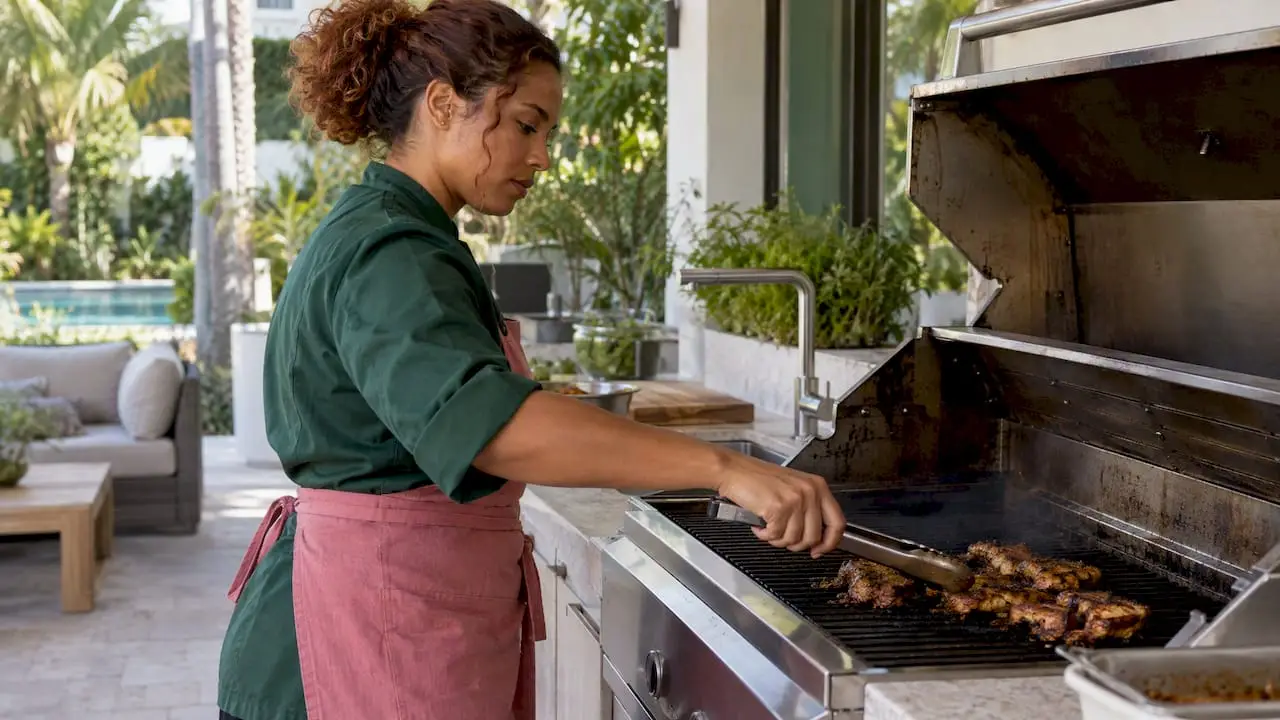
The Illinois resource notes that fusion cooking methods are adapted to regional or ethnic preferences, and that chefs may edit techniques such as grilling, stewing, baking, roasting, and stir-frying. Often the easiest bridge between two cuisines is a technique both already use. If both traditions grill, marinate, or slow-cook, you have common ground before you add a single unfamiliar spice.
Let one tradition lead each dish
A dish with a clear backbone reads as confident. Choose which heritage sets the structure (the protein, the cooking method, the base) and let the second tradition supply the accents: a marinade, a finishing sauce, an herb, a pickle. Dishes where both cuisines fight for the lead tend to taste unfocused.
Balance heat, acid, sweetness, and fat
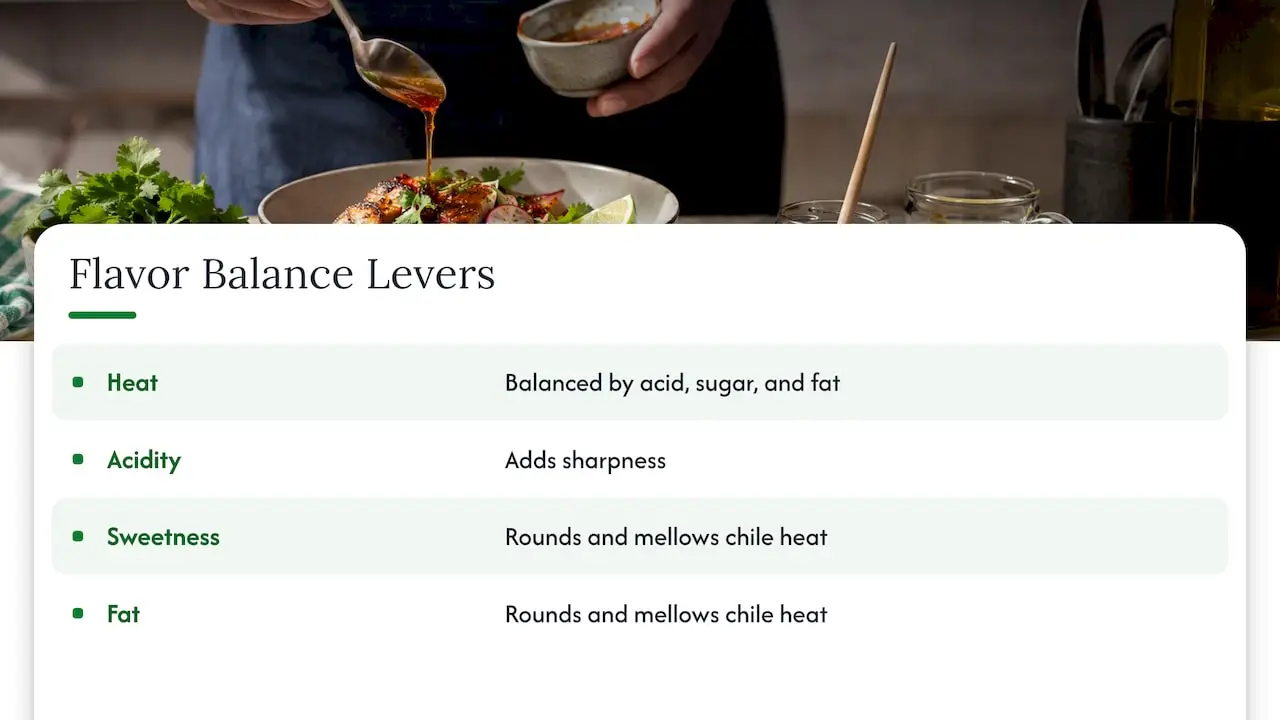
Spice is where many fusion dishes go wrong. Serious Eats explains that heat can be balanced with acidity, sweetness, and fat: acids add sharpness, while sugar and fat round out flavors and mellow chiles. In practice that means a citrus squeeze on a rich, spiced braise, or a cooling yogurt or tahini sauce beside a chile-forward marinade. When we taste a new dish, we check whether each of those four levers is present before we decide whether it is finished.
Respect the source
Fusion that borrows a dish’s name without understanding where it comes from tends to feel hollow. Cooks who grew up with an ingredient, or who have studied it, know why it is used, how much of it is right, and what it should never be paired with. That knowledge is what separates a fusion dish from a gimmick.
Serve it in a way that supports the flavors
Small details help a blended dish read clearly. Serving sauces and condiments on the side, in little pots, lets guests control how much heat or acid reaches each bite, and a set of ceramic sauce pots makes that easy at a dinner table. It also keeps a fusion plate from being overwhelmed by a single bold element.
A closer look: Haitian and Lebanese flavors together
Here is the version of fusion we cook every day. VJ Cuisine is a Miami private chef service rooted in a Haitian-Lebanese culinary heritage, and that dual heritage is the backbone of our menus.
The two traditions share more than you might expect on first look. Both are built on fresh herbs, bright acidity, and layered seasoning, and both have long histories of dishes that reward patient preparation. Haitian cooking leans on aromatic seasoning bases and warm spices, which we cover in our guide to Haitian spices such as epis and cloves. Lebanese cooking brings the mezze table, with its sharing plates, grilled meats, lemon, garlic, and tahini, which you can explore in our piece on cookable Lebanese mezze.
What we do with that heritage is the same thing any thoughtful fusion cook does. We find where the two traditions already agree, such as marinades, herb-heavy sauces, and slow-cooked proteins, and let each add what the other does not. If you want to turn this idea into an actual evening, our guide to building a fusion dinner menu that works walks through the course structure.
Fusion food at home: ways to bring it to your table
Fusion tends to be at its best when the people eating it can talk to the person cooking it. That is why it suits several kinds of home occasions.
- A date night or celebration. A multi-course meal with a clear story is ideal for a blended menu. Our romantic dinner at home plan and our guide to a tasting menu at home show how pacing and course order make unfamiliar pairings feel natural.
- Everyday dinners. Fusion is not only for special occasions. Weeknight meals built on two heritages can break up the routine of the same five dishes, which is a big part of why families choose chef-crafted meal plans.
- A busy professional’s week. Variety is the first thing to disappear when time runs short. Many Miami professionals hire a personal chef for that reason, as we explain in why Miami professionals choose personal chef meal plans.
- Seafood and fresh ingredients. Coastal cooking is a natural place for citrus, herbs, and spice blends from different traditions to meet. See our notes on planning a seafood dinner at home.
Our perspective on fusion
We do not think of our cooking as a trend. Haitian and Lebanese food are both part of who we are, and we cook them together because they belong together on our table.
The test we apply is simple. Does each tradition add something that the other could not? If a dish only works because it is novel, we leave it off the menu. If it works because the flavors balance and the technique is sound, it stays.
That is why every menu is designed and prepared by the chef herself, in small batches, with fresh ingredients and never frozen. Fusion depends on precision: how much acid, how much heat, how long a marinade sits. Mass production and frozen shortcuts flatten exactly those details.
It is also why clients talk with the chef directly. A blended menu should still fit your palate, your family, and your dietary needs, and that conversation is how we get it right.
Virginia Jiha
Bring Haitian-Lebanese cooking to your table
If reading about fusion made you hungry, we can cook it for you. VJ Cuisine offers chef-crafted meal plans delivered fresh across Miami, private in-home dinners for couples and small groups, and boutique catering for events. Menus are tailored to your preferences and dietary needs, with small-batch, never-frozen dishes.
For business gifting, we also create chef-made corporate holiday gifts in Miami. Tell us what you like, and we will build the menu around it.
How to order or cook fusion well: a short checklist
Whether you are ordering from a chef or planning a dinner yourself, these questions help you judge a fusion menu quickly.
- Does each dish have a clear lead tradition? A recognizable backbone with accents is easier to enjoy than a dish that tries to be everything.
- Can you name the technique that connects the two cuisines? Grilling, braising, or marinating shared by both is a good sign.
- Is there acid on the plate? Citrus, vinegar, pickles, or yogurt keep rich and spiced food from feeling heavy.
- Is the heat adjustable? A side sauce gives each guest control.
- Does the cook know the source cuisines? Ask where a dish comes from. A good chef will have a story, not a shrug.
- Are dietary needs built in from the start? Good planning handles allergies and preferences in the design, not as an afterthought.
FAQ
What is fusion food?
Fusion food combines ingredients, techniques, and traditions from two or more food cultures into one dish or cuisine. It can happen slowly through migration, as with Tex-Mex, or deliberately in a chef’s kitchen, as with Korean tacos. The key idea is that the result is something new rather than two dishes side by side.
What are some examples of cultural fusion in food?
Well-known fusion cuisines include Tex-Mex, Italian-American, East-West Asian, and Louisiana-Creole. Popular dishes include the California roll, chicken tikka masala, and butter chicken pizza. In Miami, you will also find many dishes that blend Caribbean, Latin American, and Middle Eastern cooking.
Is fusion cuisine disrespectful to the original cultures?
It does not have to be. Fusion done with knowledge of both traditions, and credit to where each idea came from, tends to honor them. Problems arise when a dish borrows a name or look without understanding the food behind it. Cooks who come from the cultures they combine are often the most careful about this.
Why does spicy fusion food sometimes taste unbalanced?
Usually because heat is not offset. Acidity, sweetness, and fat all mellow and round out chile heat. Adding a squeeze of citrus, a creamy sauce, or a touch of sweetness often fixes a dish that feels harsh.
Can a private chef cook fusion food at home?
Yes. A private chef can design a menu around the traditions you enjoy and adapt it to your dietary needs. At VJ Cuisine, Chef Virginia prepares Haitian-Lebanese inspired meals in small batches, and you communicate with her directly about preferences.
Sources
- Ethnic-Specific Food Combinations (Illinois State Board of Education)
- Exploring International Cuisine Reference Book (Alberta Agriculture)
- Contemporary fusion foods: How are they to be defined, and what are the cultural implications? (ScienceDirect)
- The unlikely origins of some of the world’s favourite foods (Al Jazeera)
- Spice Hunting: How to Increase Your Spice Tolerance (Serious Eats)
- Lexus Culinary Perspectives, Vol. 2