
Great outdoor dining at home comes down to five priorities: a right-sized table with comfortable seating, layered lighting, a clearly defined zone, weatherproof materials, and safety-aware heating or fire choices. Below you will find ten concrete ideas you can copy, practical buying guidance, and a short checklist to shop from.
TL;DR:
- Allow about 24 inches of table space per person, and leave 36 inches for a walkway; measure both before buying furniture.
- Composite decking resists food stains better than natural wood, but slip resistance and flex vary by manufacturer, so check both before choosing.
- Solar lights avoid cables but dim later at night; wired strings stay steady, and every cable should follow an edge rather than cross a walkway.
- Choose electric or infrared heaters, and avoid tabletop pits that burn poured liquid fuel; the CPSC links them to flame jetting and serious burns.
Table of Contents
- 1. Ten outdoor dining ideas you can copy this weekend
- 2. Furniture and materials that survive real outdoor use
- 3. How to layer lighting for evening outdoor dining
- 4. Table styling, centerpieces and serving flow
- 5. Fire features and grills: known hazards and safer choices
- 6. A shopping and setup checklist for your phone
- 7. Keeping bugs away from your outdoor dining area
- 8. Seasonal maintenance to keep your space looking good
- 9. Adding music without overpowering the conversation
- 10. Menu planning for outdoor dining occasions
- 11. A chef’s view: timing is the real secret
- 12. Let us handle the cooking, serving and timing
- FAQ
- Sources
1. Ten outdoor dining ideas you can copy this weekend
These ideas work on a patio, a backyard deck or a small balcony. Start with the first few, then layer in the rest as your budget allows.
- Pick the right dining set. Allow enough table space per person, plus generous clearance behind each chair so guests can stand up and pass.
- Add a serving station. A slim console or sideboard keeps platters off the table.
- Build a conversation nook. Two lounge chairs and a small side table give guests a place for drinks before dinner.
- Define the area with an outdoor rug. Choose one large enough that chairs stay on it when pulled out.
- Layer your lighting. Combine string lights, table lanterns and low path lights.
- Choose durable dinnerware and textiles. Melamine plates and weighted linens survive wind and spills.
- Plan shade early. A cantilever umbrella or a pergola footprint should cover the whole table.
- Pick safe heat. Electric or infrared heaters beat anything that needs open liquid fuel.
- Adapt for a balcony. A drop-leaf bistro table and folding chairs can make a real dinner possible in a small space.
- Use planters as walls. Tall herbs in pots give privacy and a fresh scent.
A few small habits make any of these ideas work better:
- Set the table before guests arrive, with napkins weighted by a small stone or clip.
- Keep a basket of blankets nearby for cooler evenings.
- Stage a water pitcher with citrus so guests stay hydrated outside.
2. Furniture and materials that survive real outdoor use
Outdoor dining furniture takes sun, rain and spilled sauce, so material matters more than style. For floors and decks, Consumer Reports testing finds composite decking resists staining from ketchup, mustard and similar spills better than natural wood, though slip resistance and flexing differ from one manufacturer to the next.
Consumer Reports testing shows composite decking generally resists food stains better than natural wood. For a dining area, that means fewer ring marks and easier cleanup after a messy dinner.
When you compare furniture and surfaces, check these points:
- Slip resistance: wet shoes and a polished surface are a poor mix near the table.
- Flexing under load: a deck board or table slat that bows will wobble your glassware.
- Weathering: look for material rated for sun and moisture, since Consumer Reports evaluates decking over years of extreme climate exposure.
- Maintenance: note whether the product needs sealing or just a rinse.
For shade, size the umbrella to the table. The Terra Outdoor Living AKZ Plus 11’ cantilever umbrella lists a canopy area of 81 square feet, an open height of 9.8 feet and a tilted height of 13.5 feet. Those numbers show what to measure: canopy spread, base footprint and the vertical space you need to tilt it.
3. How to layer lighting for evening outdoor dining
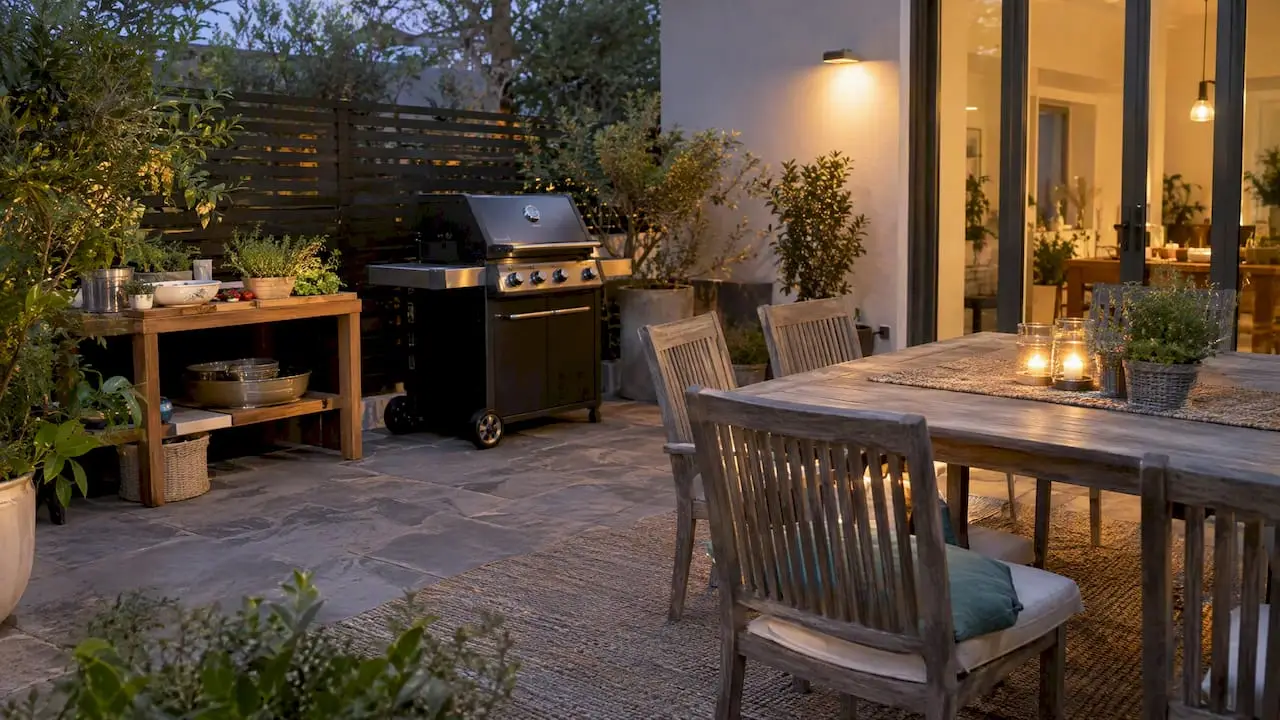
Evening is when outdoor dining feels special, and one bright bulb ruins it. Layer your light instead, keeping every layer low and warm.
- Overhead glow: hang string lights high enough to sit above heads without blocking views.
- Table level: lanterns or candles in glass hurricanes add warmth and stay put in a breeze.
- Ground level: solar or low-voltage path lights between zones mark steps and edges so guests walk safely.
Decide between solar and wired fixtures based on your setup. Solar needs no cables but dims late in the evening, while wired strings stay steady and can run on a dimmer or smart bulb for different scenes. Route any cable along the edge of the space, never across a walkway.
Pro Tip: Make the serving station and grill path a bit brighter than the dining area so you can see food and footing, while the table stays soft.
4. Table styling, centerpieces and serving flow
A good outdoor table looks relaxed and works hard. Keep the centerpiece low or long, such as a row of small herb pots or a runner of candles, so guests can see each other across the table. Tall arrangements block sight lines and tip in the wind.
Plan tableware for the setting:
- Choose shatter-resistant drinkware and sturdy plates that handle a stray gust.
- Use outdoor-friendly tablecloths with clips or weights, or skip linens and use placemats.
- Set only what you need, then bring extras from the station.
For serving flow, put a sideboard or buffet behind the table so dishes travel a short path. Keep hot food near a covered stand or a safe heat source, and place a trash and drop station within reach but out of view, perhaps tucked behind a planter. When platters land in one place and plates leave from another, the meal moves without traffic jams.
5. Fire features and grills: known hazards and safer choices
Fire adds drama, and it also adds the most serious risks at an outdoor dinner. The U.S. Consumer Product Safety Commission has warned that fire pits that burn pooled alcohol or other liquid fuel present flame-jetting and fire hazards, and the agency links them to deaths and dozens of burn injuries.
The CPSC advises consumers to stop using tabletop fire pits that need liquid fuel poured into an open reservoir. Pouring fuel onto a lit or warm unit is the moment the danger peaks.
Safer practices for your space:
- Choose fixed propane or natural gas units installed to the manufacturer’s instructions, or use electric or infrared patio heaters.
- Check model-specific recalls before using any built-in outdoor kitchen, since Paradise Grills recalled several outdoor kitchen models over gas accumulating inside closed lids and cabinets.
- Keep the clearances the manufacturer lists, and never move a lit unit.
6. A shopping and setup checklist for your phone
Use this list in the store or while staging your space. Each step ends with an action you can take right now.
- Measure the seating area. Do this now: record length, width and a 36-inch walkway.
- Confirm table size and chair spacing. Do this now: allow about 24 inches per person.
- Check weather ratings and slip resistance. Do this now: read the product label for outdoor use.
- Confirm umbrella canopy area and base weight. Do this now: match canopy size to the table plus chairs.
- Plan lighting power. Do this now: find the nearest outlet or choose solar.
- Verify the fire feature’s fuel type and recall status. Do this now: search the model name on CPSC.gov.
- Pick outdoor-friendly tableware. Do this now: choose shatter-resistant pieces.
7. Keeping bugs away from your outdoor dining area
Nothing ends a lovely dinner faster than mosquitoes and flies. The good news is that most pest control happens before guests sit down.
Start with standing water. Empty saucers, buckets and plant trays an hour or two before the event, since still water is where mosquitoes lay eggs. Trim shrubs near the table, because dense foliage gives insects somewhere to rest during the day.
Then work with air and light:
- Place a small fan near the table. A gentle breeze makes it hard for mosquitoes and flies to land on food or skin.
- Warm-toned bulbs attract fewer insects than cool white ones, so choose them for your string lights.
- Add citronella candles or torches at the edges of the space, not in the middle of the table, where smoke can touch the food.
For food, cover dishes with mesh domes or inverted bowls until guests are ready to eat. Serve sweet drinks in glasses with lids or in pitchers with a cloth cover, since wasps head straight for sugar. Keep your trash station sealed and a short distance from the table.
If you use any repellent product, read the label first, and apply sprays or lotions away from the food so nothing drifts onto plates. These small habits let you keep the evening relaxed without turning the table into a fortress.
8. Seasonal maintenance to keep your space looking good
Outdoor dining spaces last when you give them a little attention each season. Think of it as four quick resets rather than one big project.
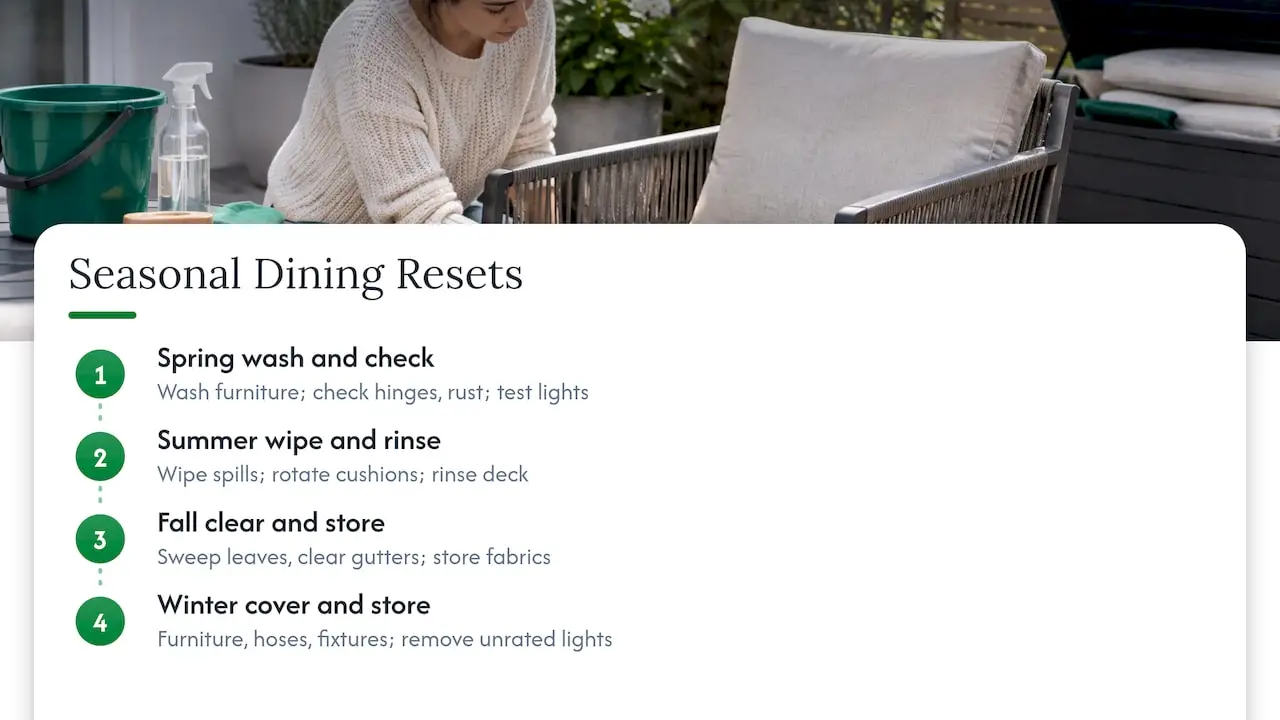
Spring. Wash the table, chairs and cushions with mild soap and water, then let everything dry fully. Check umbrella hinges and the base for rust, and test your lights before the first dinner.
Summer. Wipe spills quickly, because sun bakes sugar and sauce into surfaces. Rotate cushions so one side does not fade, and rinse the deck or patio near the table to keep it from getting slick.
Fall. Sweep leaves from the dining zone and clear gutters above it so water does not drip onto the table. Bring in cushions, linens and anything made of fabric before the first damp week.
Winter. Cover or store furniture, and drain and store hoses and any fixtures with water lines. Take down string lights if they are not rated for cold, or leave them up if the packaging says they are.
Keep a small basket with a soft brush, a microfiber cloth and a bottle of mild cleaner near the space. A quick tidy-up after dinner can help prevent stains that make people think the whole area needs replacing. Follow each manufacturer’s care guide for sealing or special cleaning, since materials differ.
9. Adding music without overpowering the conversation
Music sets the mood, but outdoors it competes with wind, neighbors and open space. The goal is a gentle layer that guests barely notice until it is gone.
Place two small speakers rather than one large one. Spread them at opposite ends of the space and aim them toward the table at about shoulder height. This gives even sound at a low volume, so no one has to lean in to talk. A single loud speaker in a corner forces the people nearest it to shout.
Choose a weather-rated speaker, and keep it under cover or off the ground during rain. Bluetooth speakers are simple, though a wired setup stays reliable if your signal drops. Charge portable units the day before.
Build a playlist in three stages:
- Arrival: upbeat, instrumental or acoustic tracks while guests settle in.
- Dinner: softer, slower music that sits in the background.
- After dinner: a bit more energy as plates clear and conversation continues.
Keep the volume at a level where you can talk comfortably at arm’s length across the table. Check with nearby neighbors if you live close by, and lower the music as the night gets later. A curated playlist saved ahead of time means you will never need to fiddle with your phone while the main course is resting.
10. Menu planning for outdoor dining occasions
An outdoor menu should survive heat, wind and a short walk from the kitchen. Pick dishes that taste good warm or at room temperature, so timing stays forgiving.
Start with a cold or room-temperature first course, such as a chilled salad, marinated vegetables or a platter of dips with grilled bread. These can sit on the table while guests arrive. For the main course, choose something that holds well: roasted chicken, braised short ribs, grilled fish with herb sauce or a vegetable tart. Avoid dishes that must be plated hot and served in seconds, because food cools fast outside.
Keep these planning rules in mind:
- Serve family style so guests help themselves and nothing sits under a lid for long.
- Prepare as much as you can ahead, then finish with a quick sear or reheating.
- Offer a lighter dessert such as fruit, sorbet or small tarts that do not melt into a puddle.
- Keep food safe by holding cold dishes on ice and hot dishes covered, and do not leave perishable food out for long in warm weather.
If you want inspiration for timing and flavors, our Mediterranean dinner party plan walks through a make-ahead approach. For guests with dietary needs, label dishes clearly and keep serving utensils separate so nothing crosses over.
11. A chef’s view: timing is the real secret
Plan the meal backward from the moment guests sit down. Stage courses so the first plate is ready when people arrive, keep salads chilled in a bowl set over ice, and warm plates for the main course so the food stays hot a little longer in cool air. Time your plating in small batches instead of everything at once. These habits come from years of cooking for real events, and our guide to rooftop and poolside private dinners goes deeper on logistics.
— Virginia Jiha
12. Let us handle the cooking, serving and timing
If you want the outdoor dinner without the planning stress, we can take it on. Our private dinners and catering bring chef-led service to your patio, balcony or backyard.
- We design the menu around your guests and any dietary needs.
- We handle food service and coordinate timing from first course to dessert.
- You enjoy the evening as a guest at your own table.

Ready to plan yours? Explore our private dinners or our catering options, and tell us about your space.
FAQ
What do I need for outdoor dining at home?
You need a table with comfortable seating, layered lighting, a defined zone, weatherproof materials and a safe heat or fire solution. Start with the table and chairs, then add shade and lighting so the space is usable day and night.
How high should I hang string lights over a dining area?
Hang them high enough so the glow sits above guests without blocking views. Add lanterns at table height and low path lights between zones for safety.
Are tabletop fire pits safe to use at dinner?
Not if they burn liquid fuel poured into an open reservoir. The CPSC warns that these units cause flame-jetting and pool-fire hazards, so choose electric or infrared heaters instead.
How much space do I need per person at an outdoor table?
Allow enough table width per person and generous clearance behind each chair. That gives guests room to sit, stand and pass dishes.
What flooring handles food spills best outdoors?
Composite materials generally resist stains better than natural wood, according to Consumer Reports testing. Slip resistance varies by manufacturer, so check that rating before buying.