Flavorful low-sodium dinners are absolutely possible once you work from a per-dinner sodium budget and build taste with fresh ingredients instead of a salt shaker. A practical target is a moderate amount of sodium per dinner, with a daily cap of less than 2,300 mg recommended, with room to adjust if a clinician has prescribed a lower limit. The three moves that matter most: cook from fresh, stock no-salt-added staples, and season with herbs, acid, and umami instead of salt.
TL;DR:
- Check sodium labels: servings at 5% Daily Value or less qualify as low, while those at 20% or more count as high.
- Rinse canned beans and chickpeas, choose no salt added tomatoes and broth, and check meat packaging for added saline solution.
- Cook pasta in unsalted water because salted cooking water raises the finished dish’s sodium; finish with mushrooms or starchy pasta water instead of hard cheese.
- Prep plain grains, vegetables, protein, and an unsalted sauce separately, then add fresh herbs or citrus after reheating to keep weekday dinners bright.
- Use 1 tablespoon of fresh herbs for every 1 teaspoon of dried herbs, and add citrus juice or vinegar just before serving to preserve its bright flavor.
Table of Contents
- 1. Ten Low-Sodium Dinners You Can Start Tonight
- 2. How to Add Flavor Without Salt
- 3. Smart Shopping: How to Read Labels and Avoid Hidden Sodium
- 4. Meal-Prep Patterns That Keep Dinners Low-Sodium and Fast
- 5. Chef-Tested Tips From VJ Cuisine: Small Moves, Big Flavor
- A Note From the Chef on Flavor and Health
- How VJ Cuisine Can Help You Eat Well Without the Nightly Cooking
- FAQ
- Sources
1. Ten Low-Sodium Dinners You Can Start Tonight
Each of these swaps a high-sodium shortcut for a fresh technique, and most come together in under 40 minutes.
- Sheet-pan lemon chicken: Roasting chicken thighs with lemon, garlic, and oregano at high heat caramelizes the skin for flavor you’d otherwise get from brining. Cook time: 35 minutes. Swap: skip the pre-made spice rub and mix your own salt-free blend.
- Pan-seared salmon with herb salsa: Salmon has enough natural richness that a bright parsley-caper-lemon salsa does all the seasoning work. Cook time: 15 minutes. Swap: use capers sparingly and rinsed, since brined capers carry sodium.
- Creamy mushroom pasta: Mushrooms bring deep umami, and cooking pasta in unsalted water keeps sodium down since salted cooking water measurably raises the sodium content of finished pasta. Cook time: 25 minutes. Swap: finish with a splash of starchy pasta water instead of grated hard cheese.
- Garlic-lemon shrimp with steamed rice: Shrimp cooks fast and takes on garlic and citrus almost instantly. Cook time: 15 minutes. Swap: buy raw shrimp rather than pre-brined “easy peel” bags, which often carry added sodium.
- Stuffed bell peppers with no-salt-added beans: Peppers hold their own sweetness, and no-salt-added beans let you control every milligram. Cook time: 40 minutes. Swap: season the filling with cumin and smoked paprika instead of a packaged taco mix.
- Chickpea and spinach curry: Curry spices like turmeric, coriander, and ginger carry so much flavor that salt becomes an afterthought. Cook time: 30 minutes. Swap: drain and rinse canned chickpeas before adding them.
- One-pot lentil stew: Lentils break down into a naturally thick, savory base that needs little more than bay leaf and thyme. Cook time: 35 minutes. Swap: use low-sodium or no-salt-added vegetable broth as the liquid.
- Tofu and vegetable stir-fry with citrus-ginger: Fresh ginger and orange zest mimic the punch of soy sauce without the sodium load. Cook time: 20 minutes. Swap: limit soy sauce to a teaspoon finished at the end rather than pouring it in during cooking.
- Roasted sweet potatoes and chickpeas with tahini-lemon: Roasting concentrates natural sugars in the sweet potato, and a tahini-lemon drizzle adds richness. Cook time: 30 minutes. Swap: toss chickpeas in spices before roasting instead of using a seasoned canned variety.
- Baked white fish with tomatoes and herbs: Mild fish like cod or tilapia soaks up the acidity of tomatoes and the aroma of basil and thyme. Cook time: 25 minutes. Swap: use no-salt-added canned tomatoes as the base.
Pro Tip: For the mushroom pasta, hold back a spoonful of sautéed mushrooms to scatter on top at the end. The extra texture and aroma make the dish taste more seasoned than it is.
2. How to Add Flavor Without Salt
Salt isn’t the only path to a dish that tastes finished. Acids, herbs, and umami-rich ingredients do much of that work on their own.
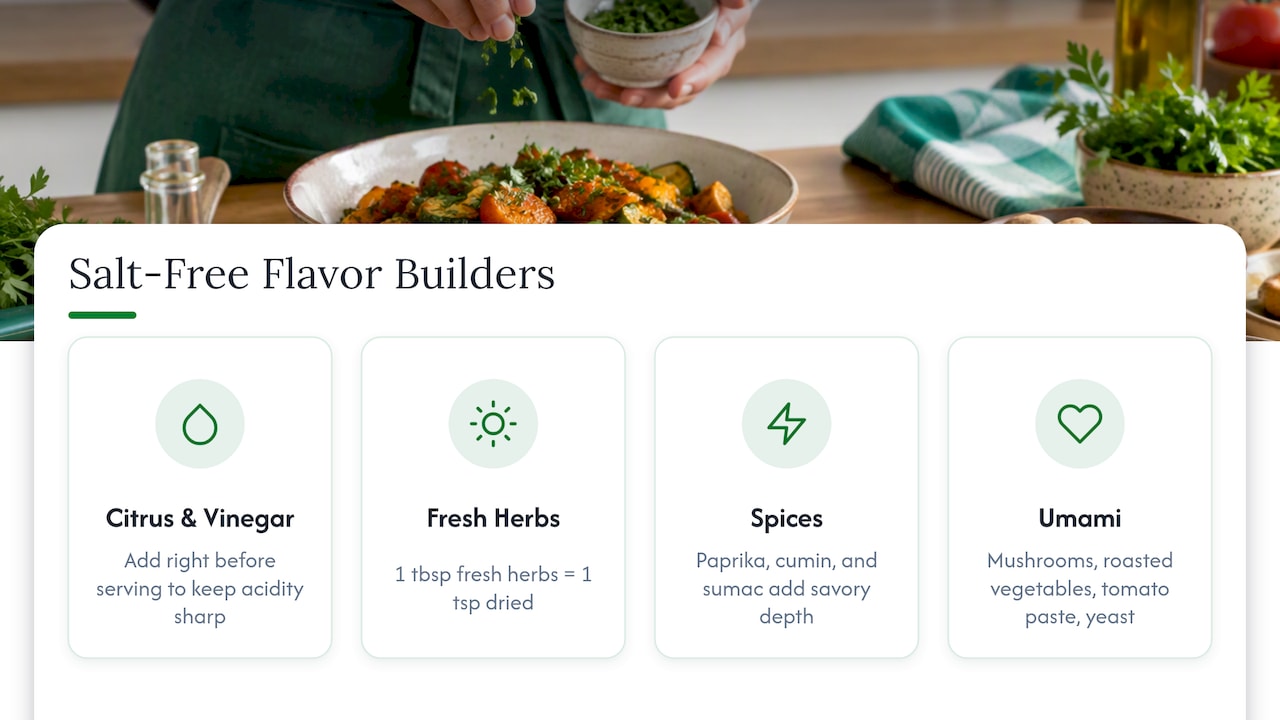
Citrus juice and vinegars brighten a dish and are best added at the end of cooking, right before serving, so the acidity stays sharp instead of mellowing. Fresh herbs like basil, cilantro, and dill add a different kind of lift than dried ones. When substituting, use the standard ratio of 1 tablespoon fresh herbs to 1 teaspoon dried. Spices like smoked paprika, cumin, and sumac create a savory depth that can read as “salty” even without sodium.
For umami, lean on mushrooms, roasted vegetables, and a small amount of reduced unsalted tomato paste. A spoonful of nutritional yeast adds a cheesy, savory note to pasta or grain bowls. The American Heart Association recommends cooking from fresh and leaning on herbs, spices, and citrus instead of reaching for the salt shaker.
Pro Tip: Finish the plate, not the pot. A little citrus zest grated over the top right before serving amplifies aroma and makes a dish taste more seasoned than it is.
3. Smart Shopping: How to Read Labels and Avoid Hidden Sodium
The Nutrition Facts label makes label reading simple once you know the numbers. According to FDA guidance on the Nutrition Facts label, the Daily Value for sodium is less than 2,300 mg per day, and a serving with 5% DV or less is considered low while 20% DV or more is considered high.
A few swaps make the biggest difference at checkout:
- Choose no-salt-added canned tomatoes and low-sodium or no-salt-added broth instead of standard versions.
- Pick reduced-sodium canned beans, or rinse regular canned beans before using them.
- Limit soy sauce or look for a low-sodium version, and check fresh meat packaging for added saline solution.
- Watch for hidden sodium in jarred sauces, deli meats, packaged rice or pasta mixes, and many pre-shredded cheeses.
4. Meal-Prep Patterns That Keep Dinners Low-Sodium and Fast
A simple Sunday prep session sets up a week of low-sodium dinners without relying on processed convenience foods. Cook a plain grain, roast a tray of vegetables, grill or bake a plain protein, and make one unsalted sauce base to finish each plate differently through the week. Store components separately in the fridge and reheat gently, adding fresh herbs or a squeeze of citrus after reheating so the flavor stays bright instead of flat.
Three fast combinations that work on busy nights:
- Grain bowl: reheated grain, roasted vegetables, and a dollop of tahini-lemon sauce.
- Sheet-pan refresh: leftover roasted protein and vegetables rewarmed together with a drizzle of good olive oil and fresh herbs.
- One-pot soup: a ladle of unsalted broth simmered with leftover grains, vegetables, and a handful of fresh greens.
5. Chef-Tested Tips From VJ Cuisine: Small Moves, Big Flavor
We build flavor in layers in our own kitchen: aromatics go in first, then a hard sear or browning step, then a finishing splash of acid right before plating. That order matters because browning creates savory compounds that read as “seasoned,” and acid added last stays sharp instead of fading into the dish.
- Turn leftover plain roasted chicken into dinner in 15 to 20 minutes: shred it, warm it with sautéed garlic and chili flakes, then finish with lime juice and fresh cilantro.
- Reserve fresh herbs and citrus zest for the final minute of cooking, not the beginning.
- Brown one component hard, whether it’s onions, mushrooms, or the protein itself, to build a savory base the rest of the dish can lean on.
As a private chef service working in small batches and never freezing our meals, this layering approach is part of how we season every dish we send out.
A Note From the Chef on Flavor and Health
Cooking low-sodium food for my own family taught me that the habit sticks when it still tastes like a reward at the end of a long day, not a restriction. Try three or four of these swaps for one week and pay attention to how your palate adjusts. Most people notice they stop missing the salt faster than they expect.
— Virginia Jiha
How VJ Cuisine Can Help You Eat Well Without the Nightly Cooking
When a full week of fresh, low-sodium cooking isn’t realistic, we build the menu for you. Our meal plans arrive fresh and small-batch, never frozen, and our private dinners are tailored to the dietary needs you bring to the table.
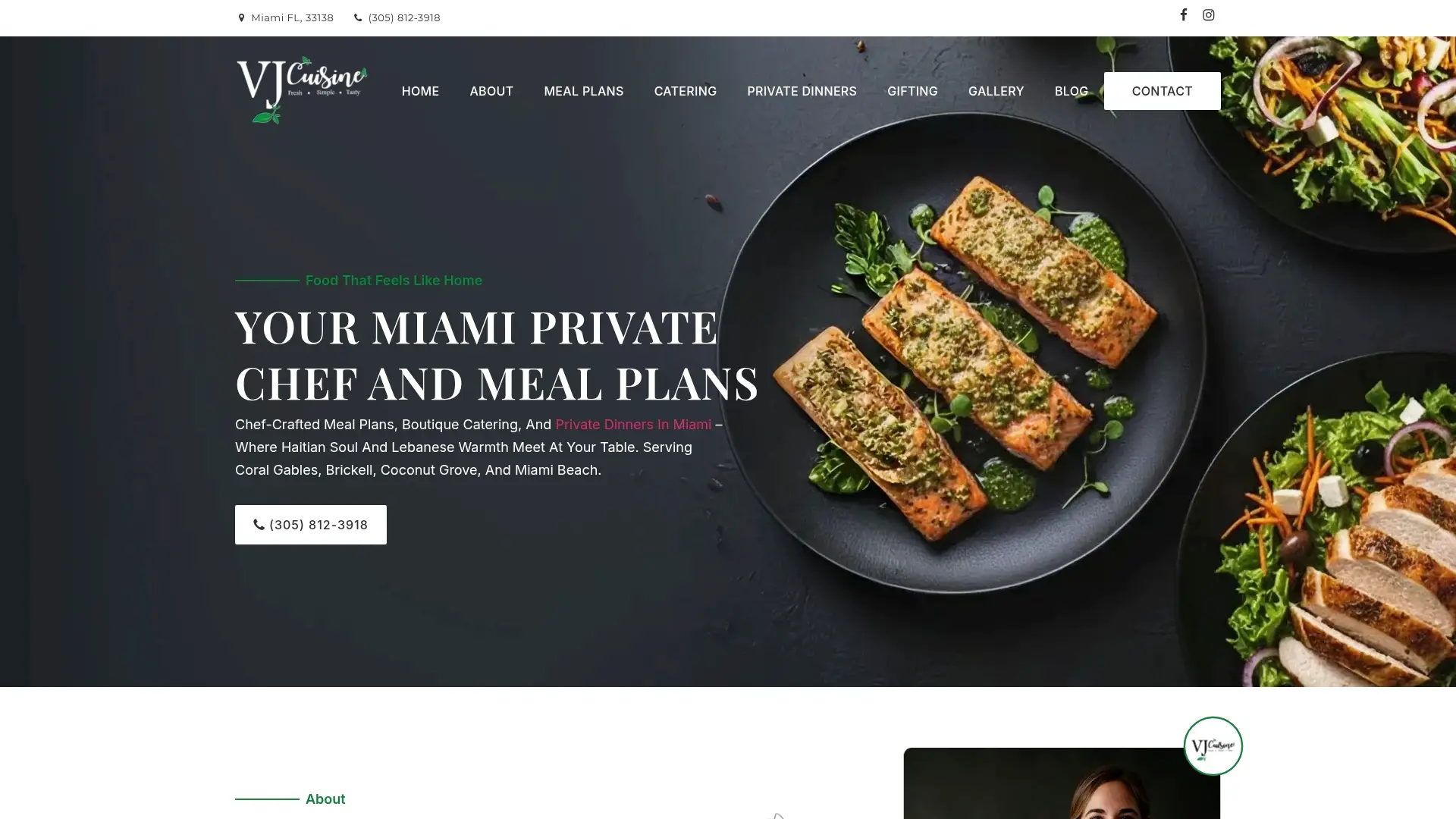
- Meal Plans: menus built around fresh, unprocessed ingredients, including low-sodium options.
- Private Dinners: a chef in your home designing a menu around your health goals, from a first course to dessert.
- Catering: catering for small events that can be designed around low-sodium or other dietary requirements.
Visit our meal plans page to see a sample menu or request a consultation and let us handle the sodium math while you enjoy the dinner.
FAQ
What Can I Eat on a Low-Sodium Diet?
You can eat fresh meats, poultry, fish, eggs, fresh or frozen vegetables, fruit, plain grains, and dried or no-salt-added canned legumes. Season with herbs, spices, citrus, and vinegar instead of salt, and limit processed foods like deli meats, canned soups, and packaged sauces where most dietary sodium hides.
What Flushes Out Sodium Fast?
Drinking water and eating potassium-rich foods like bananas, spinach, and sweet potatoes supports the body’s natural process of balancing sodium levels. There’s no instant fix, so the more reliable strategy is reducing sodium intake at each meal going forward.
Is Pasta OK on a Low-Sodium Diet?
Pasta itself is low in sodium, but cooking it in salted water significantly raises the sodium in the finished dish, as shown in research on pasta’s mineral content during cooking. Cook pasta in unsalted water and season the sauce with herbs, garlic, and acid instead.
What Meal Has the Least Amount of Sodium?
A meal built from fresh, unprocessed ingredients, like a baked fish fillet with roasted vegetables and a plain grain, tends to have the least sodium since nothing is pre-salted or packaged. Checking the Nutrition Facts label on any packaged ingredient you add helps confirm it stays under 5% Daily Value for that serving.
Sources
- FDA interactive Nutrition Facts label — Sodium guidance
- Sodium-Smart recipes and tips — American Heart Association
- Pasta as a source of minerals; effect of culinary processing on mineral content (PMC)