Pescatarian diets include fish and seafood alongside plant foods, while vegetarian diets exclude all animal flesh, including fish. Pescatarian eating generally makes it easier to meet omega-3 and vitamin B12 needs, while vegetarian eating tends to carry a lower carbon footprint and stricter ethical boundaries. The right pattern depends on your health priorities, ethical stance, and sustainability goals, not on which diet wins a popularity contest.
TL;DR:
- Vegetarians who rarely eat eggs or dairy need fortified foods or supplements for B12; vitamin C with beans or spinach improves plant iron absorption.
- Fish eaten once or twice weekly was linked to 17 beneficial health associations, but only about one third had moderate or high quality evidence.
- Vegetarian diets have lower average carbon footprints; pescatarians should check sustainability guidance and local advisories before eating fish they catch themselves.
- People who are pregnant, breastfeeding, trying to conceive, or feeding young children should choose 8 to 12 ounces weekly of lower mercury fish.
Table of Contents
- At a Glance: How the Two Diets Compare
- What Pescatarian and Vegetarian Actually Mean
- Closing the Nutrient Gaps on Each Diet
- What the Research Says About Health Outcomes
- Environmental and Ethical Trade-Offs
- How to Choose and Start Eating This Way
- Seafood Safety for Pregnancy, Children, and Sensitive Groups
- Gut Health and the Microbiome on Each Diet
- Cultural Roots: How Heritage Shapes These Diets
- Common Myths About Pescatarian and Vegetarian Eating
- A Chef’s View on Making Either Diet Work
- Let Us Handle the Planning for You
- FAQ
- Sources
At a Glance: How the Two Diets Compare
Both patterns build meals around vegetables, fruits, whole grains, and legumes, but they diverge sharply on one food group: seafood.
- Pescatarian: includes fish and shellfish, plus eggs and dairy for most followers, while excluding meat and poultry.
- Vegetarian: excludes all meat, poultry, and fish; many versions still include eggs and dairy.
- Nutrient edge: pescatarian eating makes omega-3s, B12, iron, and vitamin D easier to obtain from food alone, according to Harvard Health.
- Common shortfall: vegetarian diets often run lower in B12 and vitamin D unless fortified foods or supplements fill the gap, per a systematic review of plant-based diets.
- Who it suits: pescatarian works well for people prioritizing heart and brain nutrients with less meal planning; vegetarian suits those prioritizing a smaller environmental footprint or stricter avoidance of animal flesh.
What Pescatarian and Vegetarian Actually Mean
“Pescatarian” (sometimes spelled pescetarian, or called pesco-vegetarian) describes someone who eats fish and seafood but no other meat or poultry. Most pescatarians also eat eggs and dairy, though some pair the pattern with a plant-forward emphasis that limits those too.
“Vegetarian” is broader and splits into several common subtypes:
- Lacto-ovo vegetarian: eats both dairy and eggs, the most common version.
- Lacto vegetarian: eats dairy but no eggs.
- Ovo vegetarian: eats eggs but no dairy.
- Flexitarian: mostly plant-based with occasional meat or fish, often used as a stepping stone rather than a strict category.
People choose these patterns for different reasons. Some care most about animal welfare and draw the line at any flesh, including fish. Others want the cardiovascular benefits tied to fish or are simply drawn to the taste and texture of seafood. Environmental concerns, religious practice, and family habits shape the decision as much as nutrition science does.
Closing the Nutrient Gaps on Each Diet
Both diets can be nutritionally sound, but each requires attention to specific nutrients that are harder to get without meat.
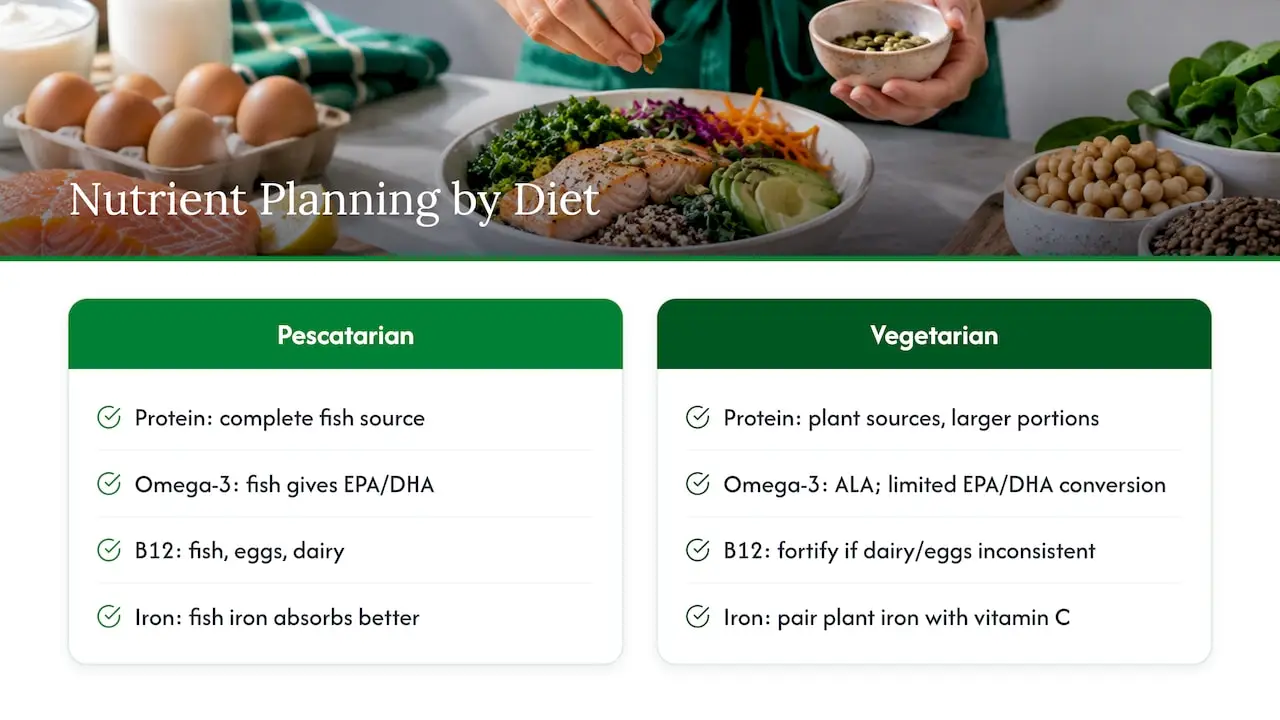
Protein: fish delivers a concentrated, complete protein source with little prep. Vegetarians rely on soy foods, lentils, chickpeas, tempeh, tofu, and seitan, which cover protein needs but may require slightly larger portions to match the density found in fish or eggs.
Omega-3s: fatty fish like salmon and sardines supply EPA and DHA directly, while plant sources like flaxseed, walnuts, and chia provide ALA, which the body converts to EPA/DHA only in limited amounts. This is one nutritional consideration vegetarians may want to plan around.
Vitamin B12: found naturally only in animal foods, including fish, eggs, and dairy. Vegetarians who skip dairy and eggs, or eat them inconsistently, often need a fortified food or supplement to avoid deficiency, a pattern confirmed across plant-based diets in the 2021 systematic review.
Iron and zinc: plant iron (non-heme) absorbs less efficiently than the iron in fish. Pairing beans, lentils, or spinach with vitamin C sources like citrus or bell peppers meaningfully improves absorption.
Iodine, vitamin D, and calcium: seafood and dairy cover iodine and vitamin D easily; dairy-free vegetarians should look to fortified plant milks, mushrooms exposed to UV light, and iodized salt.
A simple swap: replace one weekly meat-based dinner with a lentil and tahini bowl topped with roasted vegetables and a squeeze of lemon, covering protein, iron, and vitamin C in one plate.
Pro Tip: Batch-cook a pot of lentils or chickpeas weekly; it becomes your fastest route to covering protein, iron, and fiber without extra planning each night.
What the Research Says About Health Outcomes
Clinical trials on vegetarian diets show measurable benefits for specific markers. A review of randomized trials found that following vegetarian patterns for roughly six months was linked to reductions in LDL cholesterol, HbA1c, and body weight, with the largest cholesterol drops seen in low-fat vegetarian diets among people already at high cardiovascular risk.
Pescatarian eating shows its own strengths in observational data. An analysis of US adult diets found pescatarian eaters had the highest average Healthy Eating Index scores among the diet patterns studied, even above vegetarians, based on NHANES data.
An umbrella review of meta-analyses found that eating fish once or twice a week was tied to 17 beneficial health associations, including lower cardiovascular mortality, though only about a third of those associations were rated moderate or high quality evidence.
The research suggests that both dietary patterns can have benefits, and that food choices within each pattern matter. A vegetarian diet heavy in refined carbs and a pescatarian diet heavy in fried seafood will both underperform their whole-food versions.
Environmental and Ethical Trade-Offs
If lowering your footprint is the priority, the data points in a clear direction. An analysis of US dietary patterns found vegan and vegetarian diets carry lower average carbon footprints than pescatarian and omnivore diets, even though pescatarian diets scored better on overall diet quality in the same analysis.
Seafood brings its own ethical layer that meat-free diets avoid entirely.
- Overfishing and bycatch remain real concerns for certain species and fishing methods, which is why sourcing matters as much as the decision to eat fish at all.
- Local advisories matter too: fish caught recreationally can carry pollutants not found in store-bought seafood, so checking regional guidance before eating self-caught fish is worth the extra step, per the National Park Service.
- Practical fix: use a seafood sustainability guide and favor lower-impact, locally available species over imported or heavily trawled varieties.
Neither diet is ethically or environmentally “clean.” Vegetarian eating sidesteps fishing impacts entirely, while pescatarian eating requires more active sourcing decisions to keep its footprint reasonable.
How to Choose and Start Eating This Way
Start with a short checklist before committing to either pattern:
- Clarify your main driver: are you optimizing for heart health, ethics, budget, or environmental impact first?
- Audit your cooking time: fish requires minimal prep but demands freshness; plant-based meals often need more advance planning for protein and iron pairing.
- Pick a starting approach: choose a manageable change, such as adding fish meals or meat-free days, rather than an all-or-nothing switch.
- Stock core staples: canned low-mercury fish, frozen vegetables, lentils, tofu, and a vitamin C source for iron absorption.
- Swap one meal at a time: replace a meal with your new pattern, then expand further when it feels manageable.
Budget tip: canned sardines, frozen fish fillets, and dried legumes can be used in soups and grain bowls.
Pro Tip: If full commitment feels like too much at once, try a flexitarian approach first: it lowers the stakes while you learn which swaps actually fit your schedule.
Seafood Safety for Pregnancy, Children, and Sensitive Groups
If you are pregnant, breastfeeding, or feeding young children, fish choice matters more than fish avoidance.
The FDA and EPA jointly recommend 8 to 12 ounces, or 2 to 3 servings, per week of fish lower in mercury for people who are pregnant, breastfeeding, or trying to conceive, and for young children, with a standard serving defined as 4 ounces.
- Best Choices include salmon, sardines, tilapia, shrimp, and canned light tuna.
- Fish to avoid due to higher mercury levels include shark, swordfish, king mackerel, and tilefish.
- If you have a specific health condition, are pregnant, or are feeding a small child, a conversation with your clinician or a registered dietitian helps tailor these general guidelines to your situation.
The guidance applies specifically to pregnancy, breastfeeding, and early childhood. For advice tailored to your own fish choices and intake, consult a clinician or dietitian.
Gut Health and the Microbiome on Each Diet
Fiber is the nutrient that most directly shapes your gut microbiome, and vegetarian diets tend to deliver more of it by default. Legumes, whole grains, and a wide variety of vegetables are sources of dietary fiber. The systematic review comparing plant-based eaters to meat-eaters found vegetarian diets consistently higher in fiber, which supports this gut-focused advantage.
Pescatarian diets do not lose this benefit automatically, since most pescatarians still build meals around plant foods and add fish rather than replacing vegetables with it. Fish itself does not contribute meaningful fiber, so plant foods remain important sources of fiber in a pescatarian diet.
The practical takeaway for either diet is the same: fiber diversity, not the presence of fish, is what moves the needle on gut health. A pescatarian eating white rice and plain grilled fish nightly will see less microbiome benefit than one who rotates lentils, oats, and a rainbow of vegetables alongside that fish. Fermented foods like yogurt, kefir, and naturally fermented vegetables add another layer of support for either pattern, since both diets can include dairy depending on the version followed.
If gut health is your main goal, prioritize plant diversity first and treat fish or its absence as a secondary decision.
Cultural Roots: How Heritage Shapes These Diets
Long before “pescatarian” and “vegetarian” became dietary labels, cultures around the world built entire cuisines around these exact patterns, often for religious, geographic, or economic reasons rather than modern health trends.
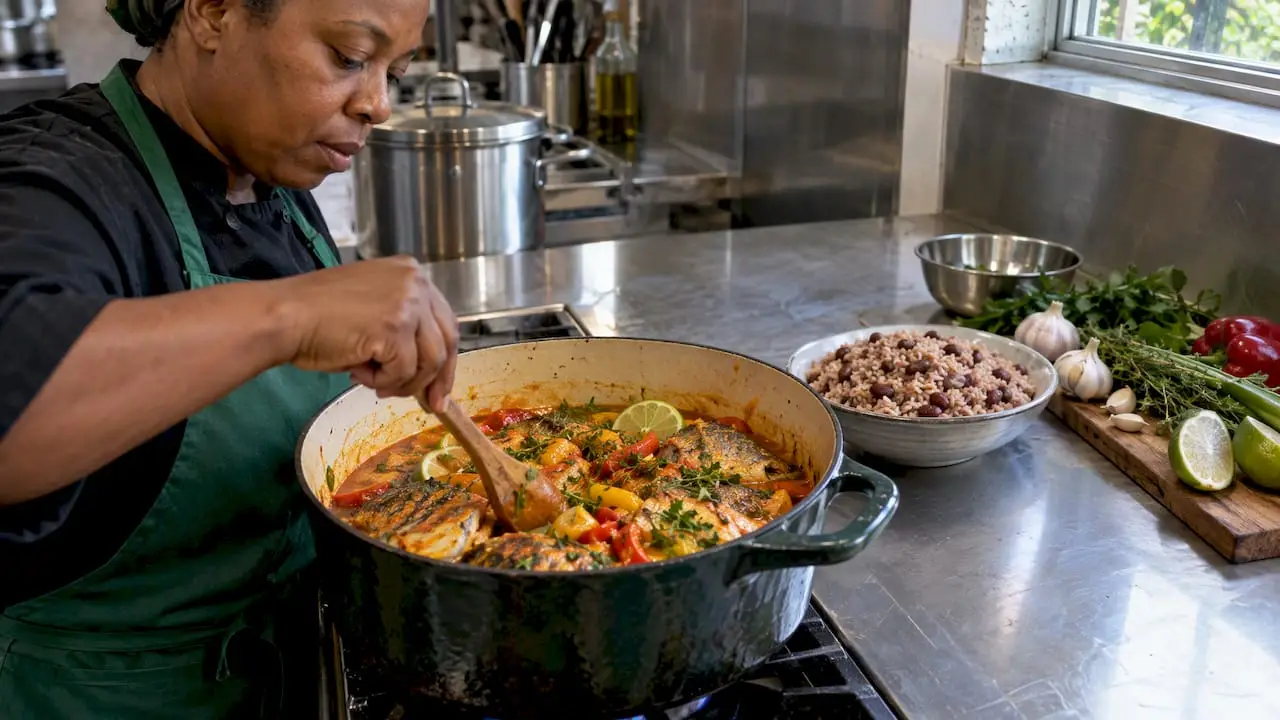
Haitian cooking reflects a coastal, resourceful culinary tradition where fish, conch, and seafood stews sit naturally alongside rice, beans, and seasoned vegetables, making pescatarian adaptations feel familiar rather than restrictive. Dishes built on griot-style seasoning techniques translate easily to grilled or stewed fish, keeping the bold, herb-forward flavor profile intact while swapping the protein.
Lebanese cuisine, meanwhile, has long leaned plant-forward by habit: tabbouleh, fattoush, lentil soups, and mezze spreads built on chickpeas, eggplant, and tahini show how a vegetarian table can be rich and varied without ever feeling like a diet of exclusion. Lebanese cooking also folds in seafood naturally along the coast, blending citrus, garlic, and warm spices into fish preparations that fit a pescatarian pattern just as comfortably.
Blending these two culinary traditions, as Haitian-Lebanese cooking does, shows how heritage can make either dietary pattern feel abundant rather than limited. Pulling from both traditions, we build meals where seasoning blends, marinades, and technique carry the flavor, so a seafood stew or a lentil-based main never reads as a compromise.
Common Myths About Pescatarian and Vegetarian Eating
Several misconceptions keep people from trying either diet, or from doing it well once they commit.
Myth: fish alone replaces everything meat provides. Fish provides protein and omega-3s, while legumes and vegetables provide fiber and other nutrients, so a pescatarian diet can include a variety of plant foods.
Myth: vegetarian automatically means healthy. A vegetarian diet built on refined pasta, fried snacks, and processed meat substitutes can be just as low in nutrient density as a poor omnivore diet. Diet quality depends on food choice, not the label.
Myth: pescatarians need large amounts of fish to get benefits. The evidence on fish and health outcomes centers on modest intake, generally one to two servings a week, not daily consumption.
Myth: plant-based protein is automatically incomplete. Combining varied plant proteins like beans, grains, and seeds across a day covers essential amino acids without needing to pair specific foods at every single meal, a common oversimplification.
Myth: relying on packaged “meat-free” or “seafood-style” products is a nutritional shortcut. The nutritional value of packaged meat-free or seafood-style products varies, so compare their labels with those of whole foods when choosing what to eat.
A Chef’s View on Making Either Diet Work
Clients choosing pescatarian or vegetarian eating usually struggle less with knowledge and more with consistency, the daily work of sourcing, seasoning, and balancing a plate so it does not feel repetitive. Tailoring a menu around fresh, small-batch ingredients can help reduce that friction. If hands-off consistency matters to you, a professionally planned menu is worth considering.
Let Us Handle the Planning for You
We build pescatarian and vegetarian menus around the same principle we apply to every plate we send out: fresh, small-batch, never frozen, and shaped by Haitian-Lebanese technique rather than a generic template.
- Meal plans delivered weekly, customized to your dietary pattern and any nutrient priorities you want covered.
- Private dinners featuring a pescatarian or vegetarian menu for a special occasion.
- Catering for events where guests span both diets without anyone getting a single sad plate of plain vegetables.
If you want to see how a pescatarian or vegetarian week could look without doing the shopping or prep yourself, explore our healthy meal plans or book a private dinner to taste the difference firsthand.
This article is general information, not a substitute for advice from a qualified doctor. Consult a qualified healthcare professional about your own circumstances before acting on anything here.
FAQ
Do vegetarians eat fish?
No, vegetarians exclude all meat, poultry, and fish by definition; someone who eats fish but avoids other meat is specifically a pescatarian, not a vegetarian.
What are the seven types of vegetarian diets?
Common vegetarian subtypes include lacto-ovo (dairy and eggs), lacto (dairy only), ovo (eggs only), vegan (no animal products at all), pescatarian (sometimes grouped loosely alongside vegetarian styles despite including fish), flexitarian (mostly plant-based with occasional meat), and raw vegetarian (uncooked plant foods). Definitions vary by source, so the exact list sometimes differs depending on who is categorizing them.
Is it healthier to be vegan or pescatarian?
Neither is universally healthier; vegan and vegetarian diets tend toward lower carbon footprints, while pescatarian diets scored highest for overall diet quality in the same analysis. The better choice depends on which nutrients and goals you prioritize, with whole-food quality mattering more than the category itself.
What is a person who only eats fish and vegetables called?
Someone who eats fish and vegetables but no other meat is called a pescatarian, also spelled pescetarian. Most pescatarians also include eggs, dairy, and grains alongside fish and vegetables rather than eating only those two groups.
How much fish is safe to eat each week?
The FDA and EPA recommend 8 to 12 ounces, or 2 to 3 servings, per week of lower-mercury fish for pregnant or breastfeeding people and young children. For advice about your own intake, consult a clinician.
Sources
- Fda
- Nutrient Intake and Status in Adults Consuming Plant-Based Diets Compared to Meat-Eaters: A Systematic Review
- Popular diets as selected by adults in the United States show wide variation in carbon footprints and diet quality
- Thinking about becoming a pescatarian? What you should know about the pescatarian diet – Harvard Health