

Labneh is yogurt that has been strained until it becomes a thick, spreadable yogurt cheese. The difference comes down to how much whey is removed during that straining process. Regular yogurt keeps most of its liquid whey, while labneh loses enough of it to concentrate the solids, protein, and tang into a denser, scoopable product.
Key Takeaways:
- Use whole milk plain yogurt for homemade labneh, then refrigerate it in cheesecloth for 8 to 24 hours; prestrained Greek yogurt can become pasty.
- Labneh typically contains 22% to 26% total solids and is often salted, so check labels for sodium and serve smaller portions than yogurt.
- When labneh is unavailable, drain Greek yogurt further for a thicker substitute, or blend softened cream cheese with plain yogurt and a pinch of salt.
- Commercial labneh commonly has a refrigerated shelf life of 14 to 21 days, but discard it for off smells, visible mold, or a slimy surface.
|
Bring Haitian-Lebanese Flavor Home
VJ Cuisine offers fresh, small-batch meals and private dining rooted in Haitian-Lebanese culinary heritage, with options for specific dietary needs. Explore VJ Cuisine |
What Is Labneh, Strained Yogurt, and Greek Yogurt?
Yogurt starts as milk fermented with live bacterial cultures, which thickens it and gives it its characteristic tang. Strained yogurt takes that base and removes a portion of the liquid whey, concentrating the remaining solids. Labneh sits at the far end of that spectrum: it is strained long enough to become spreadable, often lightly salted, and thick enough to hold a spoon upright.
You may see labneh labeled as “yogurt cheese” or “strained yogurt” depending on the brand and region, since naming conventions are not standardized across every market. Greek yogurt occupies a middle ground, strained enough to thicken but not concentrated to the point of being spreadable like labneh. Some products labeled “Greek-style” skip straining altogether and use thickeners instead, so the texture and solids content can vary even when the label looks similar.
How Labneh and Yogurt Are Made
Yogurt production starts with either a set method, where milk ferments directly in its final container, or a stirred method, where the curd is broken up after fermentation and before packaging. Labneh begins the same way, then adds a straining step that pulls whey out of the curd until the remaining solids reach a thick, spreadable consistency.
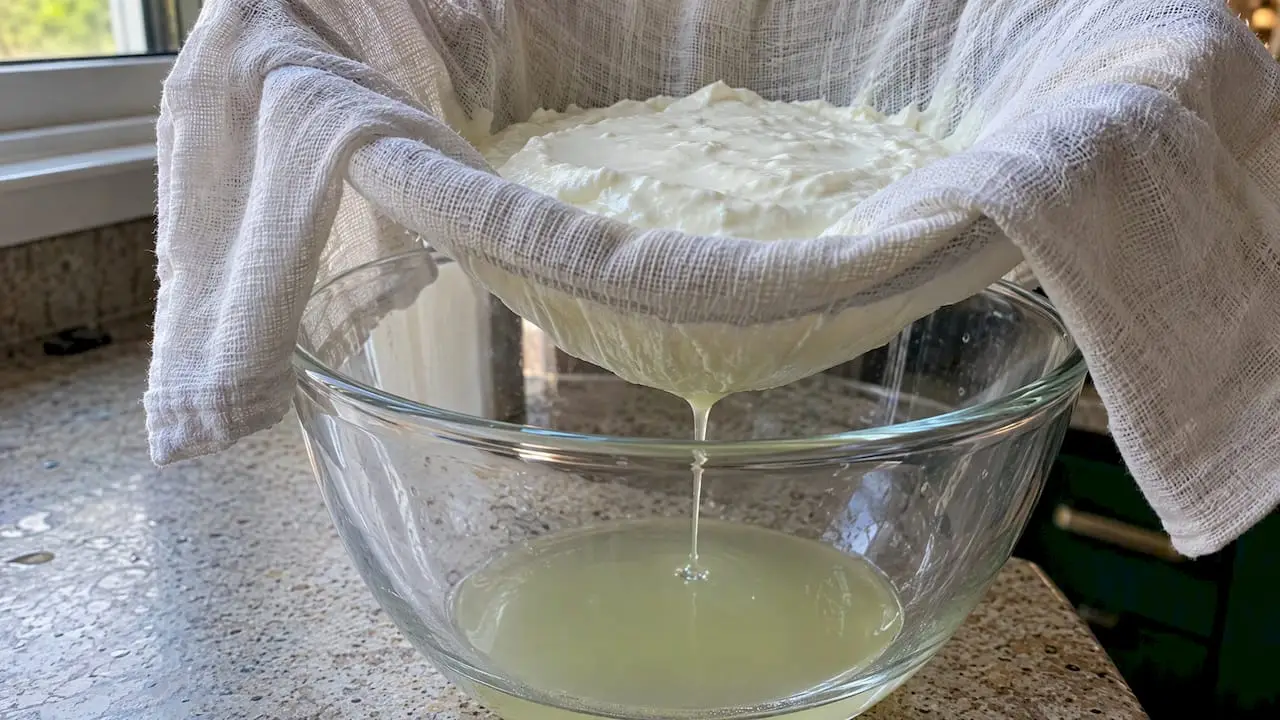
At home, straining typically happens through cheesecloth or a fine mesh strainer suspended over a bowl, relying on gravity for several hours to overnight. Commercial producers often use centrifuges or ultrafiltration membranes instead, which separate whey faster and with more consistent results than cloth ever could.
- Set yogurt ferments in its final container; stirred yogurt is mixed after fermentation.
- Home straining relies on cheesecloth and gravity, usually taking several hours to overnight.
- Commercial labneh often uses centrifugal or ultrafiltration methods for faster, more uniform results.
The yogurt you start with matters too. Whole-milk plain yogurt strains into a creamier labneh, while yogurt that has already been partially strained, like store-bought Greek yogurt, can turn pasty or overly dense if strained further.
What Concentration Does to Nutrition and Texture
Straining does more than thicken yogurt. It concentrates everything inside it, including protein, fat, and sodium, into a smaller volume. Labneh typically contains between 22% and 26% total solids, compared with a much lower percentage in standard yogurt, which is why a small spoonful of labneh feels so much richer than a spoonful of yogurt (PubMed).
Labneh typically contains 22 to 26% total solids, far above standard yogurt, which explains its dense, spreadable texture and higher protein concentration per ounce (PubMed).
Because labneh is concentrated and frequently salted, a small serving carries meaningful protein and sodium. Consumer Reports notes that a 2-tablespoon serving can provide modest protein and some sodium, with sodium amounts varying by brand, so checking labels matters.
| Factor | Standard yogurt | Labneh |
|---|---|---|
| Total solids | Lower, variable by brand | 22 to 26% (PubMed) |
| Texture | Spoonable, pourable | Spreadable, dense |
| Sodium | Typically unsalted | Often salted, varies by brand |
| Serving size norm | By the cup | By the tablespoon |
How to Make Labneh at Home Step by Step
Making labneh at home takes patience more than skill. Start with whole-milk plain yogurt for the creamiest results, since it holds moisture better than fat-free versions during straining.
You will need: whole-milk plain yogurt, a fine mesh strainer or cheesecloth, a bowl to catch the whey, and optional salt or olive oil for finishing.
- Line a strainer with cheesecloth and set it over a bowl deep enough to catch the whey without touching the strainer.
- Spoon in the yogurt, stir in a pinch of salt if desired, and cover loosely with plastic wrap.
- Refrigerate and let it strain for 8 to 24 hours, checking at the 8-hour mark for a soft, spreadable texture.
- Transfer the strained labneh to a clean container and drizzle with olive oil before serving or storing.
If your labneh turns out too loose, strain it longer; if it turns pasty, you started with yogurt that was already partially strained.
Pro Tip: Whole-milk plain yogurt strains into a smoother labneh than pre-strained Greek yogurt, which can overthicken and lose creaminess.
Culinary Uses and Easy Substitutes for Labneh
Labneh shows up across mezze spreads, as a dip base, dolloped over grain bowls, or baked into savory pastries where its density holds up better than loose yogurt. Its thicker body also makes it a natural stand-in for cream cheese in spreads and dips.
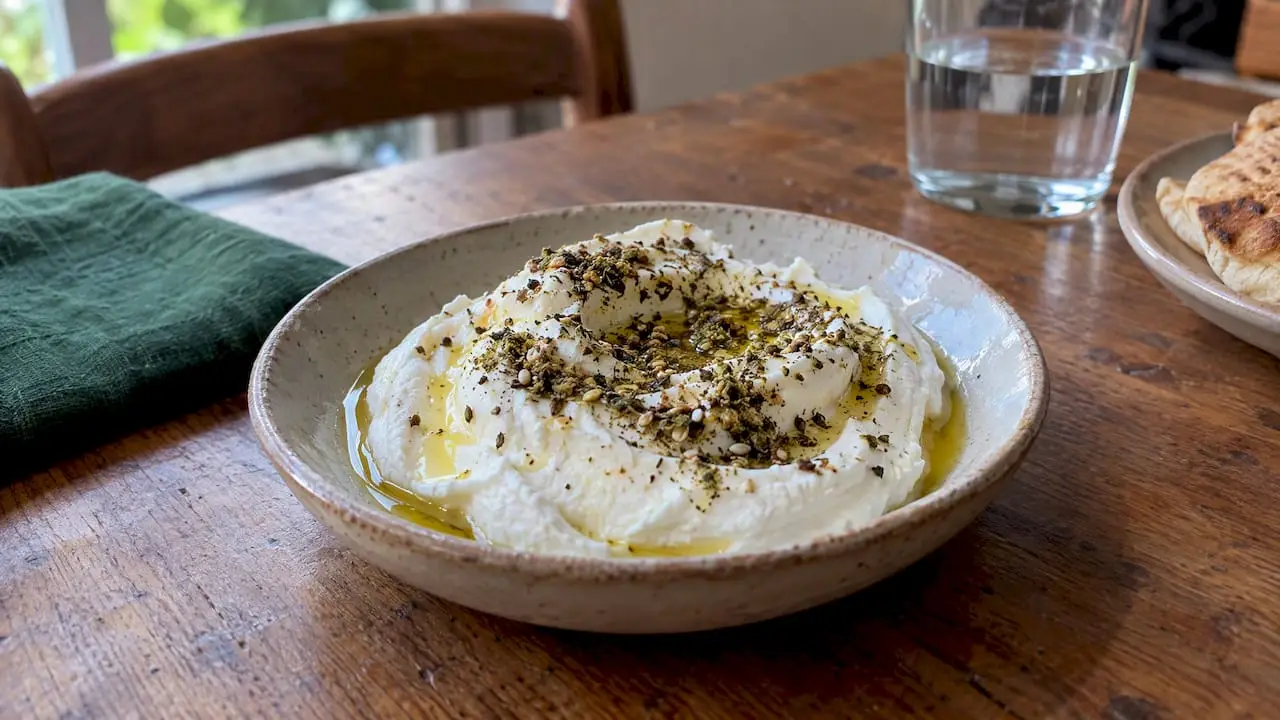
- Use labneh as a mezze dip base, topped with olive oil, za’atar, or fresh herbs.
- Swap in Greek yogurt when labneh is unavailable, draining it further if a thicker result is needed.
- Blend softened cream cheese with plain yogurt for a quick labneh-style approximation.
- Serve labneh in smaller portions than yogurt, since its concentration means less goes further.
Shelf Life and Safe Storage for Labneh and Yogurt
Standard yogurt keeps well in the refrigerator at 40°F for about one to two weeks, according to FSIS guidance. Labneh made through commercial cloth-bag straining commonly carries a stated shelf life between 14 and 21 days, though sensory quality can decline faster at higher storage temperatures, according to shelf-life research published in the Journal of Dairy Science.
Labneh preserved in olive oil, often rolled into small balls, can last longer under refrigeration since the oil limits air exposure, though it should still be used within a few weeks for best quality. Watch for sour off-smells, visible mold, or a slimy surface as signs to discard either product.
Chef Notes on Technique and Menu Uses
Fresh, whole-milk dairy makes the biggest difference in how labneh turns out, since lower-fat yogurts strain unevenly and lose the creamy mouthfeel that makes labneh worth making. We lean on small-batch straining for the same reason we avoid shortcuts anywhere else in the kitchen: consistency shows up in the final texture.
A finishing drizzle of good olive oil, a scatter of za’atar, or a swirl into a warm dip changes how labneh reads on a plate, turning a simple strained yogurt into a dish with real presence. On a tasting menu, labneh works best served cool, in small portions, letting its tang balance richer dishes around it.
The Cultural Roots Behind Labneh and Yogurt
Yogurt has been part of daily diets across the Middle East, the Balkans, Central Asia, and South Asia for centuries, long before refrigeration made storage simple. Straining yogurt into a thicker form was a practical response to that same problem: removing whey extended freshness and made the product easier to transport and store without spoiling.
Labneh in particular holds a central place in Levantine and Eastern Mediterranean cooking, where it appears on breakfast tables alongside olive oil, za’atar, and warm bread, and shows up again later in the day as a mezze staple. In Lebanon, Syria, Jordan, and Palestine, labneh is often rolled into small balls and preserved in olive oil, a method that both extends shelf life and deepens flavor over time.
The practice of straining yogurt was not limited to one region. Versions of concentrated yogurt appear under different names across Turkey, Iran, and parts of the Balkans, each shaped by local climate, available milk, and household tradition. What unites them is the same basic idea: remove whey, concentrate flavor, and create something that keeps longer and tastes richer than the yogurt it started as.
That shared history is part of why labneh and yogurt, despite coming from the same fermentation process, occupy such different places on the table. One is an everyday staple eaten by the spoonful; the other is treated more like a spread or a condiment, often dressed up with oil and herbs before it reaches the table.
Why Fermentation Timing Shapes Taste and Digestion
Yogurt and labneh both start with the same live bacterial cultures fermenting lactose into lactic acid, which is what gives fermented dairy its tang. The fermentation stage itself does not differ much between the two. What changes afterward is what happens during straining, and that step affects both flavor and how the final product sits with your digestion.
As whey drains away, it carries some lactose with it, which is one reason many people find labneh gentler on digestion than regular yogurt, since lower lactose content can mean less fermentable sugar remaining in the final product. The concentration process also intensifies the tang, since straining removes diluting liquid while leaving the acidic solids behind, which is why labneh tastes noticeably sharper and more pronounced than the yogurt it was made from.
Live cultures remain present in both products, though straining and any added salt can influence how many survive through storage. If probiotic content matters to you, checking the label for live and active culture claims is more reliable than assuming labneh and yogurt are equivalent in that regard, since concentration affects culture survival differently depending on production method.
Why Labneh Is Worth the Extra Step
We think labneh rewards the wait. The texture turns breakfast into something worth slowing down for, and a good drizzle of olive oil does the rest. If a spoonable tang is all you need, yogurt still wins on convenience, but when you want something spreadable and rich, labneh is the better call.
Enjoy Chef-Made Labneh Without the Straining
We prepare labneh-style spreads and mezze as part of small-batch, never-frozen menus, built around Haitian-Lebanese heritage. Dishes can be customized to dietary needs and are prepared fresh.

- Explore our meal plans for weekly chef-prepared dishes delivered fresh.
- Book catering for mezze platters and labneh-style spreads at your next event.
- Reserve a private dinner for a fully personalized menu at home.
Browse our current offerings to see how we bring chef-made mezze to your table without the cheesecloth.