
If you plan to eat a full multi-course meal, a three-course prix fixe usually costs less than ordering the same dishes à la carte. If you want flexibility, lighter portions, or to share plates with your table, à la carte usually wins. Supplements and mandatory service charges can shift that math, so it pays to check both before you order.
Key Takeaways:
- Compare the fixed price with the starter, main course, and dessert you would actually order; the typical 10% to 25% saving can disappear with supplements.
- Meals built from individual dishes take 90 to 120 minutes, while fixed price dinners last 120 to 150 minutes; tasting menus can exceed three hours.
- For allergies or major substitutions, contact the restaurant in advance; fixed price kitchens need notice, and tasting menus may require dietary notes when you reserve.
- A mandatory service charge is treated as wages, not a tip; you need not add another amount, though voluntary tipping remains an option.
|
Bring a Curated Dinner Home
VJ Cuisine offers private dining experiences and fresh, chef-crafted meals rooted in Haitian-Lebanese culinary heritage. Explore VJ Cuisine |
Prix fixe, à la carte, and tasting menus: what sets them apart
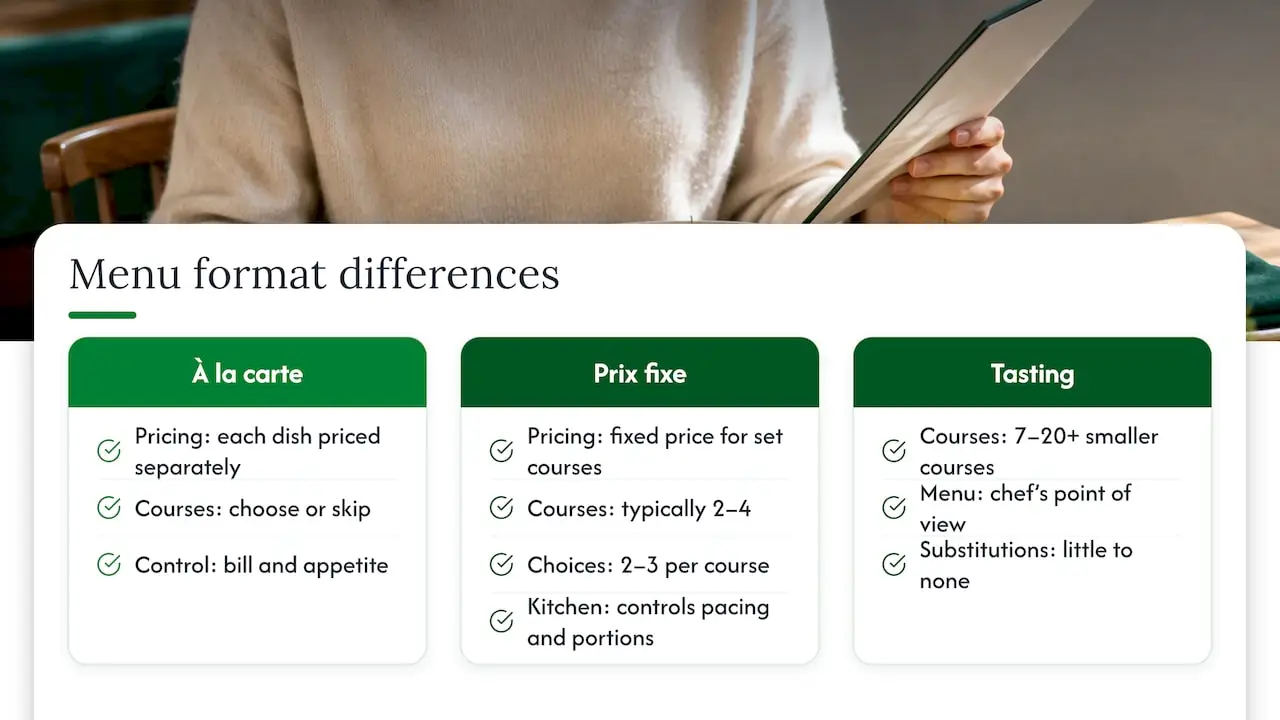
A prix fixe menu offers a fixed price for a set sequence of courses, typically two to four, often with two or three choices per course. You know the total before you order, and the kitchen controls pacing and portioning.
À la carte flips that model: every dish is priced and ordered on its own, so you build the meal you want, course by course or skip courses entirely. It gives you the most control over both your bill and your appetite.
Tasting menus sit in a separate category. They run longer, usually seven to twenty-plus smaller courses built around a chef’s point of view, with little to no substitution. Think of prix fixe as a curated sampler and a tasting menu as a full narrative arc, while à la carte is simply a menu of individual choices with no narrative at all.
How the pricing math actually works
The fastest way to compare costs is to price out what you would actually order à la carte, a starter, an entrée, and a dessert, then stack that total against the prix fixe price. If the set menu comes in lower, it is doing its job.
Industry data backs up the pattern: a three-course prix fixe often runs 10 to 25% less than ordering the same dishes individually, though the exact discount varies by restaurant and market. That range is not guaranteed. Restaurants frequently add supplements for premium ingredients, a wagyu upgrade or a caviar add-on, that can erase much of the apparent savings, so it is worth asking what is included before you commit.
Restaurants increasingly lean on prix fixe to manage rising costs while preserving perceived value. Menu prices rose roughly 3.4% to 3.5% year over year in recent industry reporting, and operators use set menus to keep checks predictable even as ingredient costs climb.
A few things worth checking before you assume prix fixe is the better deal:
- Compare the set price against your actual à la carte picks, not the menu’s most expensive items.
- Ask whether any course carries a supplement charge.
- Confirm whether tax and service charges are included in the quoted price.
Choice, portions, and pacing: how the experience differs
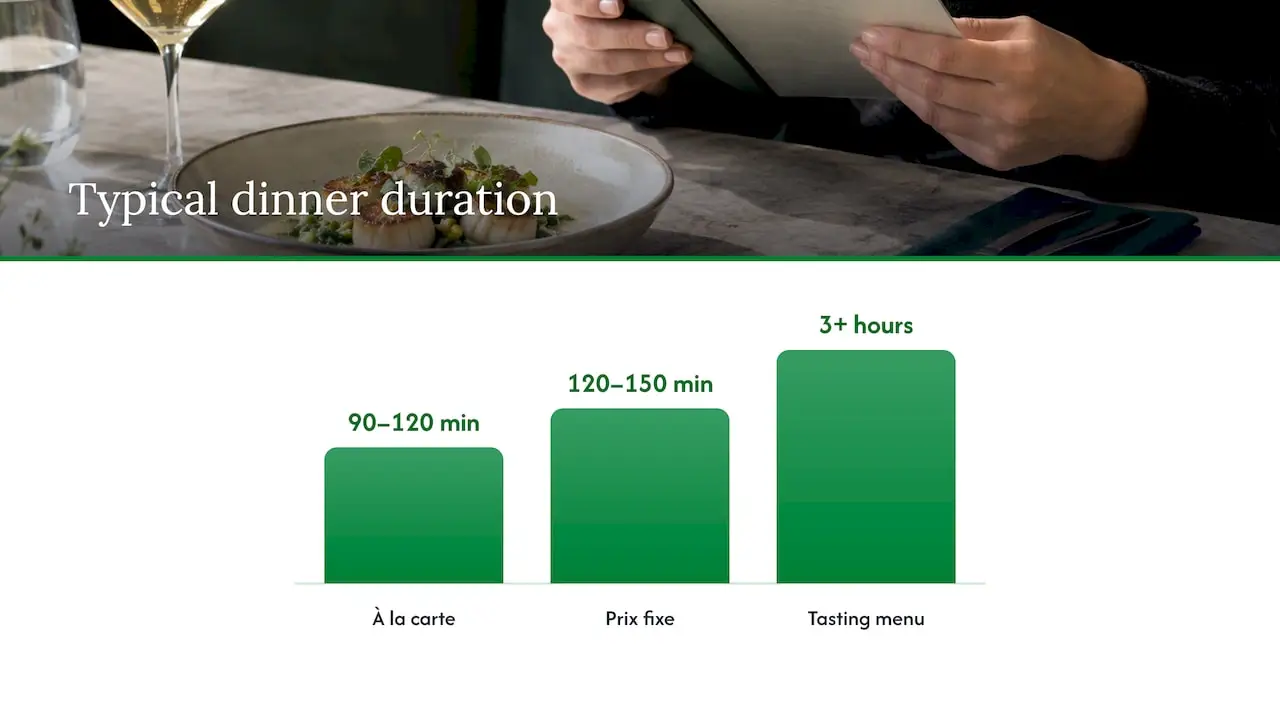
Format shapes more than your bill, it shapes your evening. À la carte dinners typically run 90 to 120 minutes, prix fixe dinners stretch to 120 to 150 minutes, and tasting menus can run three hours or more.
Portion size follows the same logic. À la carte dishes arrive full-sized and meant to stand alone, while prix fixe courses are often scaled down slightly to accommodate multiple plates across one sitting. Tasting menu portions are smaller still, built for a dozen or more bites rather than one filling plate.
Sharing works best à la carte, where you can order a few dishes for the table and split them freely. Prix fixe is less share-friendly since each diner typically commits to their own sequence of courses, and swapping plates mid-meal disrupts the kitchen’s pacing.
Handling dietary restrictions and substitutions
À la carte gives you the most room to adjust on the spot. Since each dish stands alone, swapping a side or skipping an ingredient rarely disrupts anything else on the table.
Prix fixe is less forgiving. Because courses are planned as a sequence, kitchens generally ask for advance notice on allergies or major substitutions rather than handling them table-side. Tasting menus are the strictest of all, often requiring dietary notes at the time of booking since the entire sequence is built around specific ingredients.
A few habits make any of these formats easier:
- Note allergies or restrictions directly on your reservation.
- Call ahead for prix fixe or tasting menus rather than mentioning restrictions at the table.
- Ask specifically whether substitutions are possible before you book.
Pro Tip: Calling the restaurant a day ahead almost always gets you a better substitution than asking once you’re already seated.
Tipping and service charges: calculating your real total
Mandatory service charges and voluntary tips are not the same thing, and the distinction affects both your bill and how the restaurant reports income. Under IRS guidance, a mandatory service charge is treated as part of the business’s wages, not as a tip, while a voluntary amount you add yourself is reported as a tip.
A mandatory service charge is treated as wages by the employer, not a tip, while amounts you choose to add voluntarily are reported as tips.
That matters at checkout: if your bill already lists a mandatory service charge, you are not obligated to add a separate voluntary tip on top, though many diners still do for exceptional service. If there’s no mandatory charge, calculate your tip on the full pre-tax total, including any prix fixe price. A disclosed mandatory service charge functions like a built-in wage, not a discretionary tip, according to IRS tip reporting guidance.
When to choose prix fixe vs à la carte
The right format depends less on price and more on what kind of evening you’re after.
- Choose prix fixe for celebrations, curated chef experiences, or Restaurant Week and holiday menus where you plan to eat multiple courses anyway.
- Choose à la carte for sharing plates, lighter appetites, business meals where an itemized check matters, or groups with mixed dietary needs.
- Reserve early for prix fixe or tasting menus, since seatings often sell out faster than standard à la carte tables.
- Ask about supplements before you book, especially for holiday or special-event prix fixe menus.
A quick checklist before you book or order
Running through a short mental checklist makes the decision almost automatic.
- Decide how many courses you actually want and how hungry you are.
- Add up what you’d likely order à la carte and compare it to the prix fixe price.
- Confirm any supplements or mandatory service charges before ordering.
- Think about whether you want to share plates or need substitutions.
- When unsure, ask your server for estimated timing and whether swaps are allowed.
Pro Tip: If your server hesitates when you ask about substitutions, that’s usually a sign the kitchen built the menu to run exactly as written.
How a private chef recreates prix fixe-style value at home
A well-run prix fixe menu works because it balances predictability with a touch of choice, and that’s exactly what we aim for when we build a private dinner. Each menu we design pairs a fixed structure, appetizer, entree, dessert, with room for your preferences, so you get the value of a curated sequence without losing your voice in the meal.
Because every dish we prepare is made fresh and in small batches, we can hold pacing and portioning steady course after course, the same consistency a great prix fixe menu promises. If you’re picturing a curated multi-course evening at home, our private dinner offerings and catering services are built around that same idea, and our meal plans page is a good place to see how we structure a week of chef-made meals.