An effective athlete meal plan meets daily energy needs while targeting carbohydrate and protein intake around training sessions. Carbohydrate intake generally ranges from 6 to 10 grams per kilogram of body weight daily, protein falls between 1.2 and 1.7 g/kg/day, and a post-workout snack of 15 to 25 grams of protein paired with carbohydrates supports recovery. Below, we break these numbers into sample menus, including vegan and higher-calorie versions, so you can adjust by body weight and training load.
Key Takeaways:
- Carbohydrate intake should range from 6 to 10 grams per kilogram of body weight daily, depending on training volume and sport demands.
- Post-workout protein and carbohydrate intake of 15 to 25 grams supports optimal muscle repair and glycogen replenishment during recovery.
- Meal timing is crucial, with specific strategies for pre-, during-, and post-exercise nutrition to maintain energy and reduce fatigue.
- Vegan athletes should focus on combining incomplete plant proteins, supplement vitamin B12 and vitamin D, and monitor nutrient levels through blood tests.
- Custom meal plans from chef-prepared services can reduce prep time, ensure macro compliance, and accommodate dietary restrictions effectively.
|
Make Training Meals Easier
VJ Cuisine prepares fresh, chef-crafted meal plans with personalized service and attention to specific dietary needs. Visit VJ Cuisine |
Daily macronutrient targets and how to calculate them for your weight and sport
Sports nutrition guidance from the American College of Sports Medicine sets carbohydrate intake at 6 to 10 g/kg/day and protein at 1.2 to 1.7 g/kg/day, with fat making up a substantial portion of total calories, generally recommended to be moderate. Where you land in these ranges depends on training volume, sport type, and recovery demands.
Two worked examples show how this translates into real numbers:
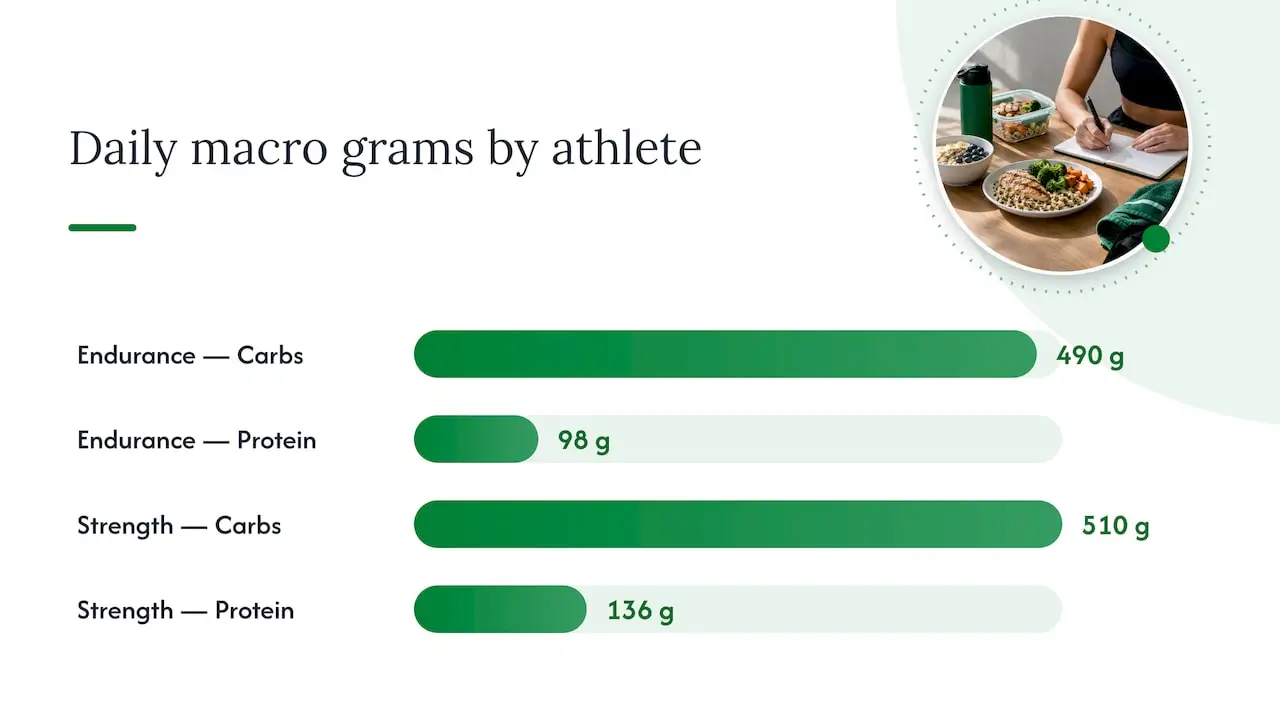
- A 70 kg endurance athlete training daily might target 7 g/kg of carbohydrate (490 g, or 1,960 calories) and 1.4 g/kg of protein (98 g, or 392 calories).
- An 85 kg strength athlete in a heavy lifting block might aim for 6 g/kg of carbohydrate (510 g, or 2,040 calories) and 1.6 g/kg of protein (136 g, or 544 calories).
Carbohydrate needs scale with training load: athletes with two-a-day sessions or long endurance blocks should sit at the higher end of the 6 to 10 g/kg range, while lower-volume strength or skill days allow for less.
Protein needs shift upward during periods of heavy muscle repair, such as a new strength block or a return from injury, while fat intake can flex down slightly on high-carbohydrate training days without compromising hormone production or nutrient absorption. Energy balance matters as much as the ratios themselves: protein only does its job for repair and growth when total calories support the training load.
Meal timing: pre-, during-, and post-workout fueling and snack frequency
Timing meals around training sessions reduces fatigue and speeds recovery. A practical sequence looks like this:
- Pre-workout (1 to 4 hours before): a meal with moderate carbohydrate and protein, lower in fat and fiber to avoid gastrointestinal discomfort, such as oatmeal with banana and a scoop of protein powder.
- During long sessions (over 90 minutes): small amounts of carbohydrate, through sports drinks or gels, help maintain blood sugar and performance.
- Post-workout (within about 2 hours): 15 to 25 grams of protein paired with carbohydrates jumpstarts muscle repair and glycogen replenishment.
On heavy training days, three main meals plus two or three snacks keep energy steady and prevent the blood-sugar dips that come with long gaps between meals. Portable options that fit this rhythm include Greek yogurt with berries, a turkey sandwich on whole grain bread, a fruit and protein smoothie, or a sports drink during extended sessions.
Pro Tip: Test your pre-workout meal and recovery snack during regular training sessions, never for the first time on competition day.
Three practical sample multi-day meal plans
These three-day frameworks give you a starting point to match against your own calculated targets. Each includes a recovery snack with 15 to 25 grams of protein and carbohydrates, and all can be adjusted up or down by portion size.
The omnivore plan runs roughly 2,400 to 2,600 calories a day: breakfast is eggs with whole grain toast and fruit, lunch is grilled chicken with rice and vegetables, dinner is salmon with sweet potato and greens, and the recovery snack is chocolate milk or a turkey wrap.
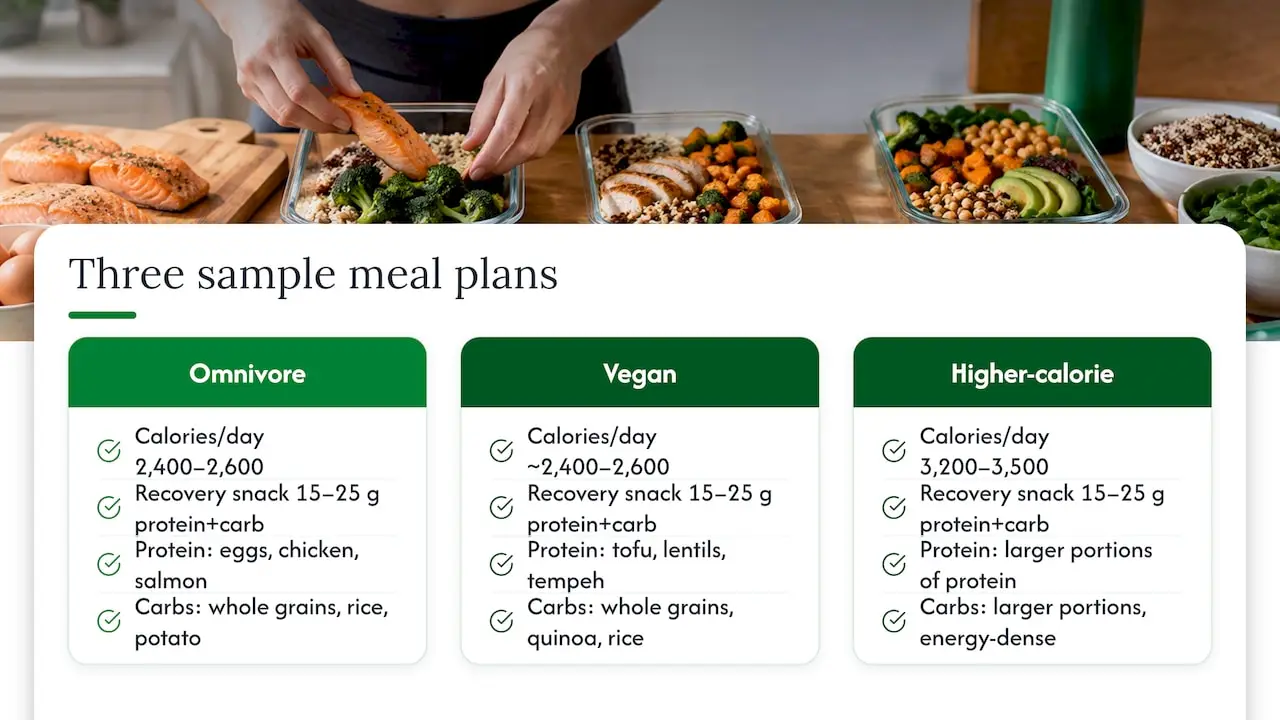
The vegan plan lands in a similar calorie range using plant proteins: breakfast is tofu scramble with whole grain toast, lunch is a lentil and quinoa bowl with vegetables, dinner is tempeh stir-fry with brown rice, and the recovery snack is a pea-protein smoothie with fortified plant milk and fruit. Fortified plant milks and nutritional yeast help cover vitamin B12 and vitamin D gaps that plant-based eating can leave behind.
The higher-calorie plan, aimed at athletes trying to gain mass, pushes toward 3,200 to 3,500 calories through energy-dense additions: breakfast adds nut butter and granola, lunch and dinner include larger protein and carbohydrate portions plus olive oil or avocado, and snacks include trail mix, dried fruit, or a second smoothie between meals.
Quick swaps make these plans realistic on busy weeks: canned tuna or rotisserie chicken for faster protein, frozen vegetables for fresh, and a pre-made smoothie pack for mornings with no time to blend. Our earlier guide on meal timing and frequent eating covers how to space these meals through a demanding training week.
Adapting plans for plant-based athletes: key nutrients, food combos and supplement notes
Well-planned vegan and vegetarian diets can meet athlete requirements for most nutrients, but they call for more intentional planning around a handful of specific gaps.
- High-protein plant foods: lentils, tofu, tempeh, edamame, seitan, and plant-based protein powders.
- Complementary pairings: rice with beans or hummus with whole grain pita combine incomplete proteins into a fuller amino acid profile.
- Iron absorption: pairing plant iron sources like spinach or lentils with vitamin C foods, such as citrus or bell peppers, improves uptake.
A systematic review of plant-based diets found that vegans often show lower intake or status of vitamin B12, calcium, iodine, and long-chain omega-3 fatty acids, which makes periodic blood testing and targeted supplementation worth discussing with a healthcare provider, particularly for B12, vitamin D, and algae-based DHA/EPA.
Why chef-crafted meal plans help athletes
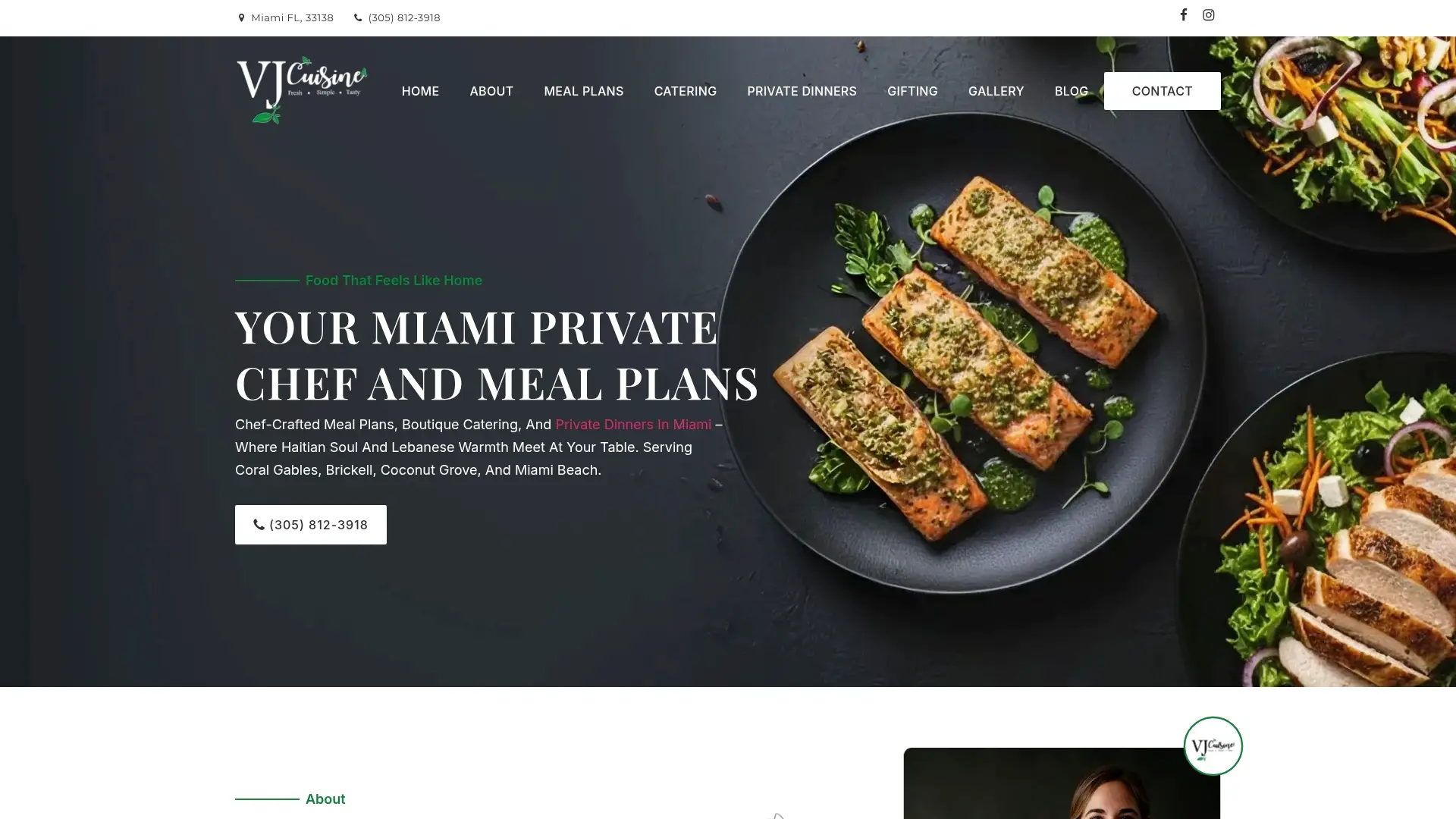
I’m Virginia Jiha, and through VJ Cuisine, we prepare fresh, small-batch, never-frozen meals built around each client’s goals, whether that means hitting specific macro targets or managing allergies and dietary restrictions. For athletes balancing training, work, and recovery, a custom meal plan removes the daily guesswork of portioning and prep.
When evaluating any chef or meal service, ask about:
- Whether macro targets can be customized to your sport and training phase.
- Delivery cadence and how meals are stored or reheated.
- Ingredient sourcing and how dietary restrictions, including vegan needs, are handled.
Testing and fine-tuning meals in training
Nutrition is personal, and the only way to know what works is to practice fueling strategies during training, not on race day. I’ve seen athletes discover that a pre-workout meal that felt fine at rest caused stomach trouble mid-session, simply because they never tested it beforehand. Treat the sample plans here as a starting framework, adjust portions and timing based on how your body responds, and loop in a sports dietitian if you’re training at an elite level.
Getting a personalized meal plan built around your training
We build custom meal plans around your macro targets, training schedule, and dietary needs, including vegan options, so you spend less time cooking and more time recovering. Meals arrive fresh and small-batch, never frozen, with menus shaped around what you actually need to perform.
- Request a sample menu built around your macro targets.
- Choose a delivery cadence that fits your training week.
- Ask about vegan or allergy-specific adaptations before your first order.
| What you get | Detail |
|---|---|
| Menu style | Custom, chef-designed around your goals |
| Meal prep | Fresh, small-batch, never frozen |
| Dietary options | Vegan and allergy-specific adaptations available |
Reach out through our meal plans page to start a conversation about your training schedule and nutrition goals.