

Host a Mediterranean mezze spread: three to five dips, warm flatbread, one showpiece main, two sides, and a make-ahead dessert. Most of it comes together in advance, so you spend the evening with your guests instead of at the stove. Check your pantry for olive oil and tahini first: they anchor nearly every dip on the table.
Key Takeaways:
- For six to ten guests, plan half a cup of each dip, one pita, and four to six ounces of protein per person.
- Prepare dips and dessert two to three days ahead; marinate the main and cook grains the day before, leaving the last hour for reheating.
- Guests avoiding gluten can swap pita for lettuce cups or extra vegetables, while vegetarian mains such as stuffed vegetables or falafel suit the same menu.
- Keep cold mezze at 40°F or below and hot dishes at 140°F or above; discard perishables after two hours, or one hour above 90°F.
- Use duplicate platters at opposite ends, and serve larger groups with a fresh dish for every three or four guests to limit reaching.
|
Spend More Time With Your Guests
VJ Cuisine offers private dining experiences and boutique catering, bringing personalized service and fresh, small-batch meals to gatherings in Miami. Explore dining options |
A Sample Mediterranean Dinner Party Menu That Works
A mezzo-first format gives guests something to nibble the moment they walk in, which also buys you time to finish the main dish. For a reliable Mediterranean dinner-party format, build your table around three to five dips, warm pita, one fresh salad, one warm main, two sides, and a dessert that holds.
Start with the mezze:
- Hummus, thinned with cold water until silky, finished with a swirl of olive oil.
- Baba ganoush, smoky from charred eggplant, lightened with tahini and lemon.
- Muhammara, a roasted red pepper and walnut spread with a touch of heat.
- Whipped feta or labneh, drizzled with za’atar and olive oil.
- Marinated olives, tossed with citrus peel and crushed coriander.
For the main, chicken shawarma, marinated overnight and roasted until the edges char, feeds a crowd without much fuss. A vegetarian swap works just as well: baked stuffed vegetables or a falafel tray holds up to the same spices and plates just as generously. Round things out with two sides, a herbed rice or bulgur pilaf and a lentil or roasted vegetable dish, plus warm flatbread for scooping.
For dessert, pick something that improves with a little rest: baklava, basbousa, or yogurt with honey and toasted pistachios all hold well overnight. For six to ten guests, plan on about half a cup of each dip per person, one pita per guest, and four to six ounces of protein. Guests avoiding gluten can swap pita for lettuce cups or extra vegetables, and the mezze course is naturally friendly to most other dietary restrictions already.
Your Make-Ahead Timeline for a Stress-Free Evening
The real advantage of a mezze dinner is that almost nothing has to happen at the last minute. A hosting timeline that front-loads the work keeps you out of the kitchen and in the room with your guests.
- Two to three days ahead: bake or assemble dessert, make the dips, and toast any nuts or seeds for garnish.
- One day ahead: marinate the main protein, cook grains for the pilaf, and chop vegetables for salads.
- Morning of: assemble cold salads, arrange olives and pickles, and set the table.
- Last hour: warm the main dish, heat the flatbread, and finish garnishes just before guests arrive.
Dips and marinated salads actually taste better after a day in the fridge, since the flavors have time to settle. Keep this schedule taped inside a cabinet door so you can glance at it without stopping what you’re doing.
Building a Shopping List That Scales Easily
Shopping gets simple once you know which staples to keep stocked and which quantities scale with your guest count.
Pantry staples worth having on hand: olive oil, tahini, za’atar, sumac, preserved lemon, and good quality olives. These show up across dips, marinades, and garnishes, so buying in slightly larger amounts pays off.
Group your shopping list by category:
- Produce: cucumbers, tomatoes, lemons, fresh herbs, eggplant, peppers.
- Pantry: chickpeas, bulgur or rice, pita, nuts, spices.
- Dairy: feta, labneh or Greek yogurt.
- Protein: chicken, lamb, or a vegetarian stand-in like extra chickpeas and halloumi.
For a moderate-sized group, a good rule of thumb is about one pita per person, a small serving of dip per guest spread across the table, and a moderate portion of protein per plate. Buy perishables like herbs and cucumbers closer to the party date, and get pantry items and proteins for marinating a few days out.
Setting Up the Table for Easy, Relaxed Serving
Family-style service suits a mezze spread better than individual plating, since it encourages guests to serve themselves and keeps conversation moving. A practical approach to hosting layout favors duplicate platters over one large spread: put two bowls of hummus at opposite ends of the table instead of one in the middle, so no one has to reach across six place settings.
Set up a small drinks station near the entrance so guests can pour their own aperitif while you finish last details. For larger groups, plate a fresh dish for every three or four guests rather than passing a single oversized platter.
- Place warm dishes on trivets near the center, within easy reach of most seats.
- Stack napkins and utensils at both ends of the table, not just one.
- Keep a small bowl for olive pits and discarded garnishes within reach.
Pro Tip: Duplicate your most popular dish, usually the hummus or the main, so it never runs out on one side of the table while guests on the other side wait.
Keeping Your Mezze Spread Food-Safe All Evening
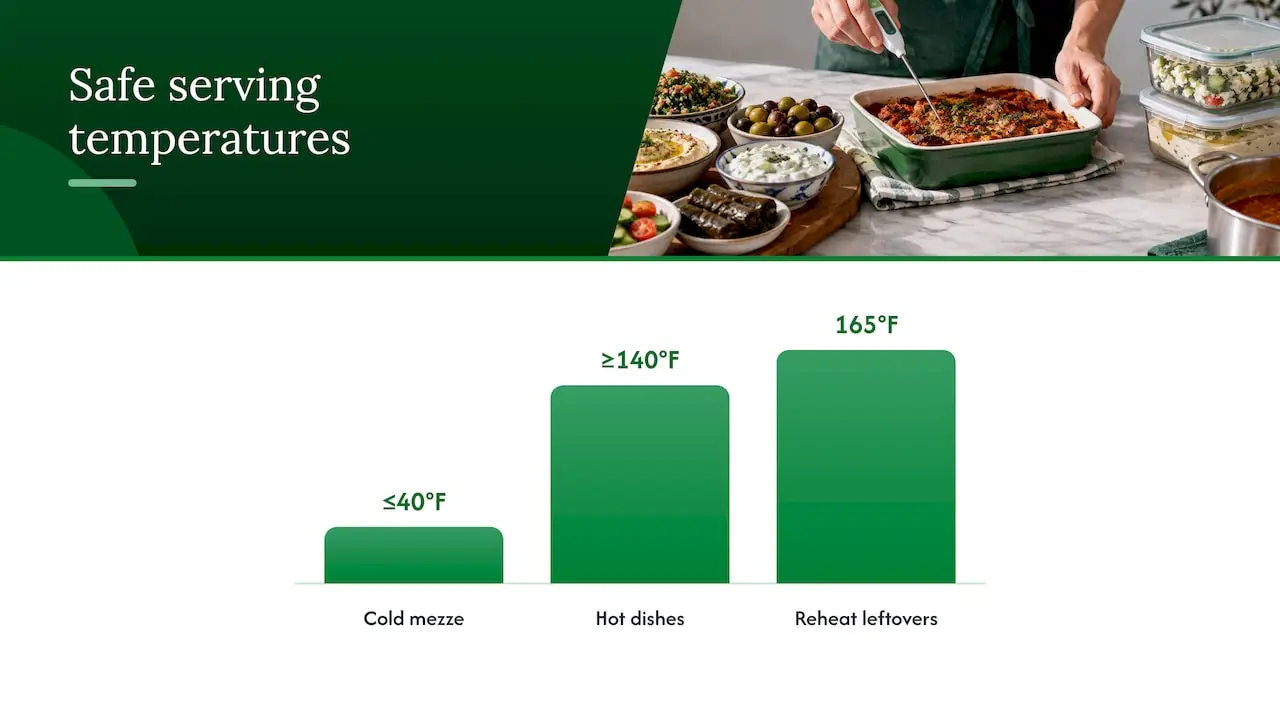
A shareable spread is only as good as it is safe, and buffet-style service has real risks if food sits out too long. USDA guidance on food safety sets clear limits: keep cold mezze at 40°F or below and hot dishes at 140°F or above.
Perishable food should be discarded after two hours at room temperature, or after just one hour if the room is above 90°F, according to the same guidance. That matters at an outdoor summer dinner more than it does at a cool indoor table in winter.
- Replace small dip bowls from the fridge rather than topping up an old one that’s been sitting out.
- Use insulated carriers if you’re transporting food, and reheat leftovers to at least 165°F.
- Label anything with nuts, dairy, or gluten so guests with allergies can serve themselves with confidence.
Smaller, frequently replenished platters beat one large spread left out for hours, both for safety and for how fresh the food tastes by the second hour.
Recipes and Techniques That Scale Without Extra Work
A few techniques make the whole menu easier to execute at scale. Blender hummus, for instance, often turns gluey once chilled; a splash of ice water whisked in just before serving brings back the silky texture.
- Dips: blend chickpeas, tahini, and lemon smooth, then adjust texture with cold water right before serving.
- Mains: marinades built on yogurt or citrus hold flavor overnight, and sheet-pan roasting lets you cook for a crowd without babysitting a stove top.
- Sides: bulgur and rice salads reheat well, so cooking them a day ahead saves real time on the day of the party.
- Dessert: basbousa and baklava both improve with an overnight rest, since the syrup has time to soak through.
A food processor earns its keep here, turning dip-making into a five-minute task. An instant-read thermometer takes the guesswork out of roasting chicken or lamb, and a simple warming tray keeps the main dish at serving temperature without drying it out.
How a Private Chef Plans This Same Kind of Evening
We build Mediterranean-style dinners around the same make-ahead logic a home host would use, just with a tighter schedule. Dips and desserts get made first, mains are marinated well in advance, and popular platters get duplicated so no one table feels short. Dietary swaps get sorted during menu planning, not at the table, which avoids the last-minute scramble most hosts dread. The sequencing matters as much as the recipes themselves.
Let Us Host the Mediterranean Dinner for You
Not every host wants to spend three days prepping dips and marinating chicken, and that’s exactly where we come in. Through private dinners, we bring the mezze spread, the warm main, and the make-ahead dessert to your table, prepared fresh and tailored to your guests’ dietary needs.
Hiring a private chef makes sense when:
- You want the evening to feel effortless, not just planned.
- Guests have dietary restrictions you’d rather not manage solo.
- Presentation matters as much as the food itself.
For larger gatherings, our boutique catering covers the same Mediterranean menu at scale. Reach out through Vjcuisine to start planning your evening.
Sources
- 11 Easy Middle Eastern Dips and Spreads made for scooping up with warm pita: Serious Eats
- Safe handling of take-out foods | Food Safety and Inspection Service (FSIS), USDA
- How to host your first dinner party in a good long while: Food & Wine
- Middle Eastern dinner party menu for a full table: The Gourmet Host