
Most dinners have three courses: an appetizer, an entrée and dessert. Casual gatherings often have two. Formal dinners usually run five to seven. Tasting menus can reach 12 courses or more. The right number is the one your guests, your kitchen and your evening can carry without strain, and this guide shows you how to choose it and what to serve in each position.
TL;DR
- Three courses (appetizer, entrée, dessert) is the most dependable structure for a home dinner. Two suits a relaxed evening, and four or five suit a celebration.
- A formal dinner at home generally means more than three courses. Five to seven is the common modern range, and there is no single mandatory sequence.
- Your limit is usually time, kitchen space and help, not appetite. Plan the count around what you can execute calmly.
- The order moves from light to rich, then to small and delicate. An amuse-bouche is a one-bite gift from the chef that arrives before the first course.
- Dietary needs shape the menu from the first draft, so decide on them before you choose the number of courses.
Table of Contents
- The short answer: what counts as a course
- Common course counts, compared
- What makes a dinner formal
- The usual order of courses
- What is an amuse-bouche?
- How to choose the right number for your dinner
- Dietary needs change the menu, not just the plate
- Pacing the evening between courses
- Sample menus at three, five and seven courses
- Restaurant courses versus home courses
- Our perspective: fewer courses, better executed
- Let a private chef handle the courses
- FAQ
- Sources
The short answer: what counts as a course
A course is a group of foods served together, and the next group arrives only after the first is cleared. That is why a buffet with twelve dishes is one course, while three small plates served one after another are three. Wikipedia’s overview of the course notes that this sequential service keeps an underlying progression from older French meal staging, even as the number of courses has changed over time.
So when someone asks how many courses a dinner has, they are really asking how many times the table resets. WebstaurantStore’s guide says many meals have a single course, a basic full-course meal has two or three, and meals can stretch to 12 or more. The same guide says the most ambitious tasting menus can reach up to 20 courses.
Those are extremes. For a dinner you host or book, the realistic choices sit between two and seven.
Common course counts, compared
| Courses | Typical sequence | Best for | Approximate pace |
|---|---|---|---|
| 2 | Entrée plus dessert, or appetizer plus entrée | Relaxed weeknight gatherings | Under 90 minutes |
| 3 | Appetizer, entrée, dessert | Most home dinners, birthdays, family meals | About 90 minutes to 2 hours |
| 4 | Appetizer, soup or salad, entrée, dessert | Holidays, small celebrations | About 2 hours |
| 5 | Hors d’oeuvres or appetizer, salad, entrée, dessert, plus one addition | Anniversaries, formal dinner parties | Two to two and a half hours |
| 7 | Hors d’oeuvre, soup, appetizer, salad, main course, dessert, mignardises | Special occasions, chef-led tasting dinners | Around three hours |
The pace column is our working estimate from hosting experience, and it shifts with how fast courses are cleared and how much your guests talk. One published guide to home tasting menus puts a five-course meal at two to two and a half hours. Treat every figure here as a planning range, not a rule.
Two courses
Two courses is a perfectly good dinner. The Dinner Party Guide calls two courses right for relaxed gatherings. Most restaurant diners land here too: an entrée and either a starter or dessert.
Three courses
The same guide calls three courses the most reliable structure. Plate Artists presents the standard three-course order as appetizer, main course and dessert. It gives guests a beginning, a middle and an end without turning the evening into a production.
Four and five courses
A four-course dinner usually adds soup or salad. According to Atlantic Restaurant Supply’s full-course guide, a three-course dinner commonly consists of an appetizer, entrée and dessert, and the fourth course is often soup or salad. For five courses, Escoffier Online lists hors d’oeuvres, an appetizer, a salad, an entrée and dessert, while noting that the exact components are debated. The Dinner Party Guide says four or five courses suit formal celebrations or dinners where the meal is the evening’s entertainment.
Seven courses and beyond
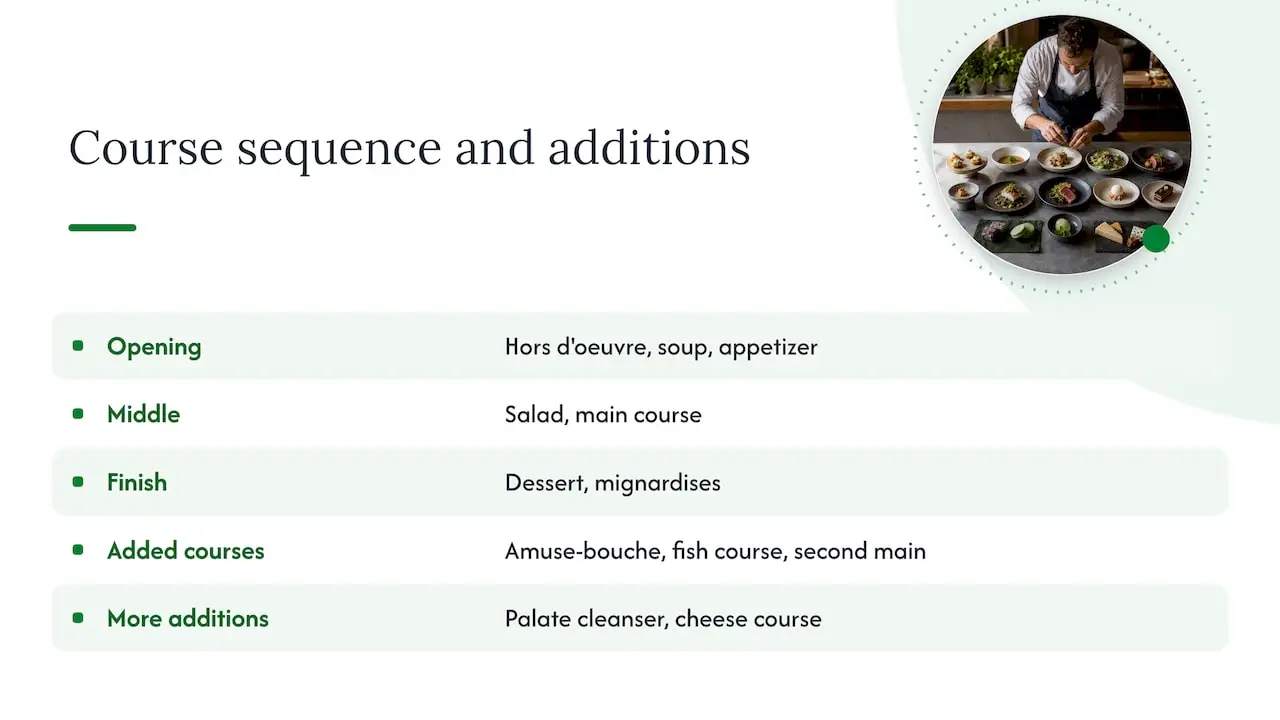
Seven-course versions vary. One widely published example runs hors d’oeuvre, soup, appetizer, salad, main course, dessert and mignardises, according to WebstaurantStore. Its 12-course sample adds an amuse-bouche, a fish course, a second main course, a palate cleanser and a cheese course. Escoffier’s culinary school describes multi-course meals as ranging from three carefully chosen items to 14-part tasting menus.
What makes a dinner formal
Formality is partly about the count and partly about the setting. Emily Post says a formal place setting is used at home for a meal of more than three courses, such as a dinner party or holiday meal. Its formal example runs a shellfish appetizer, soup or fruit first course, fish course, entrée and salad.
The informal version is simpler. Emily Post’s informal table setting guide labels its example a three-course dinner, with soup, salad or a first course, an entrée and dessert.
There is no single required sequence. Emily Post’s table-setting guidance shows formal settings varying: four courses including dessert, or five including dessert and an oyster dish, with soup or a palate-cleansing sorbet inserted depending on the menu. Etiquette commentary describes roughly five to seven courses as common for a modern formal dinner, and that is a convention rather than a US rule.
In practice, “formal” means the table resets more often, the plates are smaller, and the pace is slower. It does not mean more food overall.
The usual order of courses
The governing principle is simple. WebstaurantStore describes the progression as lighter plates first, richer dishes later, and small, delicate items at the end. Within that, a typical full sequence looks like this:
- Hors d’oeuvres. Small bites served before the meal. The Long Beach Post’s guide to fine dining courses says they can bridge the time between guests’ arrival and the meal, especially at cocktail parties.
- Amuse-bouche. A single chef’s bite, covered below.
- Soup. Warm, light and easy to portion.
- Appetizer. Often a cold or lightly dressed dish that shows the menu’s direction.
- Salad. Acidity to refresh before the main event.
- Fish or first main. The lighter of two proteins.
- Palate cleanser. Usually a small scoop of sorbet.
- Main course. The richest plate of the evening.
- Cheese. Sometimes placed before dessert.
- Dessert. Sweet and sized to finish, not to fill.
- Mignardises. Tiny sweets served with coffee.
Nobody serves all eleven at home. The point is to know the order so that whichever courses you keep still fall in a sensible sequence.
What is an amuse-bouche?
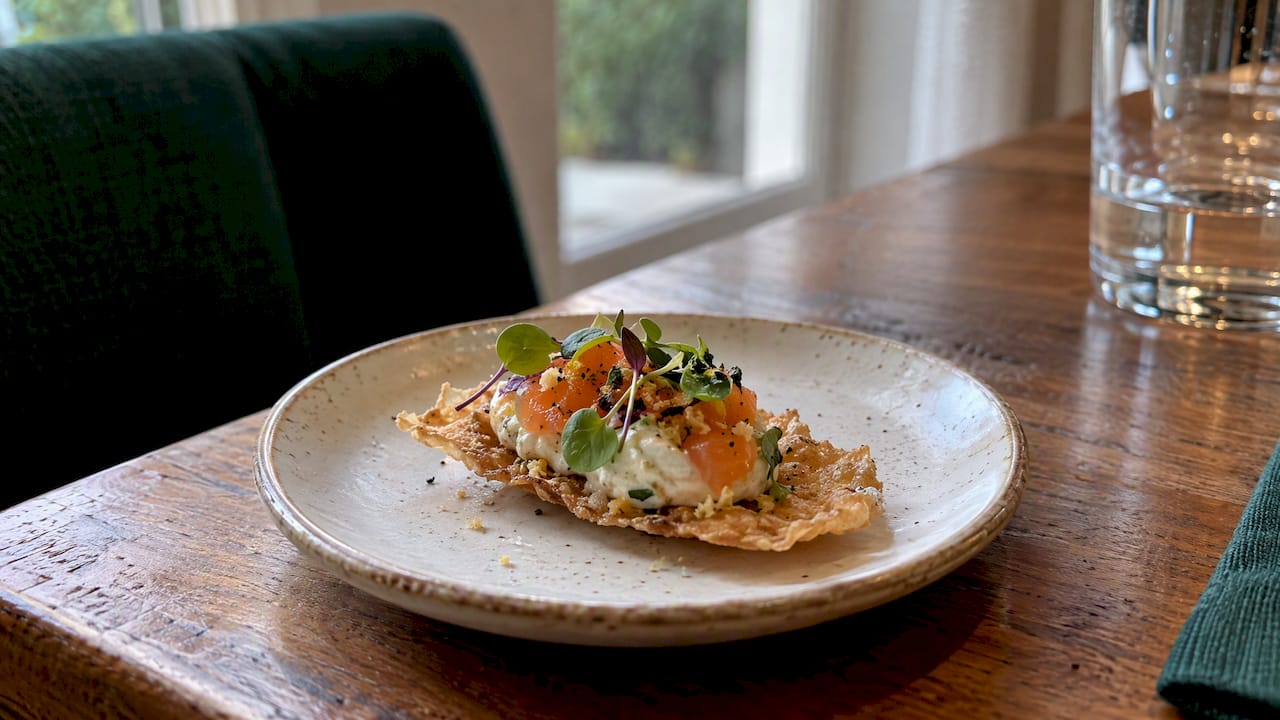
An amuse-bouche is a small complimentary bite from the chef, meant to prime the palate and introduce the chef’s style. You do not order it, and it does not count toward your course total on most menus. It arrives before the substantive courses. In the Long Beach Post’s 12-course example it follows the hors d’oeuvre and comes ahead of soup.
At home, it is one of the easiest ways to make a three-course dinner feel like an occasion. A spoonful of chilled soup, a single seasoned shrimp, or a small crisp with a bright topping is enough. Serve it standing or at the table the moment guests sit, and keep it to one or two bites.
How to choose the right number for your dinner
The honest answer is that the number depends on what you can accomplish well. Escoffier Online says home cooks are often best served by three or five courses, with the count set by how much the cook can and wants to do, kitchen size, equipment, guest count and available help. Escoffier’s culinary school adds that hosts with minimal help should keep the menu simple so that preparation does not overwhelm execution.
The Atlantic guide frames the same decision for professionals: the right count depends on the concept, the event type, kitchen capacity, guest expectations and price point. Tasting Table treats it as a balance of guest numbers, occasion, budget, time and the host’s ability to enjoy the meal. That last factor matters. If you are plating in the kitchen while your guests talk without you, the menu has too many courses.
Use these five questions:
- How much time do you have? If dinner must end by 9:30 and guests arrive at 7:00, three or four courses fit comfortably.
- How many guests? Every added course multiplies plating, clearing and dishwashing. Four guests and seven courses is manageable. Twelve guests is a different job.
- How many hands? Working alone, favor courses that are cold, make-ahead or cooked in one pan.
- What is the occasion? A birthday supper and an anniversary are not the same evening.
- Who is eating? Dietary needs come first, as the next section explains.
If you want to work backward from the dinner hour, our guide to building a dinner party timeline backward shows how to place each course with a buffer built in.
Dietary needs change the menu, not just the plate
The Dinner Party Guide notes that an allergy, a vegetarian guest or a gluten-free requirement can change which dishes are viable, and it recommends building around restrictions from the outset. We agree, and would go further: the worst outcome is a single sad plate set in front of one guest while everyone else eats the full menu.
A few practical rules:
- Ask early and ask specifically. “Any allergies?” is not enough. Ask about intolerances, strict avoidances and what is a preference rather than a medical need.
- Design one menu that works for everyone where you can. A soup thickened with vegetables instead of flour, or a main served over rice instead of pasta, spares the guest an alternate dish.
- Watch cross-contact. Shared cutting boards, fryer oil, marinades and seasoning blends can carry allergens into a dish that looks safe. Read every label, and keep prep surfaces and utensils separate.
- Do not improvise on the night. Substitutions made at the last minute are where mistakes happen.
For guests with serious allergies, such as celiac disease or a severe food allergy, ask them what they need and follow it. They know their own limits better than any menu rule.
Pacing the evening between courses
The number of courses matters less than the gaps between them. A good rhythm is roughly 15 to 25 minutes from plate to plate: enough for conversation, short enough that nobody gets restless. Lighter courses can move faster, and the main course deserves the longest pause on either side.
A few levers help:
- Start the evening before the table. Bites during arrival buy you time and settle the room. Our cocktail party hors d’oeuvres guide covers what to serve and how much.
- Put a cold course early. It can be plated before guests sit.
- Choose one hot-and-fast course. Searing fish or finishing a sauce is fine, but only one dish should need your full attention at the stove.
- Set the mood. Music shapes how long people linger. If you are planning a longer, more formal evening, dinner reception piano setlists show how repertoire can be matched to each stage of the meal.
Portion size is the other half of pacing. Five courses of full entrée portions will exhaust everyone. Appetizers and sides in a multi-course meal should be a few bites each. For help sizing plates, see our catering portions per person guide.
Sample menus at three, five and seven courses
These show how the same evening scales. They lean on the flavors we cook with in Miami, but any cuisine follows the same structure.
A three-course dinner
- Chilled cucumber and herb soup, or a bright citrus salad.
- Slow-braised chicken with rice and a sharp pickled slaw.
- Roasted pineapple with a spoon of cream.
This is the version most hosts can pull off alone. Two of the three components can be made a day ahead.
A five-course dinner
- Amuse-bouche: a single spiced shrimp.
- Appetizer: kibbeh or a small crab cake with a herb sauce.
- Salad: shaved fennel, citrus and olive oil.
- Entrée: grilled fish or braised short rib with a vegetable side.
- Dessert: a small cake or tart with fruit.
Note the structure: light, brighter, then rich, then sweet. The amuse-bouche is not counted, so a guest would call this a five-course meal. Others would call it six. Both are right, which is why menus should simply list what will be served.
A seven-course dinner
- Hors d’oeuvres on arrival.
- Soup.
- Appetizer.
- Salad.
- Main course with sides.
- Dessert.
- Mignardises with coffee.
This follows the seven-course example published by WebstaurantStore. At home it works best for four to eight guests with real help in the kitchen, or with a chef handling the plating.
If you are blending cuisines in your menu, our guide to building a fusion dinner menu explains how to keep flavors coherent across courses. For seafood-led menus, the seafood dinner at home guide covers sourcing and timing.
Restaurant courses versus home courses
Restaurants set course counts for business reasons: kitchen capacity, table turns and price. Many diners order only two courses, and some menus let you order from a single section. A prix fixe menu fixes the count and price in advance, and it can change how a kitchen paces the evening. We compare the two formats in prix fixe versus à la carte.
At home you have different constraints. No one is waiting for your table, but you are cooking, serving and hosting at once. That is why many home dinners are best at three courses and why a private chef changes what is possible: the cooking, plating and clearing move off your shoulders.
Our perspective: fewer courses, better executed
We cook small-batch, never-frozen meals rooted in Haitian and Lebanese traditions, and the most common question we get from clients planning a dinner is how much is too much.
Our answer is almost always to start with the guests, not the format. A couple celebrating an anniversary at home often wants four courses and plenty of time at the table. A family hosting relatives wants three generous plates and no fuss. A group with several dietary needs wants a menu that every person can eat in full, with nobody singled out.
We design every menu personally and talk directly with each client about preferences and dietary needs before we cook. That conversation is where the course count gets settled. We would rather serve three courses that each arrive at the right temperature than seven that rush the kitchen. Courses are a pacing tool. Used well, they slow the evening down enough for people to enjoy each other. Used for their own sake, they just make the night longer.
One more thing we have learned: the first and last courses are what guests remember. A thoughtful opening bite and a well-finished dessert carry a menu further than a crowded middle.
— Virginia Jiha
Let a private chef handle the courses
If you like the idea of a multi-course dinner but not the dishes, planning and clearing that come with it, we can cook it in your home. Our private dinners are designed with you, course by course, around your guests, your occasion and any dietary needs. For larger gatherings, our catering service covers boutique events with the same small-batch, fresh approach.
For couples, a plated dinner at home is a good alternative to a crowded restaurant. Our romantic dinner at home plan walks through how an evening like that comes together. To discuss a menu, reach out through vjcuisine.com and tell us the date, guest count and any restrictions.
FAQ
How many courses is a normal dinner?
Most dinners have three courses: an appetizer, an entrée and dessert. Relaxed meals often have two, and celebrations may have four or five. The usual limit at home is the time and help you have, not the guests’ appetites.
How many courses is a formal dinner?
A formal dinner at home generally has more than three courses. Etiquette guidance describes roughly five to seven as common for a modern formal dinner. Emily Post notes that there is no single required sequence, so courses like soup or sorbet are added based on the menu.
What are the seven courses of a meal?
One widely published seven-course example is hors d’oeuvre, soup, appetizer, salad, main course, dessert and mignardises. Other versions swap in fish, cheese or a palate cleanser. Because the sequence varies, the key is that lighter dishes come first and richer ones later.
Is an amuse-bouche a course?
Usually not. It is a small complimentary bite from the chef, served before the first course to introduce the menu. Some hosts count it and others do not, so it is clearer to describe the menu by listing every dish.
Can I order from just one course at a restaurant?
Often yes, especially on à la carte menus, where you simply choose the dishes you want. A prix fixe menu usually sets the courses and price together, so ask the restaurant before you book if you want to skip one.
Sources
- Course (food), Wikipedia
- Full Course Meals Explained: A Definitive Guide, WebstaurantStore
- Dinner Party Menu: How to Plan One That Actually Works, The Dinner Party Guide
- Courses of a Meal in Order, Plate Artists
- Full Course Meal Guide, Atlantic Restaurant Supply
- How To Plan a Cohesive Multi-Course Meal, Escoffier Online
- Finer Points Of Advice For Building Out A Multi-Course Menu, Escoffier
- The Formal Place Setting, Emily Post
- Informal Table Setting, Emily Post
- Proper Table Setting 101, Emily Post
- Demystifying the menu: a guide to fine dining courses, Long Beach Post
- How To Plan A Menu For A Dinner Party, Tasting Table